
Call us now :07313727211
 Send Inquiry
 Send Inquiry
Dorry Abrasion Testing Machine
Price 45000.0 INR/ Piece
MOQ : 1 Piece
Dorry Abrasion Testing Machine Specification
- Temperature
- Ambient
- Automation Grade
- Manual
- Measuring Range
- Up to 500 gm loss
- Frequency
- 50 Hz
- Number of Specimens
- 2
- Response Time
- Instantaneous
- Mounting Type
- Bench Mounted
- Test Range
- Aggregate Abrasion Resistance
- Humidity
- Standard Room Conditions
- Max Height
- ~30 cm
- Specimen Size
- Diameter: 25-50 mm, Height: 25-50 mm
- Application
- Aggregate Abrasion Testing
- Resolution
- 1 gm
- Accuracy
- ±1 gm
- Hardness
- Steel components >45 HRC
- Display Type
- Analog
- Equipment Type
- Dorry Abrasion Testing Machine
- Power Supply
- 230V AC, 50 Hz, Single Phase
- Features
- Heavy Duty Construction, Corrosion Resistant, Stable Base
- Interface Type
- Manual Control
- Operating Voltage
- 230V AC
- Usage
- Testing the abrasion resistance of aggregates
- Capacity
- Up to 4 test cycles
- Machine Weight
- Approx. 50 kg
- Test Speed
- 20-30 rpm
- Test Stroke
- 215 mm
- Control Mode
- Manual
- Dimension (L x W x H)
- Approx. 600 x 400 x 300 mm
- Sample Holder Material
- Mild Steel with chrome plating
- Wheel Material
- High-grade cast iron
- Abrasive Charge Size
- 50 mm Diameter, 50 mm Height
- Finish
- Powder coated body
- Standard Accessories
- Pair of sample holders, Weights, Abrasive charges
- Rotation Mechanism
- Geared motor system
Dorry Abrasion Testing Machine Trade Information
- Minimum Order Quantity
- 1 Piece
- FOB Port
- coimbatore
- Payment Terms
- Cash Advance (CA), Cash in Advance (CID)
- Supply Ability
- 1 Piece Per Day
- Delivery Time
- 1 Days
- Sample Available
- No
- Packaging Details
- cotton box
- Main Export Market(s)
- Asia, Africa
- Main Domestic Market
- Bihar, Chandigarh, Daman and Diu, Goa, Jharkhand, Odisha, Punjab, Assam, Chhattisgarh, All India, South India, Central India, West India, North India, East India, Gujarat, Karnataka, Kerala, Lakshadweep, Mizoram, Delhi, Tamil Nadu, Telangana, Tripura, Pondicherry, Uttar Pradesh, Uttarakhand, West Bengal, Meghalaya, Manipur, Andhra Pradesh, Dadra and Nagar Haveli, Andaman and Nicobar Islands, Arunachal Pradesh, Haryana, Himachal Pradesh, Jammu and Kashmir, Madhya Pradesh, Maharashtra, Nagaland, Rajasthan, Sikkim
About Dorry Abrasion Testing Machine
Specification:
It consists of a disc rotating about a shaft connected to a reduction gear box coupled to a motor. The disc rotates at 28-30 RPM.
Under the rotating disc is a tray with an outlet to facilitate the removal of sand. Two Conical Hoppers are mounted on a bracket fixed to the circular tray. An arrangement is made for start and stop the flow of sand. Two containers with weights are supplied to keep the specimens pressed against the rotating disc.
Suitable for operation on 220 V, 50 cycles, A.C. Supply
Heavy-Duty, Accurate Aggregate Testing
Engineered for high-performance abrasion resistance evaluation, this Dorry Abrasion Testing Machine is crafted with a stable base and corrosion-resistant finish, ensuring reliability in rigorous laboratory environments. Its robust construction and manual interface enable precise control and consistent test results for aggregates, vital for quality assurance in construction projects.
Advanced Features for Consistent Results
Equipped with a geared motor, chrome-plated sample holders, and high-grade cast iron wheels, this machine offers a smooth and controlled testing process. It delivers accurate results (within 1 gm), thanks to instant analog readouts and a manageable resolution, making it suitable for demanding aggregate testing applications across India's supply network.
FAQ's of Dorry Abrasion Testing Machine:
Q: How does the Dorry Abrasion Testing Machine evaluate aggregate abrasion resistance?
A: The Dorry Abrasion Testing Machine determines abrasion resistance by rotating aggregate specimens in contact with abrasive charges on high-grade cast iron wheels. The controlled rotation, powered by a geared motor, enables accurate measurement of material lost (up to 500 gm) after a set number of cycles, helping to assess aggregate durability.Q: What are the standard procedures for operating the machine?
A: Begin by securing two sample specimens into the chrome-plated mild steel holders. Adjust the weights and abrasive charges as required, set the manual controls for rotation speed (20-30 rpm), and run up to four test cycles per session. Weight loss is measured to gauge abrasion resistance, following aggregate testing standards.Q: When should I use the Dorry Abrasion Testing Machine?
A: Use this machine whenever determining the durability and quality of aggregates for construction projects is necessary. It is commonly applied in quality control laboratories, aggregate processing plants, and research institutions to ensure compliance with safety and performance standards.Q: Where can this equipment be installed for optimal performance?
A: The Dorry Abrasion Testing Machine is designed for bench-mounted installation in standard laboratory environments under ambient temperature and humidity. Ensure stable, vibration-free placement near a 230V AC, 50 Hz power supply for accurate and consistent results.Q: What benefits does this machine provide for aggregate testing?
A: This equipment ensures highly reliable aggregate quality assessment, featuring robust and corrosion-resistant construction, easy manual operation, and instant analog displays. Its high measurement accuracy (1 gm) and heavy-duty design reduce maintenance while providing clear, repeatable results.Q: How many specimens can be tested at once, and what are the specimen size requirements?
A: Up to two aggregate specimens can be tested simultaneously. Each sample should have a diameter and height between 25-50 mm, aligning with standard aggregate abrasion test methodologies.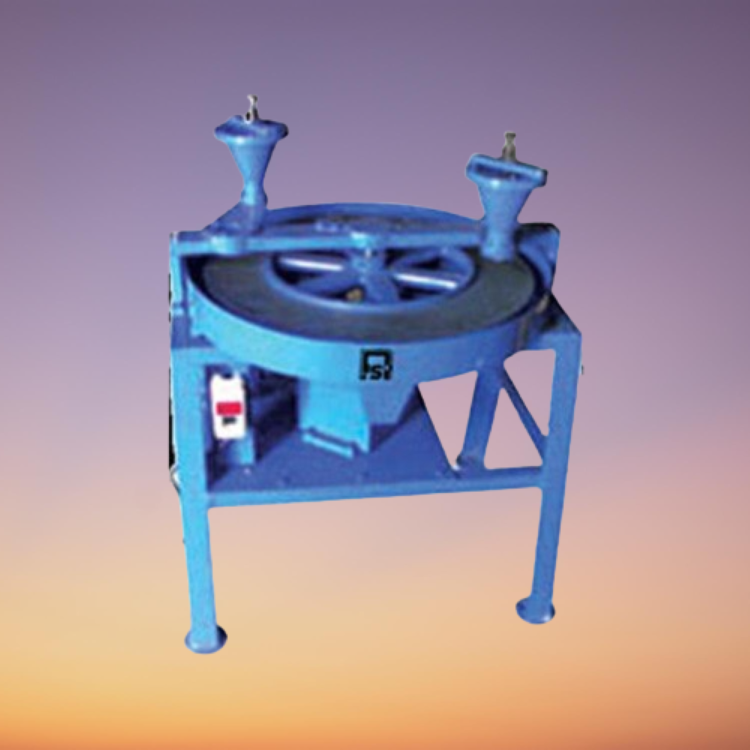
Tell us about your requirement

Price:
Quantity
Select Unit
- 50
- 100
- 200
- 250
- 500
- 1000+
Additional detail
Mobile number
Email

More Products in Concrete Highway Engineering lab Category
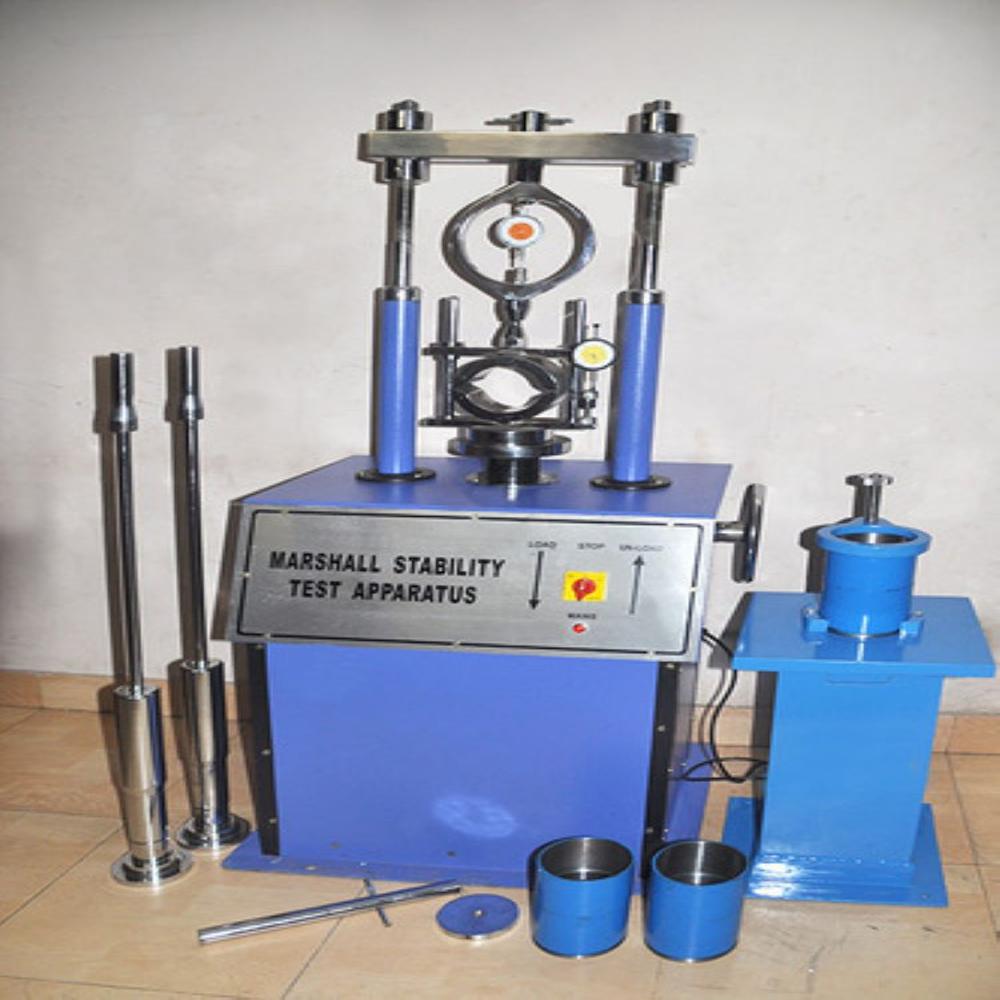
Automatic Marshall Stability Test Machine
Price 100000.0 INR
Minimum Order Quantity : 1 Piece
Usage : Laboratory/Research
Display Type : Digital LCD with Peak Hold Feature
Power Supply : 220 V AC, 50 Hz
Mounting Type : Bench Top

Core Cutting Grinding Machine
Price 100000.0 INR / Piece
Minimum Order Quantity : 1 Piece
Usage : Laboratory use for sample preparation
Display Type : Analog / Manual scale
Power Supply : 230 V AC, 50 Hz
Mounting Type : Bench mounted
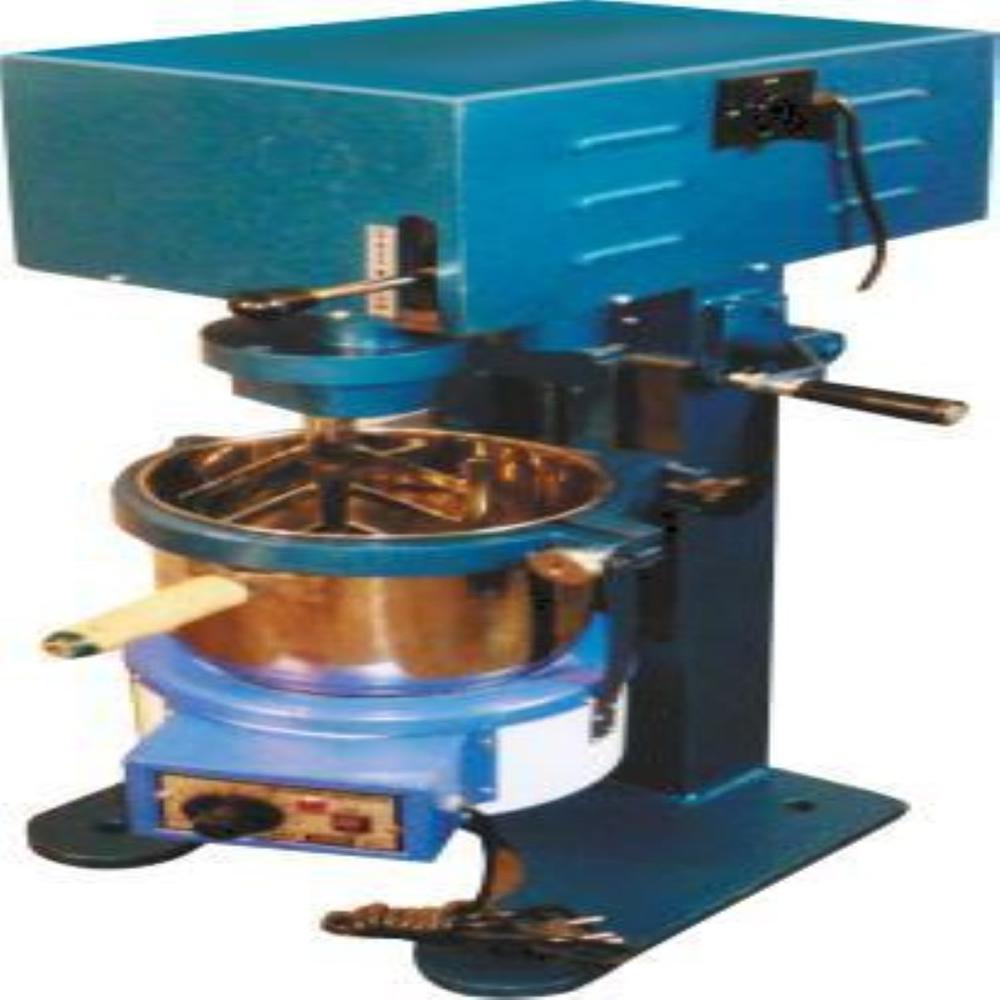
Mixer With Heating Jacket
Price 50000.0 INR / Piece
Minimum Order Quantity : 1 Piece
Usage : Industrial & Laboratory mixing with heating
Display Type : Digital temperature display
Power Supply : 230V AC, 50 Hz
Mounting Type : Floor standing
Standard Penetrometer
Price 10000 INR / Bundle
Minimum Order Quantity : 1 Bottle
Usage : Laboratory testing
Display Type : Dial gauge or digital
Power Supply : 230 V AC, 50 Hz
Mounting Type : Benchtop

We are dealing in Coimbatore, Chennai and Tamilnadu.
 Send Inquiry
Our Products
- Concrete Testing Equipment
- Survey Lab Equipment
- Construction Equipment
- Concrete Testing Machine
- Soil Test Machine
- Survey Instrument
- Auto Level
- Cement Testing Machine
- Soil Testing Equipments
- Soil Testing Equipment
- Civil Engineering Lab Equipment
- Total Station
- Soil Test equipments
- Auto Level
- Concrete Highway Engineering lab
- Mechanical Engineering Lab Equipment
- Weighing Scale
- Laboratory Testing Equipment
- Workshop Trolleys
- Compression Testing Machine
- Water Testing Equipment
- Vertical Milling Machine
- Moulding Products
- CNC Machines
- Measuring Ruler
- Cylinder Carrier
- Core Cutting Machine
- Digital Measuring Machine
- Hydraulic Jack
- Drawing Instruments
- Fuel Testing Equipment
- Dynamics Lab Equipment
- Hydraulics and Fluid Mechanics Lab Equipment
- Heat Transfer Lab Equipment
- Scientific Equipment
- Surgical Equipment
- Hot Air Oven
- Impact Testing Machine
- Torsion Testers
- Bernoullis Theorem Apparatus
- Wooden Tripod
- Liquid Mercury
- Vibrating Table
- Material Testing Equipment
- Agriculture Equipment
- Waste Water Analysis

SF No. 189/1B1A, 191/3A1A1E, Sidco Private Industrial Estate, LIC Colony, Kurichi Pudhu Nagar, Kuruchi Housing,Coimbatore - 641021, Tamil Nadu, India

Mr Balamurugan C
(Manager)
Mobile :07313727211
 Send Inquiry
 Send SMS
Developed and Managed by Infocom Network Private Limited.
