
Call us now :07313727211
 Send Inquiry
 Send Inquiry
Digital Penetrometer
MOQ : 1 Piece
Digital Penetrometer Specification
- Temperature
- 15C to 40C
- Humidity
- 80% RH
- Display Type
- Digital LCD
- Equipment Type
- Digital Penetrometer
- Gas Pressure
- Ambient
- Automation Grade
- Automatic
- Resolution
- 0.01 mm
- Application
- Soil, Bitumen, Grease and Food Texture Analysis
- Number of Specimens
- 1
- Port Size
- Standard 6 mm
- Accuracy
- 0.1 mm
- Specimen Size
- Custom, up to 100 mm diameter
- Mounting Type
- Bench-top
- Max Height
- 420 mm
- Interface Type
- USB
- Operating Voltage
- 230V AC
- Measuring Range
- 0 to 100 mm
- Features
- Automatic start/stop, User calibration, Data storage
- Hardness
- Up to 150 Penetration Units
- Frequency
- 50 Hz
- Power Supply
- 230V AC, 50 Hz
- Test Range
- 0-100 mm
- Response Time
- <2 sec
- Usage
- Laboratory and Field Testing
- Capacity
- 0-100 units
- Machine Weight
- 12 kg
- Test Speed
- 1 mm/s
- Test Width
- 100 mm
- Test Stroke
- 50 mm
- Control Mode
- Digital Control
- Environmental Storage
- -10C to 60C
- Material of Construction
- Stainless Steel and ABS Housing
- Needle Release Mechanism
- Magnetic and Manual
- Data Export
- USB and RS232 compatible
- Power Consumption
- 20 W
- Compliance Standards
- ASTM D5, IS 1203 & AASHTO T49
- Calibration Method
- Manual or Automatic calibration
- Penetration Needle Size
- Diameter 1 mm, Length 50 mm
- Protection Class
- IP54
Digital Penetrometer Trade Information
- Minimum Order Quantity
- 1 Piece
- FOB Port
- coimbatore
- Payment Terms
- Cash Advance (CA), Cash in Advance (CID)
- Supply Ability
- 1 Piece Per Day
- Delivery Time
- 1 Days
- Sample Available
- No
- Packaging Details
- cotton box
- Main Export Market(s)
- Asia, Africa
- Main Domestic Market
- East India, Gujarat, Jharkhand, All India, South India, Central India, West India, North India, Kerala, Karnataka, Mizoram, Manipur, Lakshadweep, Meghalaya, Andhra Pradesh, Bihar, Chandigarh, Daman and Diu, Goa, Odisha, Punjab, Assam, Delhi, Dadra and Nagar Haveli, Andaman and Nicobar Islands, Arunachal Pradesh, Chhattisgarh, Haryana, Himachal Pradesh, Jammu and Kashmir, Madhya Pradesh, Maharashtra, Nagaland, Rajasthan, Sikkim, Tamil Nadu, Telangana, Tripura, Pondicherry, Uttar Pradesh, Uttarakhand, West Bengal
About Digital Penetrometer
Specification:
A typical digital penetrometer specification includes a measuring range (e.g., 0-50 mm or 0-620 penetration scale), a resolution (e.g., 0.01 mm), and programmable test duration (e.g., 0.1 to 9999 seconds). Other specs include a digital display, automatic zeroing, data memory and export capabilities (USB, LAN), and compliance with various industry standards like ASTM D5 and ISO 2137.
Here are common specifications for a digital penetrometer, particularly for bitumen testing:
Performance Specifications
- Measuring Range: 0-50 mm, 0-620 penetration scale, or similar, depending on the model.
- Resolution: 0.01 mm or 1/100mm.
- Test Duration (Time Interval): Adjustable, often from 0.1 to 9999 seconds.
- Standard & User-Defined Programs: For consistent testing.
- Automatic Averaging: Calculates the average of multiple test results.
Display & Control
- Display Type: LED or LCD with penetration depth reading.
- Illuminated Display: Often with a magnifying glass for clear viewing.
- Jog Wheel/Joystick: For fine manual adjustments.
- User-Friendly Interface: Easy to set test parameters.
Features & Accessories
- Data Memory: Stores a significant number of results.
- Data Export: Options for memory sticks (Excel), printers, or laboratory networks (LAN, LIMS).
- Statistical Analysis: Calculates mean, min, max, and standard deviation.
- Limit Indication: Alarms for low and upper limits.
- Detachable Base: Provides a large platform for sample containers.
- Accessories: Includes calibration kits, magnifiers, and sometimes sample tins or cups.
Electrical & Environmental
- Power Supply: Typically 220-240V, 50/60 Hz or 110-120V, 60 Hz.
- Power Consumption: Around 70-75 W.
- Humidity: Rated for non-condensing air humidity (max 80%).
Standards Conformance
- ASTM: D5, D217, D937, D1321, etc.
- ISO: 2137.
- DIN: 51579, 51580, etc.
- IP: 49, 50, 179, etc.
Advanced Material Construction and Design
Built with a combination of stainless steel and ABS elements, this penetrometer ensures long-term durability in challenging laboratory or field environments. The bench-top mounting and IP54 protection further enhance its reliability, making it suitable for various conditions. The magnetic and manual needle release mechanism allows flexibility and precision during testing.
Precision Measurement and Digital Control
With a test speed of 1 mm/s and a measuring range of up to 100 mm, users can rely on precise, repeatable results. The digital LCD display, automatic start/stop functions, and customizable specimen sizes empower efficient, user-friendly operation. The penetration unit accuracy and rapid response time streamline testing for soil, bitumen, grease, and food texture.
Compliance, Calibration, and Data Handling
This instrument meets international standards, ensuring trustworthy analysis for regulated applications. Users can opt for manual or automatic calibration to maintain measurement integrity. Data export through USB and RS232 interfaces makes it straightforward to share or archive results, supporting seamless workflow integration in research and production settings.
FAQ's of Digital Penetrometer:
Q: How does the Digital Penetrometer ensure accurate measurement during testing?
A: The penetrometer is engineered with a high-resolution digital LCD display, an automatic start/stop feature, and a precision needle release mechanism (magnetic/manual). It offers an accuracy of 0.1 mm and a resolution of 0.01 mm, ensuring consistent and reliable results for every specimen.Q: What types of materials can be tested using this Digital Penetrometer?
A: This device is suitable for analyzing soil, bitumen, grease, and food texture. Its customizable specimen size (up to 100 mm diameter) and broad measuring range make it appropriate for various laboratory and field applications.Q: When should the calibration be performed, and what methods are available?
A: Calibration is recommended before initial use and periodic testing, especially when switching specimen types. The instrument supports both manual and automatic calibration, allowing users to select the approach that best fits their process requirements and regulatory guidelines.Q: Where can data from the Digital Penetrometer be exported or shared?
A: Measurement data can be exported directly via USB or RS232-compatible interfaces, enabling seamless integration with computers or data management systems for analysis, reporting, and archiving.Q: What is the process for operating the Digital Penetrometer during a test?
A: To use the penetrometer, mount the specimen, select the control mode (digital/manual), initiate the penetration needle (magnetically or manually), and monitor the digital LCD display for real-time data. Results are automatically stored, and users can export them post-test as needed.Q: How does the Digital Penetrometer benefit laboratory and field work?
A: The combination of automatic control, rapid response, precise measurement, and robust construction makes it ideal for both laboratory and field environments. It improves workflow efficiency, ensures compliance, and minimizes errors during analysis.Q: Is the penetrometer compliant with international testing standards?
A: Yes, the equipment complies with ASTM D5, IS 1203, and AASHTO T49 standards, providing credible and standardized results for regulated applications.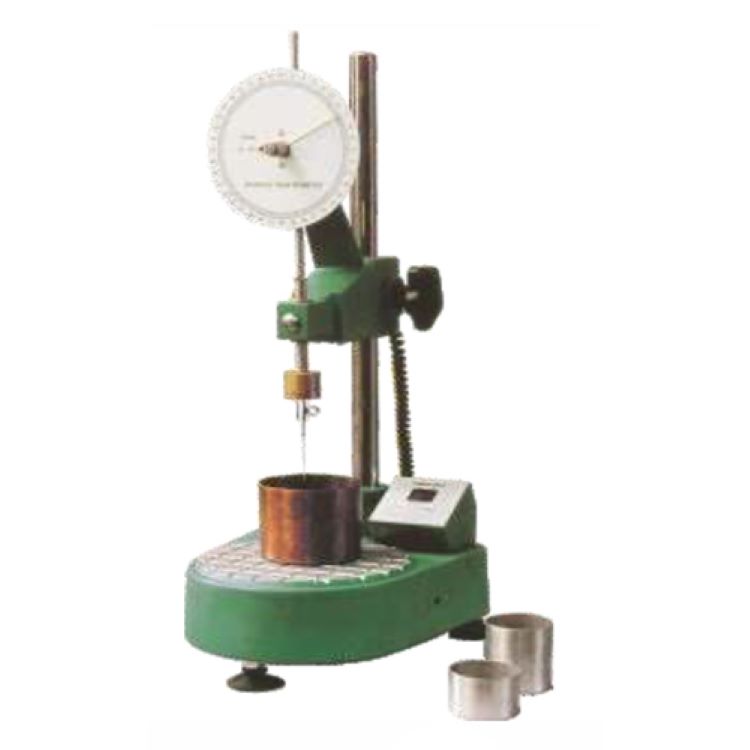
Tell us about your requirement

Price:
Quantity
Select Unit
- 50
- 100
- 200
- 250
- 500
- 1000+
Additional detail
Mobile number
Email

More Products in Concrete Highway Engineering lab Category
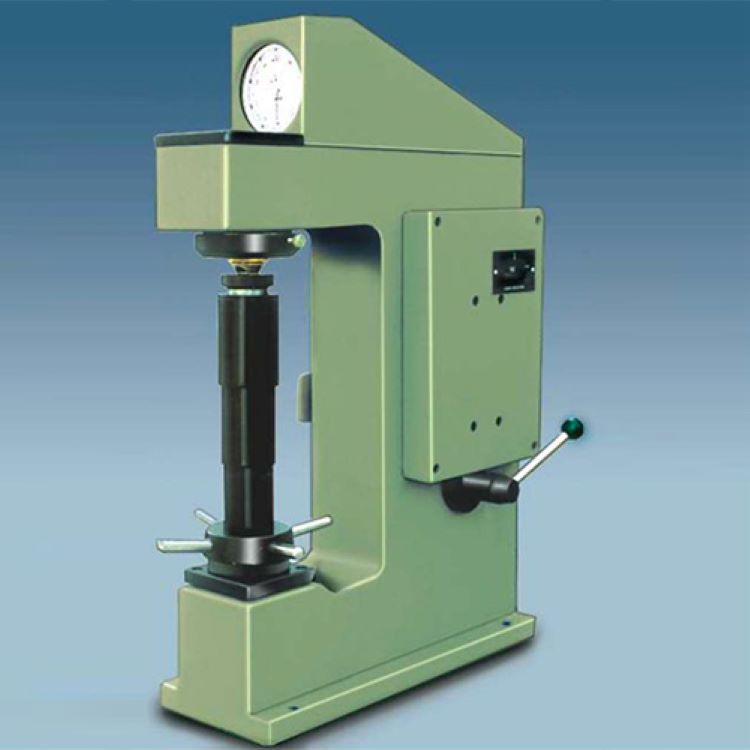
Rockwell Hardness Tester
Price 100000.0 INR / Piece
Minimum Order Quantity : 1 Piece
Mounting Type : Benchtop
Power Supply : 230V, 50Hz, Single Phase AC
Usage : Hardness testing of metals and alloys
Interface Type : None (manual device)

Asphalt & Concrete Floor Saw
Price 150000.0 INR / Piece
Minimum Order Quantity : 1 Piece
Mounting Type : Floor Mounted
Power Supply : Petrol/Diesel Engine 5.5 HP
Usage : Civil Construction Projects
Interface Type : Mechanical
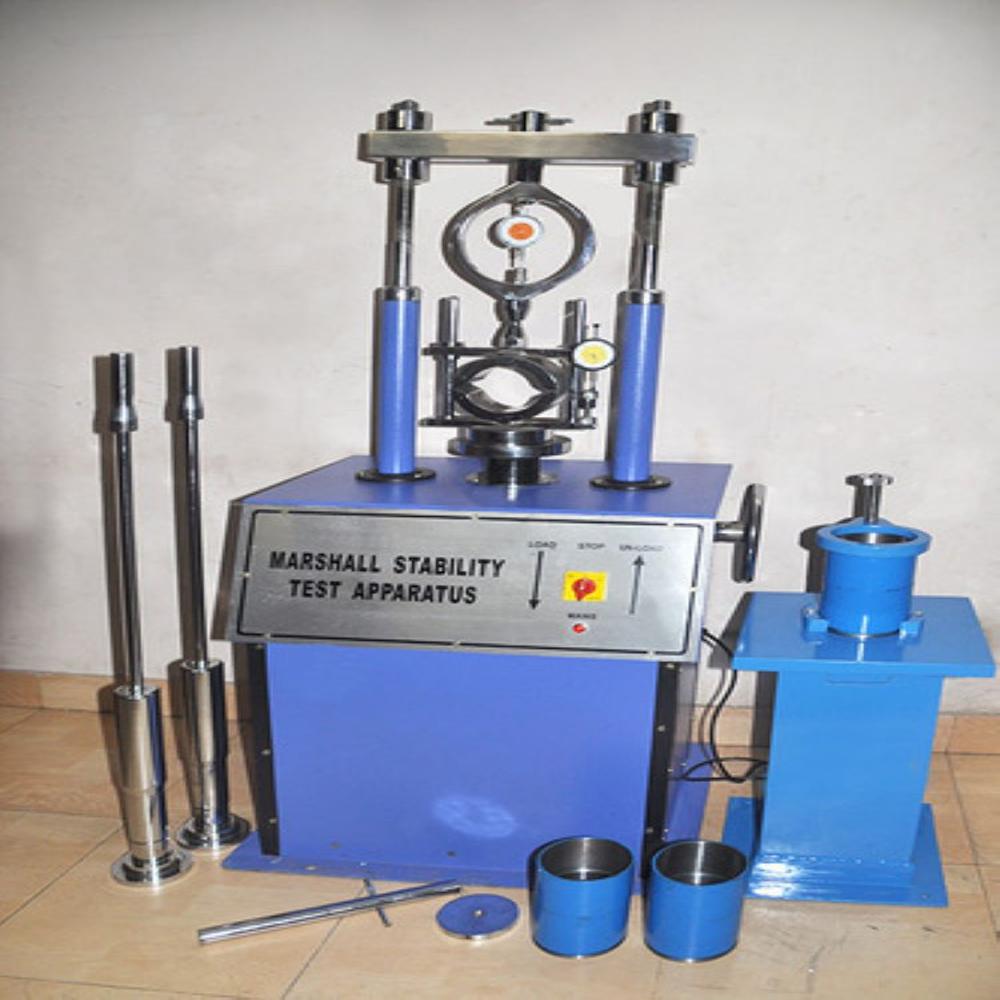
Automatic Marshall Stability Test Machine
Price 100000.0 INR
Minimum Order Quantity : 1 Piece
Mounting Type : Bench Top
Power Supply : 220 V AC, 50 Hz
Usage : Laboratory/Research
Interface Type : RS232 / USB
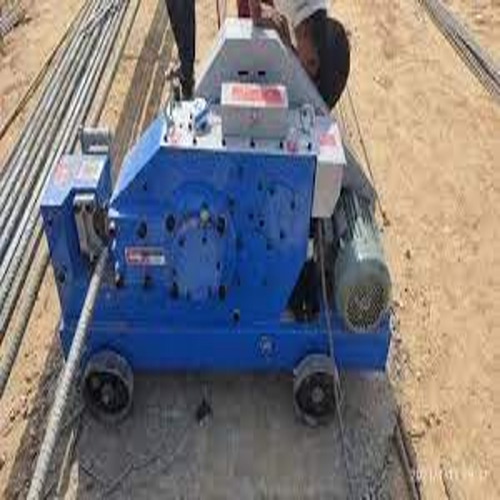
Steel Bar Cutting Machine
Price 100000 INR / Piece
Minimum Order Quantity : 1 Piece
Mounting Type : Floor Mounting
Power Supply : Electric
Usage : Industrial, Laboratory

We are dealing in Coimbatore, Chennai and Tamilnadu.
 Send Inquiry
Our Products
- Concrete Testing Equipment
- Survey Lab Equipment
- Construction Equipment
- Concrete Testing Machine
- Soil Test Machine
- Survey Instrument
- Auto Level
- Cement Testing Machine
- Soil Testing Equipments
- Soil Testing Equipment
- Civil Engineering Lab Equipment
- Total Station
- Soil Test equipments
- Auto Level
- Concrete Highway Engineering lab
- Mechanical Engineering Lab Equipment
- Weighing Scale
- Laboratory Testing Equipment
- Workshop Trolleys
- Compression Testing Machine
- Water Testing Equipment
- Vertical Milling Machine
- Moulding Products
- CNC Machines
- Measuring Ruler
- Cylinder Carrier
- Core Cutting Machine
- Digital Measuring Machine
- Hydraulic Jack
- Drawing Instruments
- Fuel Testing Equipment
- Dynamics Lab Equipment
- Hydraulics and Fluid Mechanics Lab Equipment
- Heat Transfer Lab Equipment
- Scientific Equipment
- Surgical Equipment
- Hot Air Oven
- Impact Testing Machine
- Torsion Testers
- Bernoullis Theorem Apparatus
- Wooden Tripod
- Liquid Mercury
- Vibrating Table
- Material Testing Equipment
- Agriculture Equipment
- Waste Water Analysis

SF No. 189/1B1A, 191/3A1A1E, Sidco Private Industrial Estate, LIC Colony, Kurichi Pudhu Nagar, Kuruchi Housing,Coimbatore - 641021, Tamil Nadu, India

Mr Balamurugan C
(Manager)
Mobile :07313727211
 Send Inquiry
 Send SMS
Developed and Managed by Infocom Network Private Limited.
