
Call us now :07313727211
 Send Inquiry
 Send Inquiry
Dial Gauge
Price 2100 INR/ Piece
MOQ : 1 Piece
Dial Gauge Specification
- Mounting Type
- Floor Mounting
- Material
- Steel
- Power Supply
- Manual
- Usage
- Laboratory
- Color
- Blue
Dial Gauge Trade Information
- Minimum Order Quantity
- 1 Piece
- Supply Ability
- Piece
- Delivery Time
- Days
- Main Export Market(s)
- Asia
- Main Domestic Market
- Himachal Pradesh, Andaman and Nicobar Islands, Pondicherry, Nagaland, Uttarakhand, Daman and Diu, Dadra and Nagar Haveli, Lakshadweep, South India, East India, West India, Assam, Arunachal Pradesh, Bihar, Chhattisgarh, Chandigarh, Delhi, Gujarat, Goa, Jammu and Kashmir, Jharkhand, Madhya Pradesh, Maharashtra, Mizoram, Meghalaya, Manipur, Rajasthan, Sikkim, Tamil Nadu, Tripura, West Bengal, Uttar Pradesh, Haryana, Karnataka, North India, Punjab, Telangana, Andhra Pradesh, Kerala, Central India, Odisha, All India
About Dial Gauge
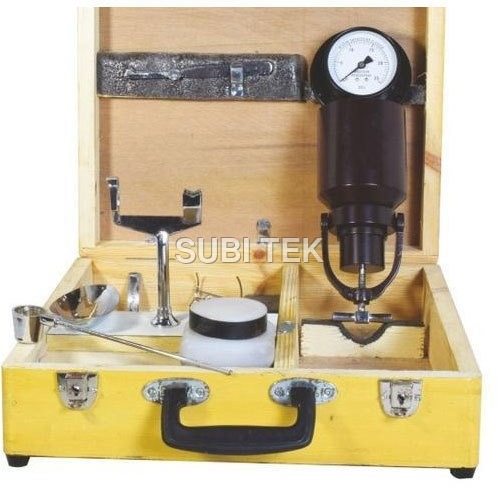
Used for taking measuring settlement of soil, used as flow meter in Marshall stability test to measure deformities, strains, displacements in general. Available Models: (a) 0.01 X 25mm (b) 0.002 X 5mm (c) 0.01 X 50mm
Dealer in Chennai
Manufacturer in Chennai
Reliable Measurements for Laboratory Settings
The Dial Gauge stands out for its accuracy and durability, making it an essential tool for laboratories. Its manual power supply and steel build ensure long-term reliability, while the floor mounting type provides exceptional stability during intricate measuring tasks.
Extensive Distribution Network in India
Whether you are a dealer, supplier, manufacturer, or wholesaler, the Dial Gauge is readily accessible throughout India. Our broad distribution network guarantees prompt delivery and support for all your laboratory equipment needs.
FAQs of Dial Gauge:
Q: How do you set up the Dial Gauge for laboratory measurements?
A: To set up the Dial Gauge, position it securely using floor mounting. Ensure the base is stable, and calibrate manually before each measurement to guarantee accuracy. Follow manufacturer instructions for optimal performance.Q: What are the advantages of using a manually powered Dial Gauge?
A: Manual operation allows for precise control and reliability without dependency on electrical power. This is particularly beneficial in laboratory settings, where consistency and accuracy are crucial for measurements.Q: Where can I purchase the Dial Gauge in India?
A: The Dial Gauge is available through dealers, distributors, retailers, manufacturers, traders, wholesalers, and suppliers across India. Contact your nearest equipment provider for purchasing information.Q: When should I consider choosing a floor-mounted Dial Gauge?
A: Floor-mounted Dial Gauges are ideal when you require extra stability and accuracy in your laboratory processes. They are suitable for both routine measurements and research applications where precision is paramount.Q: What is the process for maintaining the steel Dial Gauge?
A: Regularly clean the steel surfaces, check for corrosion, and ensure all moving parts are well-lubricated. Periodic calibration and inspection are recommended to maintain measurement accuracy and device longevity.Q: How does the blue color finish benefit laboratory use?
A: The blue finish enhances visibility in laboratories and helps distinguish the Dial Gauge from other equipment. It also adds an extra layer of protection against minor surface wear and corrosion.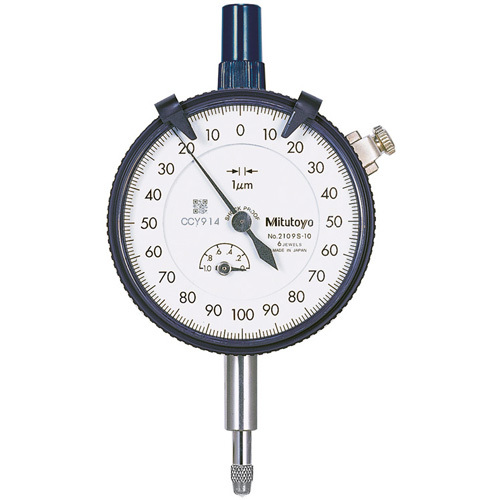
Tell us about your requirement

Price:
Quantity
Select Unit
- 50
- 100
- 200
- 250
- 500
- 1000+
Additional detail
Mobile number
Email

More Products in Soil Testing Equipment Category
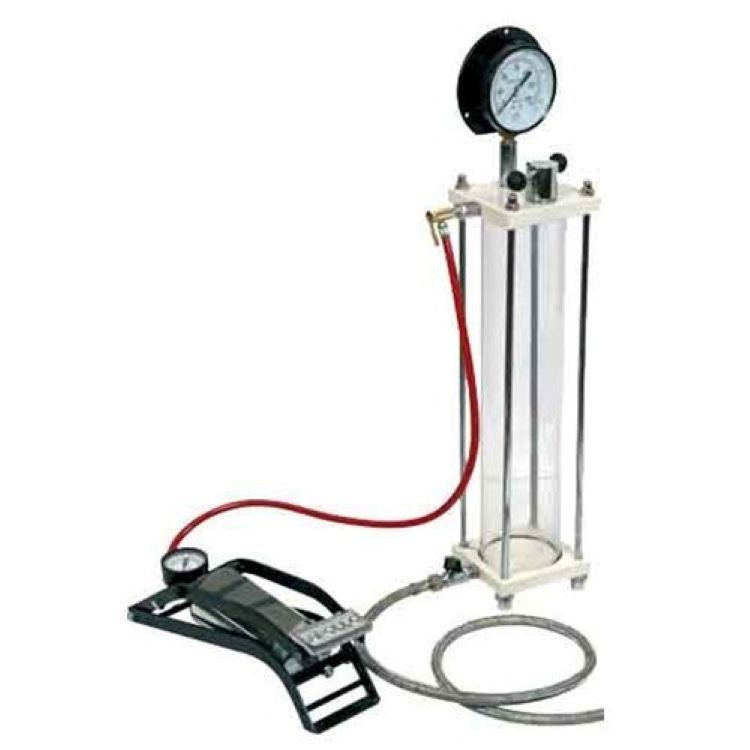
lateral pressure assembly
Price 10000.0 INR
Minimum Order Quantity : 1 Piece
Usage : Laboratory
Application : Soil mechanics, triaxial test, lateral pressure testing
Mounting Type : Benchtop
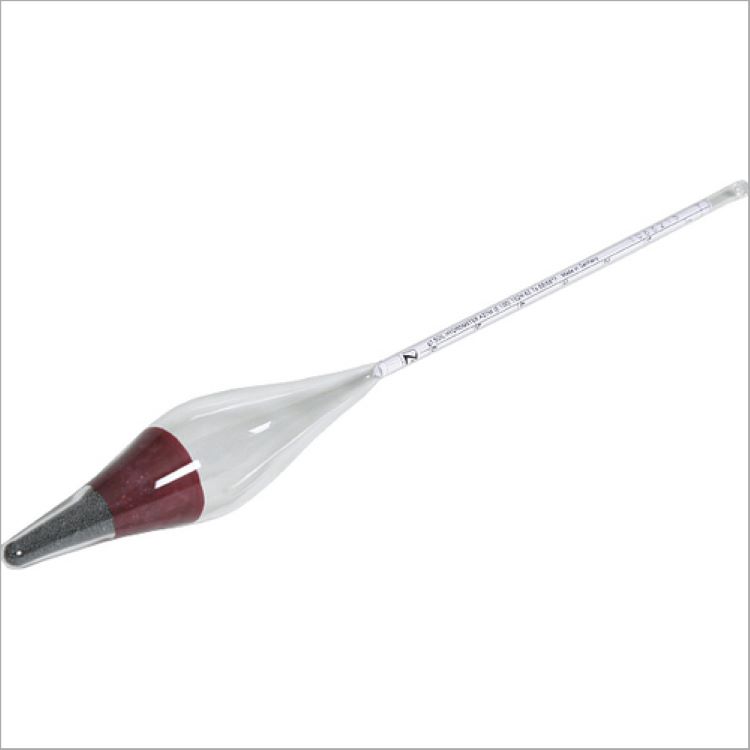
Soil Hydrometer
Price 3500.0 INR / Piece
Minimum Order Quantity : 1 Piece
Usage : Laboratory, Soil Testing
Application : Soil Particle Size Analysis
Mounting Type : Handheld
Sieve Shaker
Price 22000 INR / Piece
Minimum Order Quantity : 1 Piece
Application : Laboratory,Industrial
Color : Silver
Mounting Type : Floor Mounting
Rapid Moisture Meter
Price 5000 INR / Piece
Minimum Order Quantity : 1 Piece
Usage : Industrial
Color : Yellow

We are dealing in Coimbatore, Chennai and Tamilnadu.
 Send Inquiry
Our Products
- Concrete Testing Equipment
- Survey Lab Equipment
- Construction Equipment
- Concrete Testing Machine
- Soil Test Machine
- Survey Instrument
- Auto Level
- Cement Testing Machine
- Soil Testing Equipments
- Soil Testing Equipment
- Civil Engineering Lab Equipment
- Total Station
- Soil Test equipments
- Auto Level
- Concrete Highway Engineering lab
- Mechanical Engineering Lab Equipment
- Weighing Scale
- Laboratory Testing Equipment
- Workshop Trolleys
- Compression Testing Machine
- Water Testing Equipment
- Vertical Milling Machine
- Moulding Products
- CNC Machines
- Measuring Ruler
- Cylinder Carrier
- Core Cutting Machine
- Digital Measuring Machine
- Hydraulic Jack
- Drawing Instruments
- Fuel Testing Equipment
- Dynamics Lab Equipment
- Hydraulics and Fluid Mechanics Lab Equipment
- Heat Transfer Lab Equipment
- Scientific Equipment
- Surgical Equipment
- Hot Air Oven
- Impact Testing Machine
- Torsion Testers
- Bernoullis Theorem Apparatus
- Wooden Tripod
- Liquid Mercury
- Vibrating Table
- Material Testing Equipment
- Agriculture Equipment
- Waste Water Analysis

SF No. 189/1B1A, 191/3A1A1E, Sidco Private Industrial Estate, LIC Colony, Kurichi Pudhu Nagar, Kuruchi Housing,Coimbatore - 641021, Tamil Nadu, India

Mr Balamurugan C
(Manager)
Mobile :07313727211
 Send Inquiry
 Send SMS
Developed and Managed by Infocom Network Private Limited.
