
Call us now :07313727211
 Send Inquiry
 Send Inquiry
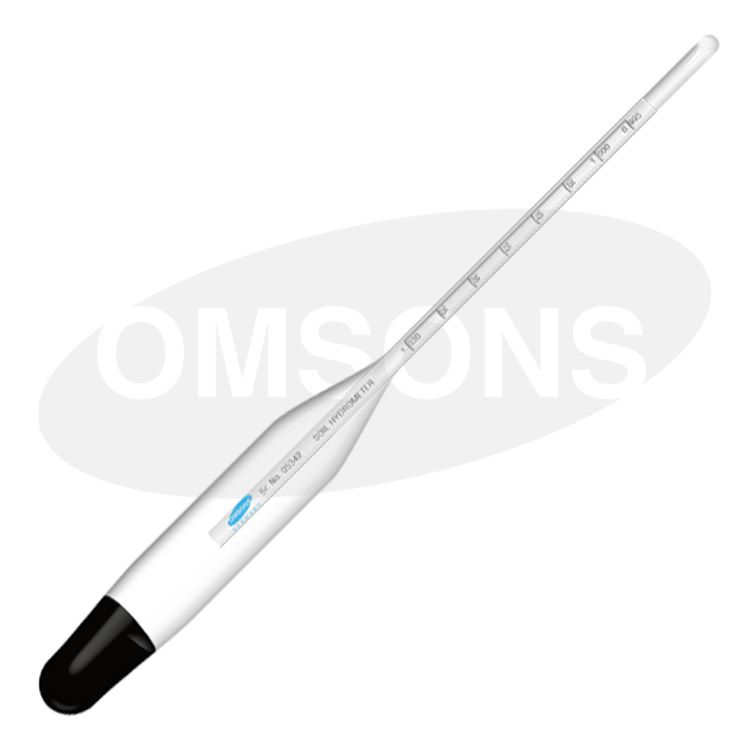
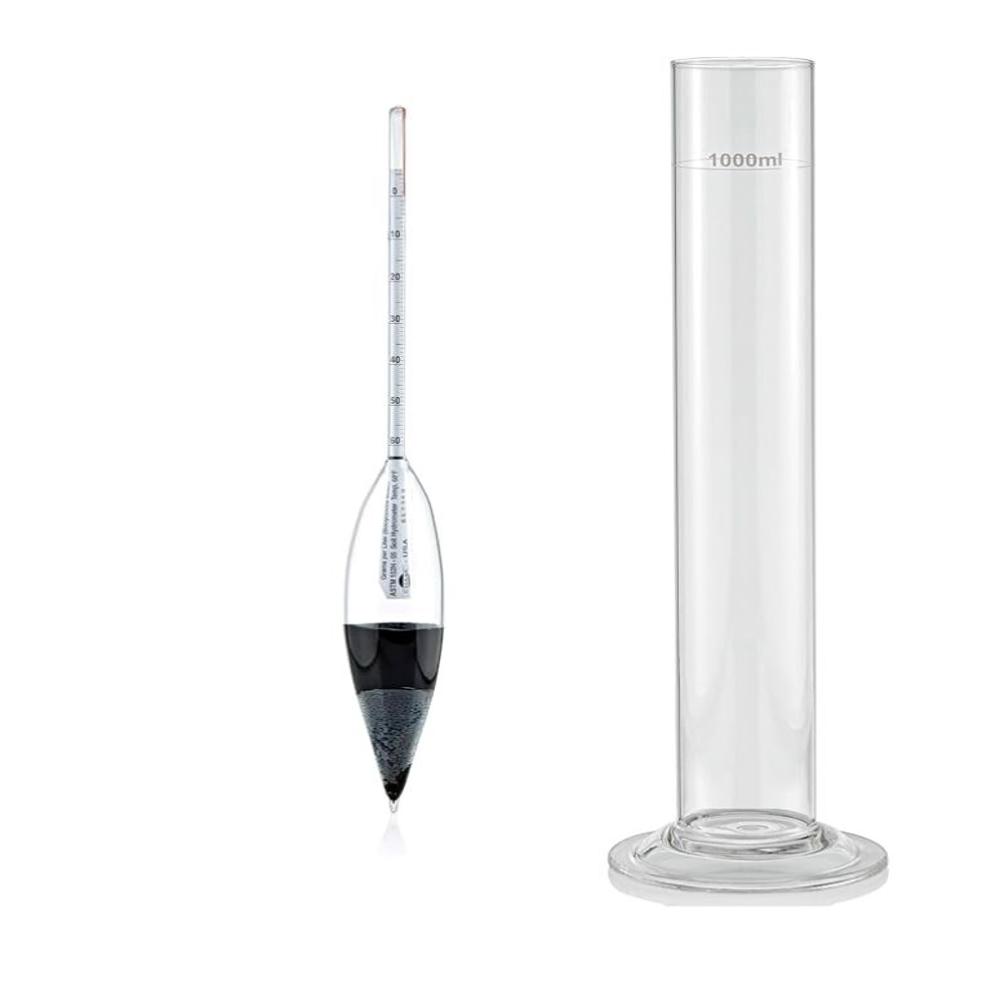
Soil Hydrometer
Price 3500.0 INR/ Piece
MOQ : 1 Piece
Soil Hydrometer Specification
- Response Time
- Within Seconds After Immersion
- Automation Grade
- Manual
- Display Type
- Graduated Glass Stem
- Max Height
- Approximately 300 mm
- Test Range
- 0.995 to 1.030 G/ml
- Mounting Type
- Handheld
- Accuracy
- ±0.001 G/ml
- Application
- Soil Particle Size Analysis
- Measuring Range
- 0.995 to 1.030 G/ml
- Resolution
- 0.0005 G/ml
- Number of Specimens
- Single Sample
- Specimen Size
- 500 ml Suspension Recommended
- Hardness
- Glass Body, Breakable
- Humidity
- 0-100% RH (Operating)
- Features
- Calibrated Stem, Easy to Read Graduations, Mercury Free
- Temperature
- 10-40°C (Operating)
- Usage
- Laboratory, Soil Testing
- Capacity
- Hydrometer Graduated 0.995 to 1.030 G/ml
- Machine Weight
- Approx. 120 g
- Test Speed
- Manual Immersion
- Control Mode
- Manual
- Packaging
- Individual Hard Case
- Stem Graduation
- 0.0005 G/ml
- Dimension
- Approx. 300 mm Length, 20 mm Diameter Maximum
- Calibration
- Traceable to National Standards
- Body Material
- Borosilicate Glass
- Immersion Depth
- Submersible up to Graduation
- Standard Conformity
- ASTM D422 / IS 2720 Part 4
- Equipment Type
- Soil Hydrometer
- Mercury Content
- Mercury Free / Lead Free
- Cleaning
- Washable, Chemical Resistant
Soil Hydrometer Trade Information
- Minimum Order Quantity
- 1 Piece
- FOB Port
- coimbatore
- Payment Terms
- Cash Advance (CA), Cash in Advance (CID)
- Supply Ability
- 1 Piece Per Day
- Delivery Time
- 1 Days
- Sample Available
- No
- Packaging Details
- cotton box
- Main Export Market(s)
- Africa, Asia
- Main Domestic Market
- Andaman and Nicobar Islands, Arunachal Pradesh, Chhattisgarh, Haryana, Himachal Pradesh, All India, South India, Central India, West India, North India, East India, Gujarat, Karnataka, Kerala, Lakshadweep, Mizoram, Meghalaya, Manipur, Andhra Pradesh, Bihar, Chandigarh, Daman and Diu, Goa, Jharkhand, Odisha, Telangana, Tripura, Pondicherry, Uttar Pradesh, Uttarakhand, West Bengal, Punjab, Assam, Delhi, Dadra and Nagar Haveli, Rajasthan, Jammu and Kashmir, Madhya Pradesh, Maharashtra, Nagaland, Sikkim, Tamil Nadu
About Soil Hydrometer
Specification:
Used for grain size analysis of soils where more than 10% of the material will pass through 75 microns B.S. sieve. Manufactured from clear transparent glass having uniform clarity throughout the upper end on which density scale is engraved. The scale range is 0.995 to 1.030 density (gms./cc) at 270C smallest division on the scale is 0.0005.
Note: Hydrometer for other liquids also available.
High Accuracy Soil Analysis
This hydrometer delivers precise measurement with a resolution of 0.0005 G/ml and an accuracy of 0.001 G/ml. Designed for laboratory-based soil particle size analysis, it offers a graduated range from 0.995 to 1.030 G/ml, making it reliable for standard-compliant testing. The calibrated stem ensures trustworthy results for environmental and geotechnical studies.
Safe and Durable Construction
Manufactured from premium borosilicate glass, this hydrometer is both mercury and lead-free, ensuring operator safety and environmental friendliness. Its chemical-resistant, washable design ensures longevity and easy maintenance. The device is protected in an individual hard case, making it portable and secure during transport or storage.
User-Friendly Manual Operation
Engineered for manual immersion and control, this soil hydrometer is simple to use. It is suitable for single sample analysis (recommended 500 ml suspension) and responds within seconds after immersion. The clear glass graduations on the stem provide fast, straightforward readings, meeting the needs of laboratories across India.
FAQ's of Soil Hydrometer:
Q: How is the Soil Hydrometer used for soil particle size analysis?
A: To perform soil particle size analysis, simply prepare a soil suspension (typically 500 ml), immerse the hydrometer to submersion up to the calibrated stem, and read the density directly from the graduated scale. This process, following ASTM D422 or IS 2720 Part 4, provides accurate and rapid measurements for laboratory soil testing.Q: What are the benefits of using a mercury-free, borosilicate glass hydrometer?
A: Using a mercury-free, lead-free hydrometer made from borosilicate glass enhances laboratory safety, environmental friendliness, and chemical resistance. Its robust construction and washability also ensure longevity, while the lack of toxic materials makes disposal and handling safer for all users.Q: When should the hydrometer be calibrated or checked for accuracy?
A: The hydrometer comes calibrated and traceable to national standards, but it's advisable to verify calibration regularly-especially if the device is subjected to heavy use, rough handling, or visible damage. Regular checks maintain measurement precision and compliance with international soil testing standards.Q: Where is this soil hydrometer primarily used?
A: This hydrometer is commonly utilized in soil mechanics laboratories, environmental research institutes, civil engineering labs, and educational settings throughout India, serving dealers, distributors, manufacturers, and more for reliable soil particle size analysis.Q: What is the recommended process for cleaning and maintaining the hydrometer?
A: After each use, gently wash the hydrometer with a mild laboratory detergent and rinse thoroughly with distilled water to prevent contamination. Its chemical-resistant borosilicate glass body makes routine cleaning easy and helps preserve measurement accuracy.Q: Can this hydrometer be used in a wide range of environmental conditions?
A: Yes, the hydrometer operates reliably in humidity conditions ranging from 0-100% RH and temperatures between 10-40C. Its durable construction allows consistent performance in diverse laboratory environments.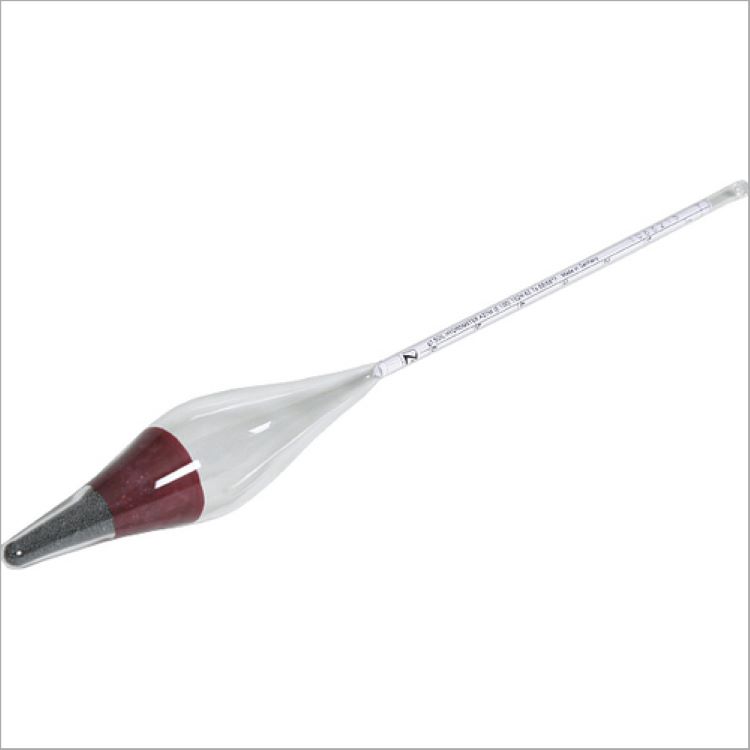
Tell us about your requirement

Price:
Quantity
Select Unit
- 50
- 100
- 200
- 250
- 500
- 1000+
Additional detail
Mobile number
Email

More Products in Soil Testing Equipment Category
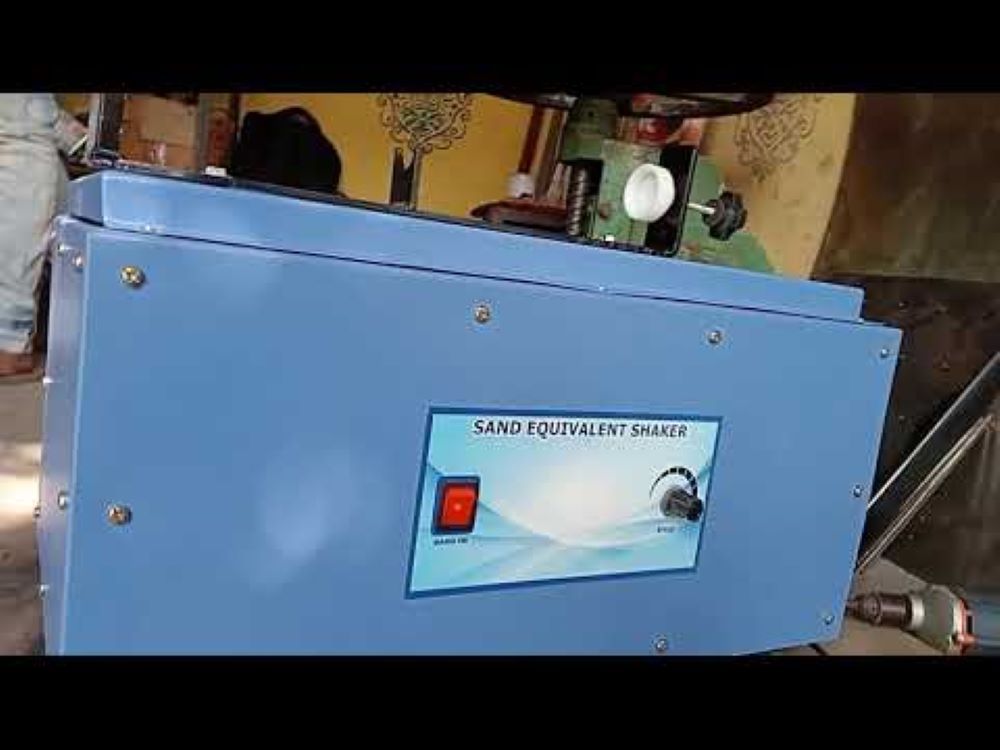
Motorised Sand Equivalent Shaker
Price 35000.0 INR / Piece
Minimum Order Quantity : 1 Piece
Usage : Shaking sand equivalent test specimens
Mounting Type : Floor/Bench Mounted
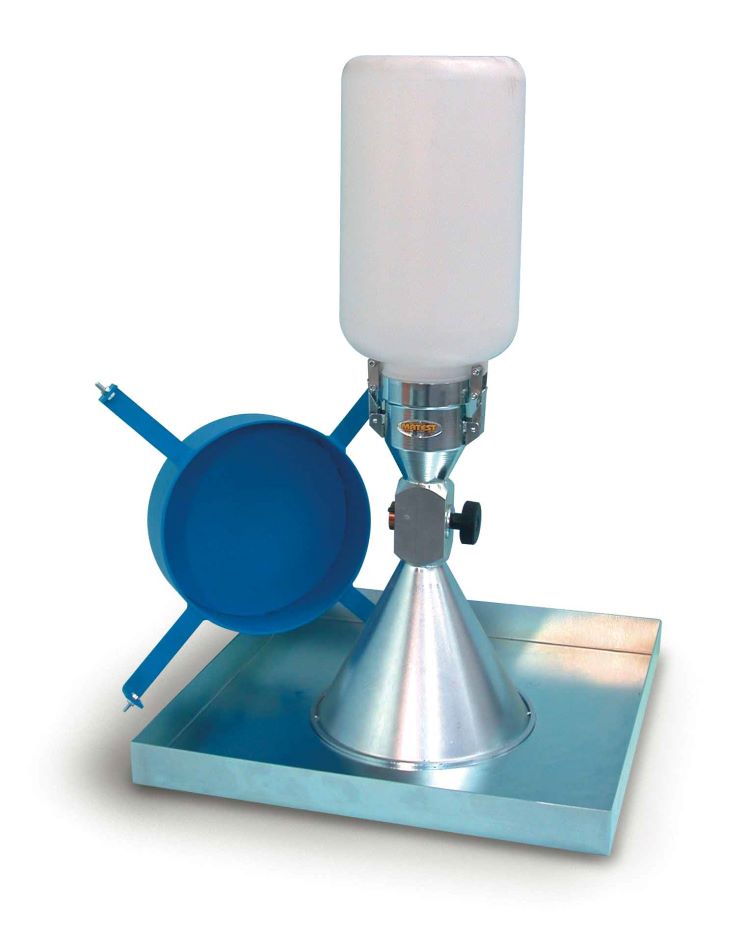
Sand Density Cone Apparatus
Price 7000.0 INR / Piece
Minimum Order Quantity : 1 Piece
Usage : Geotechnical and civil engineering field tests
Mounting Type : Portable, field use
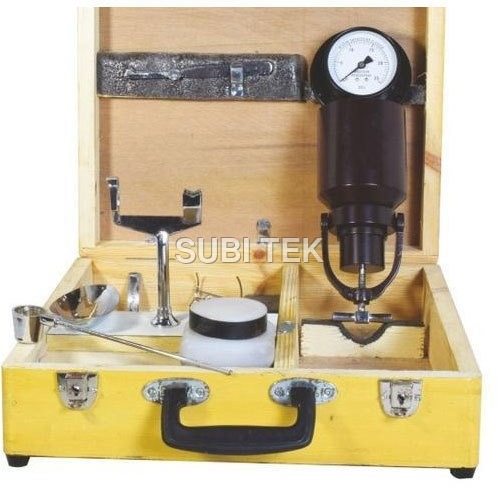
Rapid Moisture Meter
Price 5000 INR / Piece
Minimum Order Quantity : 1 Piece
Usage : Industrial
Material : MS
Color : Yellow
Pycnometer Bottle
Price 550 INR / Piece
Minimum Order Quantity : 1 Piece
Usage : Industrial, Laboratory
Material : Glass
Color : Transparent

We are dealing in Coimbatore, Chennai and Tamilnadu.
 Send Inquiry
Our Products
- Concrete Testing Equipment
- Survey Lab Equipment
- Construction Equipment
- Concrete Testing Machine
- Soil Test Machine
- Survey Instrument
- Auto Level
- Cement Testing Machine
- Soil Testing Equipments
- Soil Testing Equipment
- Civil Engineering Lab Equipment
- Total Station
- Soil Test equipments
- Auto Level
- Concrete Highway Engineering lab
- Mechanical Engineering Lab Equipment
- Weighing Scale
- Laboratory Testing Equipment
- Workshop Trolleys
- Compression Testing Machine
- Water Testing Equipment
- Vertical Milling Machine
- Moulding Products
- CNC Machines
- Measuring Ruler
- Cylinder Carrier
- Core Cutting Machine
- Digital Measuring Machine
- Hydraulic Jack
- Drawing Instruments
- Fuel Testing Equipment
- Dynamics Lab Equipment
- Hydraulics and Fluid Mechanics Lab Equipment
- Heat Transfer Lab Equipment
- Scientific Equipment
- Surgical Equipment
- Hot Air Oven
- Impact Testing Machine
- Torsion Testers
- Bernoullis Theorem Apparatus
- Wooden Tripod
- Liquid Mercury
- Vibrating Table
- Material Testing Equipment
- Agriculture Equipment
- Waste Water Analysis

SF No. 189/1B1A, 191/3A1A1E, Sidco Private Industrial Estate, LIC Colony, Kurichi Pudhu Nagar, Kuruchi Housing,Coimbatore - 641021, Tamil Nadu, India

Mr Balamurugan C
(Manager)
Mobile :07313727211
 Send Inquiry
 Send SMS
Developed and Managed by Infocom Network Private Limited.
