About Dead Weight Type Oil & Water Constant Pressure System
Specification:
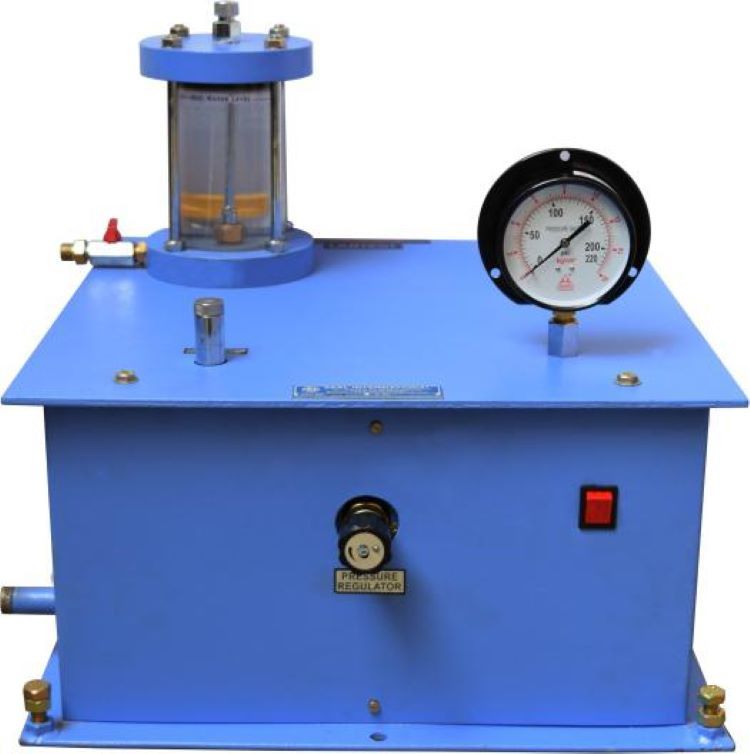
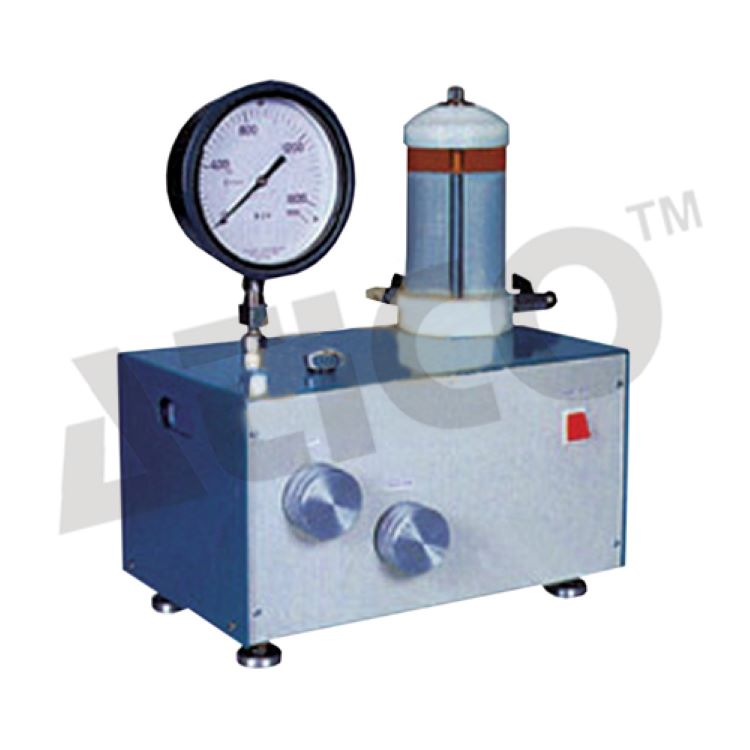
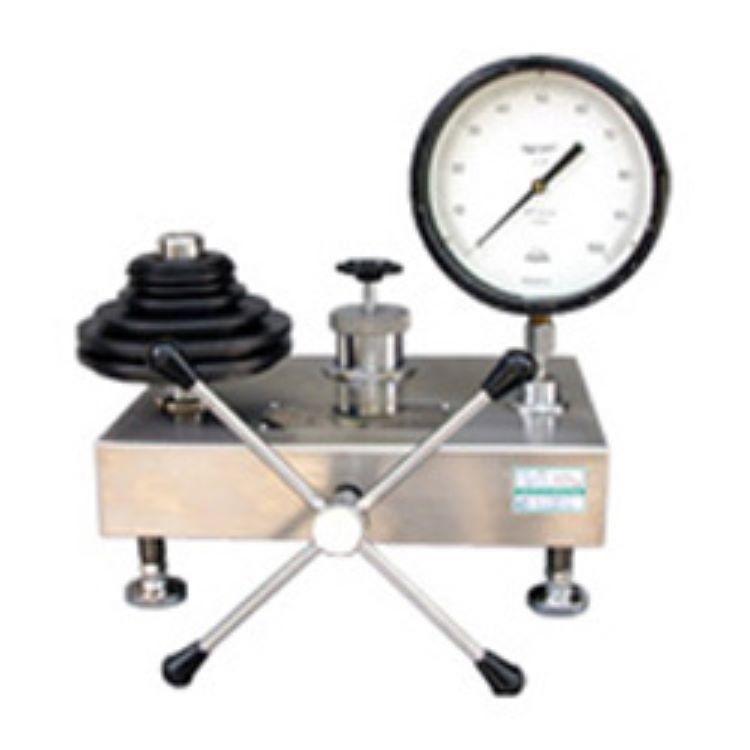
This device is used to maintain cell pressure constant for a long duration and the system can be used in place of conventional constant pressure system using mercury pots where certain minimum heights are required. Problems like de-airation of pump, leakage of mercury etc. is eliminated in this system . This unit is smaller in volume and can be used in mobile laboratory also. This can maintain pressure in the cell upto 20kg/cm sq. Pressure is maintained constant in the system by a balancing calibrated weights on a spindle against a column of oil, operating under constant feed back.
Construction:
The system consists of an oil pump continuously driven by an electric motor during the test period. The internal components are housed in a strong compact housing. The piston on which weights are kept rotates with minimum friction. A transparent oil water vessel is provided to transmit pressure to the cell. A hand pump provided facilitates priming and to maintain constant pressure during power failure
Specification :
- Range 0-20 bar(0-20kg/cm2)
- Steps of pressure 0.5bar (0.5kg/cm2)
- Accuracy + 0.5%
- Electric supply 230V, Single Phase, 50Hz, AC supply.
Supplied complete with pressure gauge, flow valves, connecting pressure hose and set of weights to give maximum pressure of 20 bar (20 kg/cm2)
Versatile Media CompatibilitySupporting both mineral oil and distilled water, this system accommodates various calibration needs. The anti-corrosive construction and robust design ensure dependable operation with a range of pressure media, making it suitable for diverse testing environments.
Precision Engineering & Safety FeaturesEquipped with high-precision weights and a meticulously machined piston-cylinder assembly, this device guarantees measurement accuracy up to 0.1% of full-scale range. Overpressure protection mechanisms safeguard both the equipment and user during high-pressure tests.
Ease of Use and PortabilityWeighing approximately 50 kg and featuring a tabletop, compact build, the system is ideal for onsite testing. Its manual and automatic control modes, panel-mounted interface, and low maintenance requirements ensure user-friendly operation in both laboratory and industrial settings.
FAQ's of Dead Weight Type Oil & Water Constant Pressure System:
Q: How does the dead weight piston mechanism generate pressure in this system?
A: The dead weight type system utilizes calibrated, non-magnetic stainless steel weights placed on a precision-machined piston. As the weights apply force, pressure is generated in the oil or water-filled chamber, allowing precise calibration of pressure gauges up to 100 bar.
Q: What types of gauges can be calibrated with this constant pressure system?
A: This equipment is designed to calibrate a wide range of laboratory and industrial pressure gauges compatible with oil or water, especially those operating within a 0 to 100 bar measuring range.
Q: When should I use oil versus water as the calibration medium?
A: Oil is typically used for general gauge calibration due to its stable properties and low risk of corrosion, while distilled water is preferred when gauge materials are sensitive to oils or where contamination must be minimized.
Q: Where can this system be used effectively?
A: Its robust, portable design makes it suitable for both laboratory and industrial settings. It is ideal for onsite gauge calibration due to its manageable size, portability, and straightforward operation.
Q: What is the process for maintaining the constant pressure system?
A: Routine maintenance involves cleaning the piston-cylinder assembly, checking overpressure protection devices, and ensuring the weights are free from contaminants. The low-maintenance design allows users to easily service the equipment and ensure continued measurement accuracy.
Q: What benefits does the overpressure protection feature provide?
A: The overpressure protection system helps prevent accidental overloading, ensuring user safety, prolonging equipment lifespan, and maintaining the integrity of sensitive pressure gauges during calibration.
Q: Is data logging available with this system, and how does it work?
A: Yes, optional digital output for data logging is available on select models. This feature enables users to record calibration data in real time, facilitating analysis, traceability, and reporting for regulatory or quality assurance purposes.








 Send Inquiry

 Send Inquiry