
Call us now :07313727211
 Send Inquiry
 Send Inquiry
Standard Compaction Test (BS Version)
Price 9000.0 INR/ Piece
MOQ : 1 Piece
Standard Compaction Test (BS Version) Specification
- Resolution
- 0.1 mm
- Measuring Range
- Moisture-Density Relationship
- Operating Voltage
- 220 V
- Specimen Size
- 100 mm or 150 mm diameter
- Response Time
- < 1 sec
- Port Size
- Standard Port
- Number of Specimens
- Single
- Test Range
- Standard Compaction as per BS: 1377
- Mounting Type
- Bench / Table Mount
- Humidity
- Ambient
- Interface Type
- Keypad / Manual Switch
- Hardness
- High-grade steel components
- Automation Grade
- Manual / Semi-Automatic
- Power Supply
- 220 V AC, 50 Hz
- Features
- Robust construction, Adjustable drop height, Conforms to BS specifications
- Application
- Soil Compaction Test
- Temperature
- Room Temperature
- Frequency
- 50 Hz
- Accuracy
- ± 0.1 mm stroke
- Max Height
- 800 mm
- Display Type
- Analog Digital Indicator
- Usage
- Laboratory Soil Compaction Assessment
- Capacity
- Maximum 4.5 kg with hammer
- Machine Weight
- Approx. 65 kg
- Test Speed
- 47 blows/min
- Test Width
- Standard - as per BS Specification
- Test Stroke
- 300 mm
- Control Mode
- Manual/Automatic options
- Mould Material
- Heavy-duty plated steel
- User Manual
- Included
- Service Warranty
- 12 months
- Calibration
- Factory calibrated, certificate provided
- Safety Mechanism
- Hammer lock and guard
- Compliance
- Conforms to BS 1377: Part 4
- Equipment Type
- Standard Compaction Testing Machine (BS Version)
- Drop Weight
- 2.5 kg and 4.5 kg interchangeable hammers
- Finish
- Powder-coated, corrosion-resistant
- Accessory Pack
- Compaction mould, rammer, tamper included
- Noise Level
- < 65 dB
Standard Compaction Test (BS Version) Trade Information
- Minimum Order Quantity
- 1 Piece
- FOB Port
- coimbatore
- Payment Terms
- Cash Advance (CA), Cash in Advance (CID)
- Supply Ability
- 1 Piece Per Day
- Delivery Time
- 1 Days
- Sample Available
- No
- Packaging Details
- cottonbox
- Main Export Market(s)
- Asia, Africa
- Main Domestic Market
- Karnataka, All India, Tripura, Pondicherry, Uttar Pradesh, Uttarakhand, West Bengal, Andhra Pradesh, Bihar, South India, Central India, West India, North India, East India, Gujarat, Kerala, Manipur, Lakshadweep, Mizoram, Meghalaya, Delhi, Dadra and Nagar Haveli, Andaman and Nicobar Islands, Arunachal Pradesh, Sikkim, Chandigarh, Daman and Diu, Goa, Jharkhand, Odisha, Punjab, Assam, Chhattisgarh, Haryana, Himachal Pradesh, Jammu and Kashmir, Madhya Pradesh, Maharashtra, Nagaland, Rajasthan, Tamil Nadu, Telangana
About Standard Compaction Test (BS Version)
Specification:
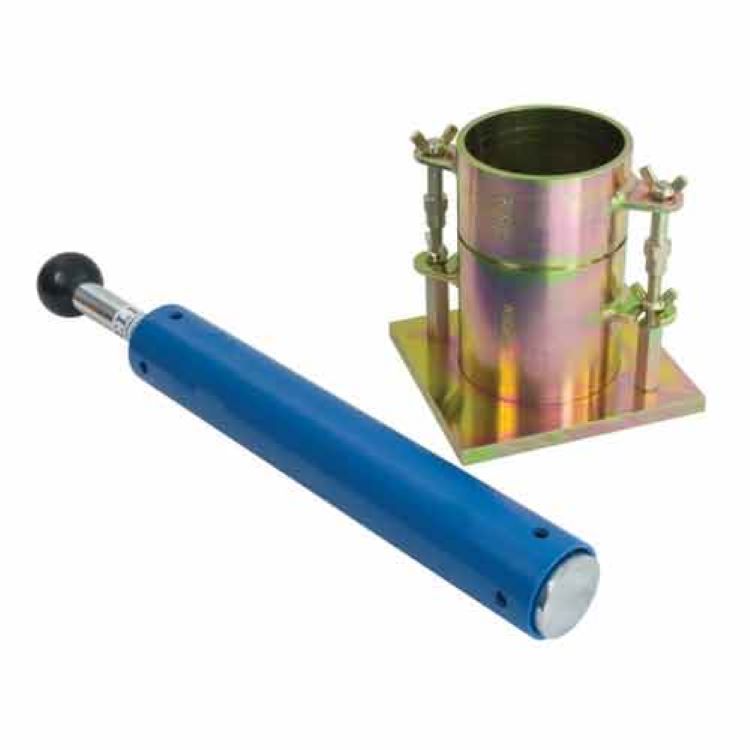
The apparatus consists one each of compaction mould steel, 105mm I.D. x 115.5mm height x 1000 cc. volume, complete with collar and base plate. Compaction Rammer is 2.5 kgs. in weight x 300mm controlled fall. Face of the rammer is 50mm
Equipment Specifications
- Mould: A cylindrical metal mould with a 100 mm internal diameter and 127.3 mm height, providing a volume of 1000 cm. A collar and a detachable base plate are also included.
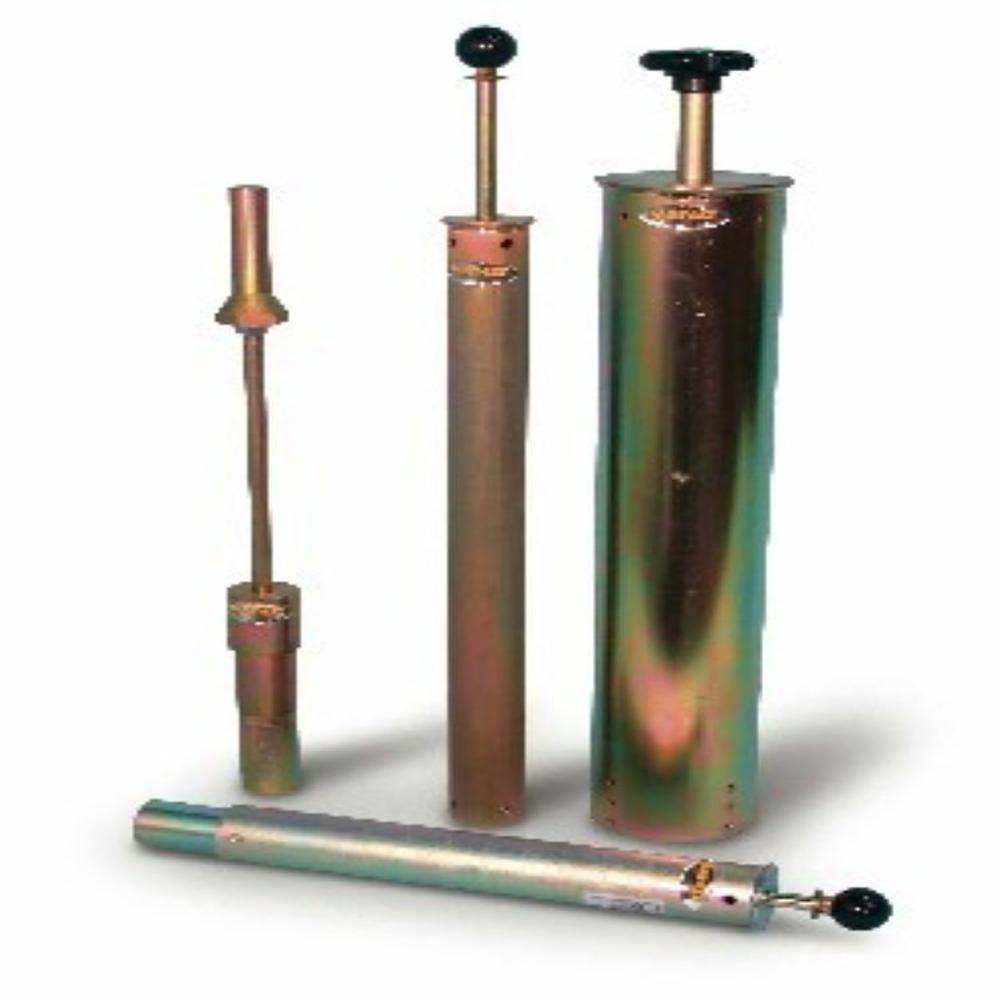
- Rammer: A 2.6 kg (5.7 lbs) metal rammer with a guide sleeve and vent holes for controlled operation and uniform energy.
- Blow Count: The rammer is designed to deliver a controlled drop of 310 mm.
- Blows per Layer: Each layer is compacted with 25 blows.
Procedure Summary
-
The soil sample is passed through a 20 mm sieve and mixed with a controlled amount of water.
-
The soil is placed into the mould in three equal layers.
-
The rammer is dropped from the specified height (310 mm) to compact each layer.
-
After compaction, the mould is cleaned and weighed to determine the mass of the compacted soil. A separate sample is dried in an oven to determine the moisture content.
-
The dry density and moisture content are calculated for each trial to develop the dry density versus moisture content curve.
Purpose
The standard compaction test establishes the relationship between the moisture content and the dry density of a soil, determining its maximum dry density and optimum moisture content. This information is crucial for achieving the required density and strength of compacted soil in civil engineering projects like dams, embankments, and highways.
Precision Compaction Testing
Designed to deliver accurate soil compaction results, this machine meets the stringent requirements of BS 1377: Part 4. Its robust construction and adjustable drop height ensure consistent test outcomes with both 2.5 kg and 4.5 kg hammers, catering to varied soil types and laboratory standards.
Comprehensive Safety and Usability
Safety features include an integrated hammer lock and protective guard, ensuring operator security during operation. The machine's intuitive interface, user manual, and accessory pack support ease of use, making it suitable for both manual and semi-automatic testing workflows.
Quality Assurance and Compliance
Factory calibration with certification guarantees measurement reliability, while the powder-coated steel finish offers lasting corrosion resistance. Noise emissions below 65 dB and compliance with BS standards affirm its suitability for professional laboratory environments.
FAQ's of Standard Compaction Test (BS Version):
Q: How is the Standard Compaction Testing Machine operated for soil assessment?
A: The machine can be operated in manual or automatic mode using the provided keypad and switches. Users place the soil specimen in the supplied mould, set the desired drop weight (2.5 kg or 4.5 kg), and initiate compaction at a test speed of 47 blows per minute for precise moisture-density relationship evaluation.Q: What accessories are included with the compaction machine upon purchase?
A: The accessory pack contains a compaction mould (100 mm or 150 mm diameter), rammer, and tamper, all needed for standard soil compaction tests. A user manual and factory calibration certificate are also provided for guidance and quality assurance.Q: When should I calibrate or service the compaction machine?
A: Factory calibration is provided during delivery. For optimal performance, it is recommended to have the machine recalibrated annually. The product comes with a 12-month service warranty, covering necessary maintenance during this period.Q: Where is this equipment commonly used?
A: This compaction testing machine is primarily utilized in laboratory settings, often by dealers, distributors, exporters, manufacturers, and research institutions involved in soil analysis. Its bench or table-mount design supports installation in most laboratory environments.Q: What benefits does the hammer lock and guard safety mechanism offer?
A: The integrated hammer lock and guard protect users by preventing accidental release of the hammer and reducing risk during operation, enabling safer and more controlled compaction processes.Q: Does the machine conform to specific standards or regulations?
A: Yes, the device strictly adheres to BS 1377: Part 4 specifications, guaranteeing accuracy, reliability, and industry compliance for soil compaction testing in professional environments.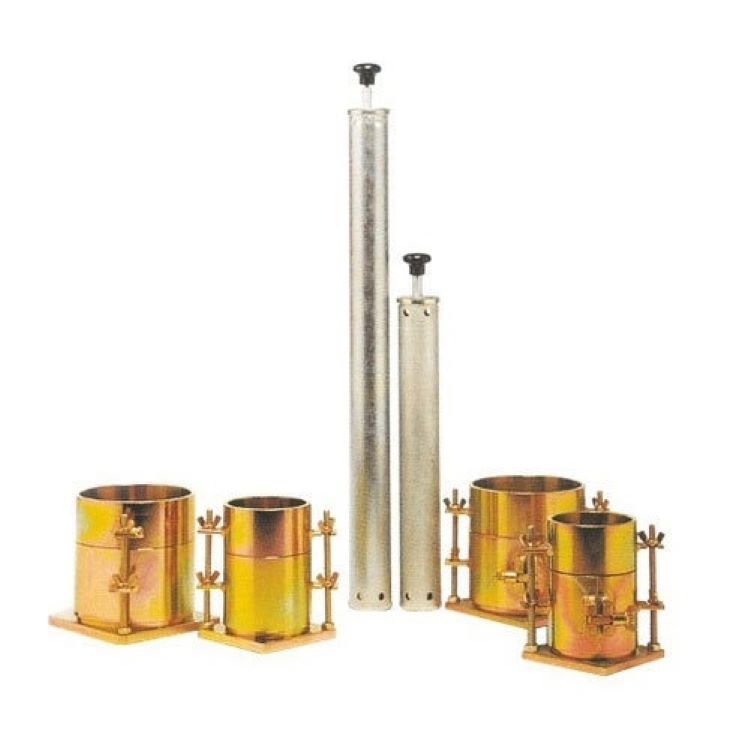
Tell us about your requirement

Price:
Quantity
Select Unit
- 50
- 100
- 200
- 250
- 500
- 1000+
Additional detail
Mobile number
Email

More Products in Soil Testing Equipment Category
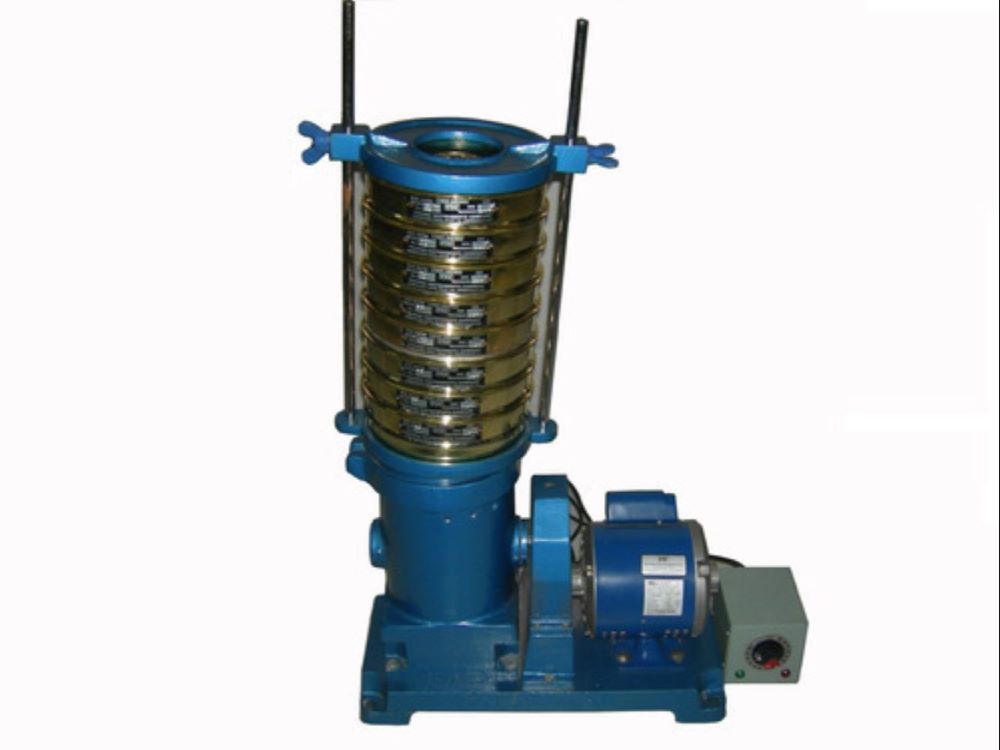
Rotatap Motorized Sieve Shakers
Price 20000.0 INR
Minimum Order Quantity : 1 Piece
Usage : Particle size distribution analysis
Power Supply : 220 V AC, 50 Hz single phase
Mounting Type : Bench top
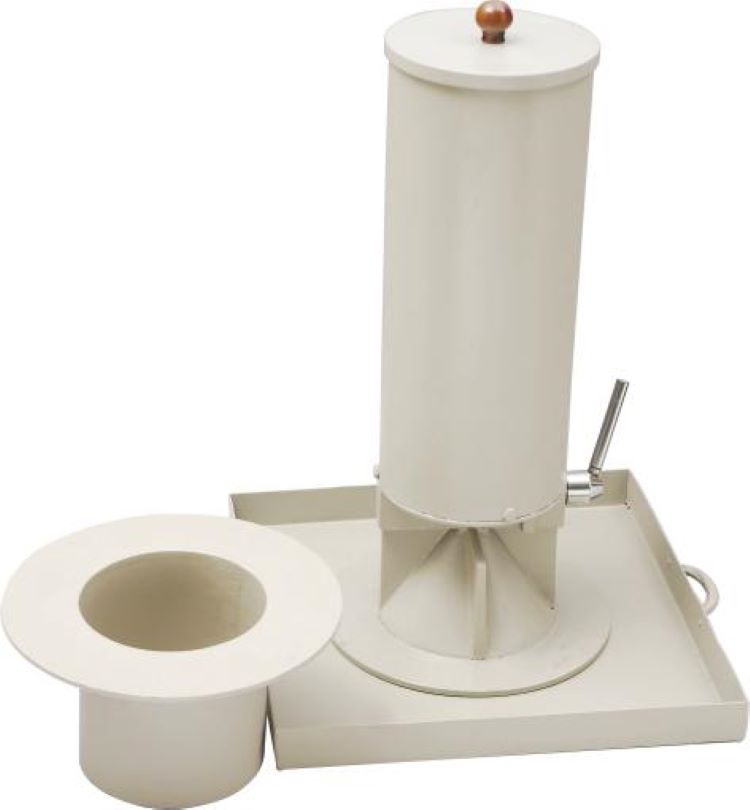
Sand Pouring Cylinder - BS
Price 8000.0 INR / Piece
Minimum Order Quantity : 1 Piece
Usage : Civil Engineering, Lab and Field Testing of Soil
Mounting Type : Portable/Handheld
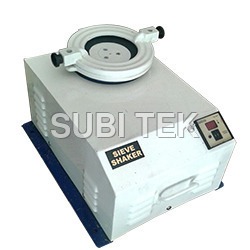
Sieve Shaker
Price 22000 INR / Piece
Minimum Order Quantity : 1 Piece
Power Supply : Electric
Color : Silver
Mounting Type : Floor Mounting
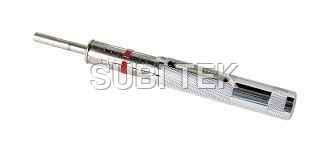
Pocket Penetrometer
Price 2200 INR / Piece
Minimum Order Quantity : 1 Piece
Usage : Industrial
Power Supply : Manual
Color : Silver

We are dealing in Coimbatore, Chennai and Tamilnadu.
 Send Inquiry
Our Products
- Concrete Testing Equipment
- Survey Lab Equipment
- Construction Equipment
- Concrete Testing Machine
- Soil Test Machine
- Survey Instrument
- Auto Level
- Cement Testing Machine
- Soil Testing Equipments
- Soil Testing Equipment
- Civil Engineering Lab Equipment
- Total Station
- Soil Test equipments
- Auto Level
- Concrete Highway Engineering lab
- Mechanical Engineering Lab Equipment
- Weighing Scale
- Laboratory Testing Equipment
- Workshop Trolleys
- Compression Testing Machine
- Water Testing Equipment
- Vertical Milling Machine
- Moulding Products
- CNC Machines
- Measuring Ruler
- Cylinder Carrier
- Core Cutting Machine
- Digital Measuring Machine
- Hydraulic Jack
- Drawing Instruments
- Fuel Testing Equipment
- Dynamics Lab Equipment
- Hydraulics and Fluid Mechanics Lab Equipment
- Heat Transfer Lab Equipment
- Scientific Equipment
- Surgical Equipment
- Hot Air Oven
- Impact Testing Machine
- Torsion Testers
- Bernoullis Theorem Apparatus
- Wooden Tripod
- Liquid Mercury
- Vibrating Table
- Material Testing Equipment
- Agriculture Equipment
- Waste Water Analysis

SF No. 189/1B1A, 191/3A1A1E, Sidco Private Industrial Estate, LIC Colony, Kurichi Pudhu Nagar, Kuruchi Housing,Coimbatore - 641021, Tamil Nadu, India

Mr Balamurugan C
(Manager)
Mobile :07313727211
 Send Inquiry
 Send SMS
Developed and Managed by Infocom Network Private Limited.
