
Call us now :07313727211
 Send Inquiry
 Send Inquiry
Index Apparatus (Flow Coefficient Of Fine Aggregates)
Price 50000.0 INR/ Piece
MOQ : 1 Piece
Index Apparatus (Flow Coefficient Of Fine Aggregates) Specification
- Temperature
- Ambient
- Features
- Easy to Use, Portable, Standardized for Laboratory Testing
- Response Time
- Immediate, as per operator
- Resolution
- Manual Measurement (Stopwatch/Graduated Cylinder)
- Humidity
- Ambient
- Display Type
- Analog (Graduated Cylinder/Stopwatch)
- Equipment Type
- Index Apparatus (Flow Coefficient of Fine Aggregates)
- Automation Grade
- Manual
- Accuracy
- As per IS Specification
- Port Size
- Discharge Port 10 mm
- Measuring Range
- Standard Specified by IS:2386 (Part I) 1963
- Number of Specimens
- 1 at a Time
- Test Range
- Suitable for Fine Aggregates
- Application
- To determine the flow coefficient of fine aggregates
- Hardness
- Rigid, Durable Body
- Interface Type
- Manual
- Mounting Type
- Table Top
- Specimen Size
- 1 Liter (Standard Sample)
- Max Height
- Approx. 400 mm
- Usage
- Laboratory Testing of Fine Aggregate Flow Coefficient
- Capacity
- About 1 Liter
- Machine Weight
- Approx. 5 kg
- Test Speed
- Manual Operation
- Test Width
- Standard Funnel 80 mm Diameter
- Control Mode
- Manual
- Discharge Height
- Approx. 50 mm above base
- Included Accessories
- Measuring Cylinder, Stand, Stopwatch
- Cup Height
- 90 mm (as per IS Standard)
- Funnel Material
- Brass or Gunmetal
- Service Support
- Available On Request
- Standard Conformance
- IS:2386 (Part I) 1963
- Body Finish
- Polished/Corrosion resistant
- Cleaning Method
- Manual Cleaning
- Cup Diameter
- 80 mm (as per IS Standard)
Index Apparatus (Flow Coefficient Of Fine Aggregates) Trade Information
- Minimum Order Quantity
- 1 Piece
- FOB Port
- coimbatore
- Payment Terms
- Cash Advance (CA), Cash in Advance (CID)
- Supply Ability
- 1 Piece Per Day
- Delivery Time
- 1 Days
- Sample Available
- No
- Packaging Details
- cotton box
- Main Export Market(s)
- Asia, Africa
- Main Domestic Market
- Madhya Pradesh, Nagaland, Rajasthan, Sikkim, Tamil Nadu, Telangana, Tripura, Pondicherry, Uttar Pradesh, Uttarakhand, West Bengal, Daman and Diu, Goa, All India, South India, Central India, West India, North India, East India, Gujarat, Karnataka, Kerala, Lakshadweep, Mizoram, Meghalaya, Manipur, Andhra Pradesh, Bihar, Chandigarh, Jharkhand, Odisha, Punjab, Assam, Delhi, Dadra and Nagar Haveli, Andaman and Nicobar Islands, Arunachal Pradesh, Chhattisgarh, Haryana, Himachal Pradesh, Jammu and Kashmir, Maharashtra
About Index Apparatus (Flow Coefficient Of Fine Aggregates)
Specification:
Efflux Index (Flow Coefficient of Fine Aggregates) apparatus is used to obtain information about the shape and the angularity of grains of fine aggregates.
The flow coefficient of an aggregate is the time, expressed in seconds, for a specified volume of aggregate to flow through a given opening, under specified conditions using a standard apparatus.
Efflux index (flow coefficient of fine aggregates) apparatus consist of two funnels with different opening, cylindrical hopper, metal stand with a shutter and metal container.
Dimensions (in mm) : 150 x 180 x 410
Weight Capacity : 5 Kg
Precision Testing for Fine Aggregates
Engineered for laboratory environments, the Index Apparatus facilitates standardized testing of fine aggregate flow coefficients. Following IS:2386 (Part I)-1963, it enables accurate, reliable measurements essential for quality control and research.
Durable and User-Friendly Design
Constructed from polished brass or gunmetal, the Index Apparatus offers a corrosion-resistant body ensuring longevity. Its manual operation is straightforward, with accessories like a measuring cylinder and stopwatch provided for optimal user experience during laboratory procedures.
Comprehensive Laboratory Application
Ideal for material laboratories, the apparatus measures the flow properties of fine aggregates with high accuracy, benefiting manufacturers, suppliers, and researchers. It supports single-specimen testing and manual data collection as per IS specifications.
FAQ's of Index Apparatus (Flow Coefficient Of Fine Aggregates):
Q: How is the Index Apparatus used to measure the flow coefficient of fine aggregates?
A: The Index Apparatus is used by placing a 1-liter fine aggregate sample into the standard funnel and timing the flow using a stopwatch. The discharged aggregate is collected in a measuring cylinder, and the value is recorded as per IS:2386 (Part I)-1963 guidelines.Q: What benefits does using a standardized apparatus offer during laboratory testing?
A: Utilizing a standardized apparatus like this ensures consistent and comparable results, meeting IS specifications for quality and reliability. Its design and resolution support precise manual measurement essential for regulatory and research purposes.Q: When should the Index Apparatus be cleaned and how is manual cleaning conducted?
A: Manual cleaning should be performed after each use to maintain accuracy and prevent cross-contamination. Rinse all parts with water, remove fine aggregate residues, and dry thoroughly before storing the equipment.Q: Where is this apparatus typically used and who can benefit from it?
A: The Index Apparatus is predominantly used in material testing laboratories in India for analyzing fine aggregates. Manufacturers, suppliers, distributors, and researchers utilize this equipment for quality assessment and conformity to IS standards.Q: What accessories are included with the Index Apparatus for effective testing?
A: The apparatus comes equipped with a brass or gunmetal funnel, a measuring cylinder, a stand, and a stopwatch, ensuring all necessary components are available for immediate, standard-compliant testing.Q: What is the process for determining the flow coefficient using this equipment?
A: The procedure involves filling the funnel with the specimen, releasing it through the 10 mm discharge port, collecting it in the cylinder, and measuring the flow time and quantity. Results are calculated based on the IS:2386 specification guidelines.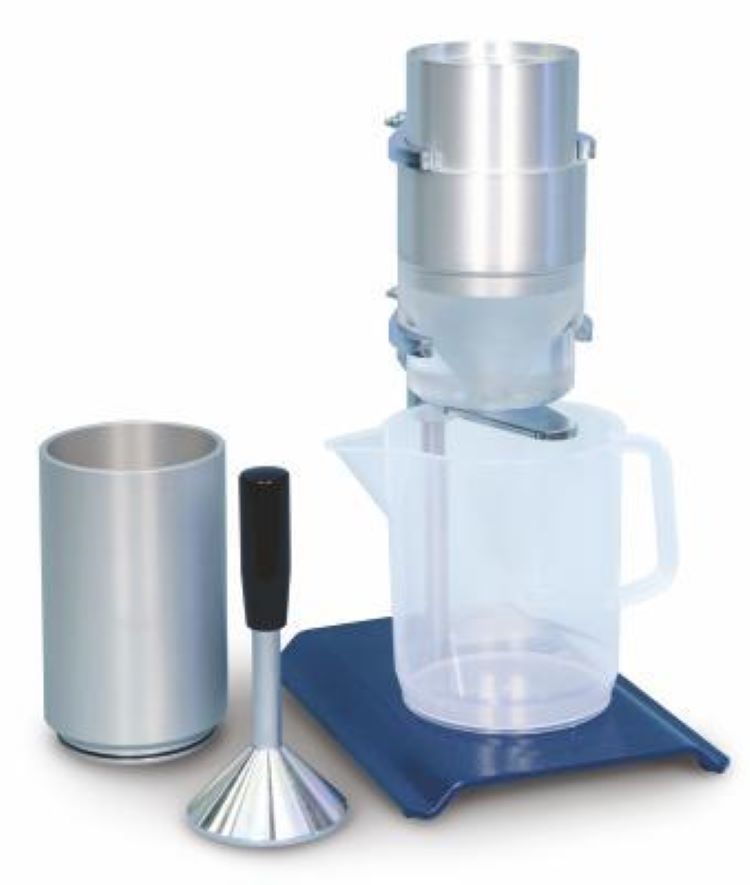
Tell us about your requirement

Price:
Quantity
Select Unit
- 50
- 100
- 200
- 250
- 500
- 1000+
Additional detail
Mobile number
Email

More Products in Concrete Highway Engineering lab Category
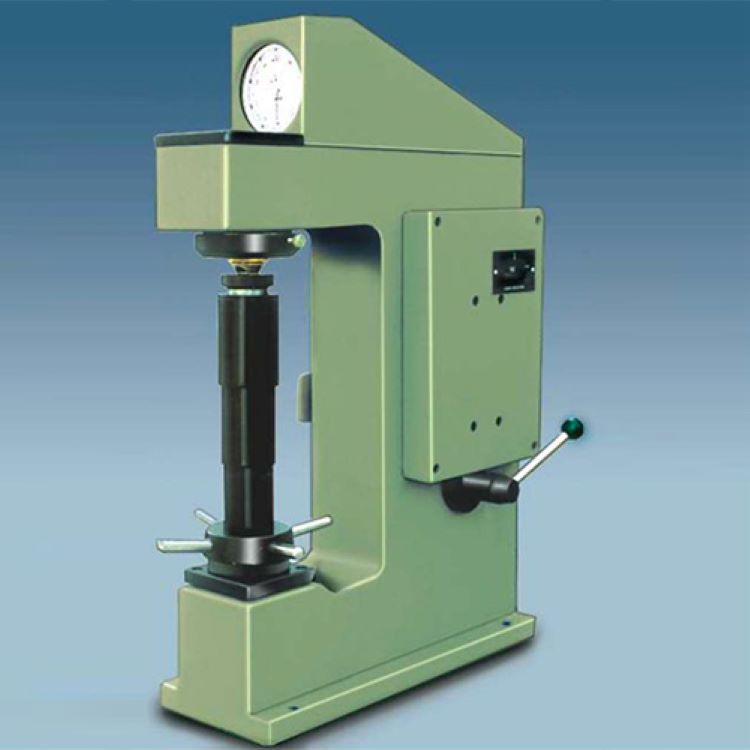
Rockwell Hardness Tester
Price 100000.0 INR / Piece
Minimum Order Quantity : 1 Piece
Usage : Hardness testing of metals and alloys
Mounting Type : Benchtop
Power Supply : 230V, 50Hz, Single Phase AC
Test Range : 20100 HRB, 2070 HRC
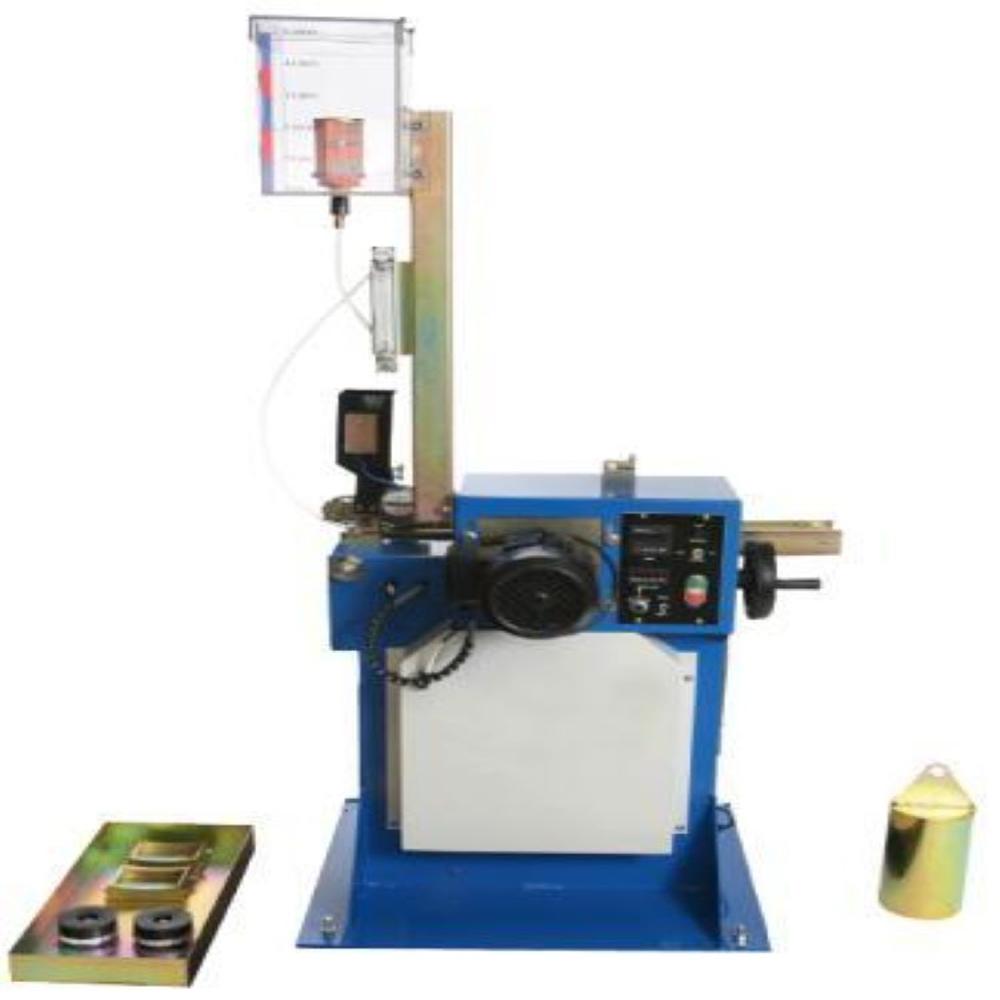
Accelerated Polishing Machine
Price 50000.0 INR / Piece
Minimum Order Quantity : 1 Piece
Usage : Laboratory, Aggregate Testing
Mounting Type : Floor Mounted
Power Supply : 220 V AC, 50 Hz
Test Range : Varied according to specimen
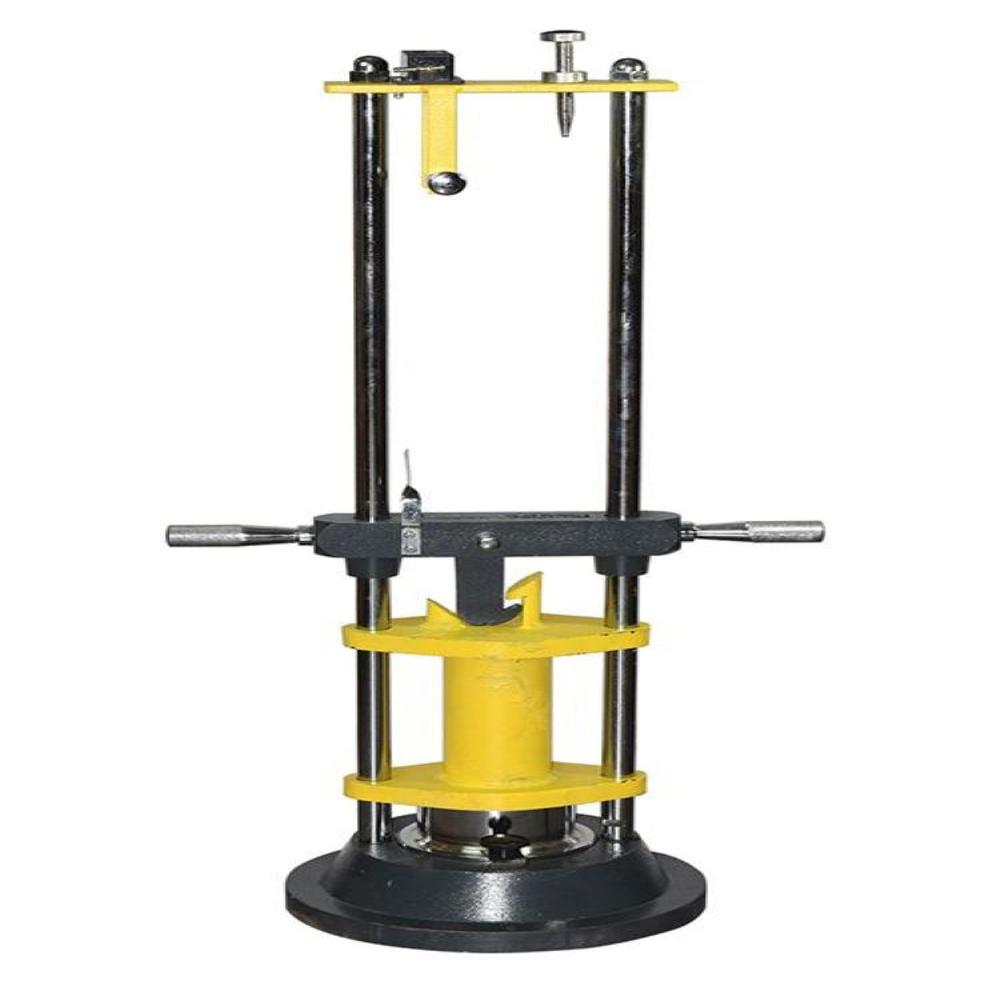
Aggregate Impact Tester With Blow Counter
Price 14000.0 INR / Piece
Minimum Order Quantity : 1 Piece
Usage : Aggregate Impact Testing as per IS: 2386 (Part 4) 1963
Mounting Type : Benchtop/Laboratory Table Mount
Power Supply : 230 V AC, 50 Hz
Test Range : Aggregate Impact Value (AIV): 0100%
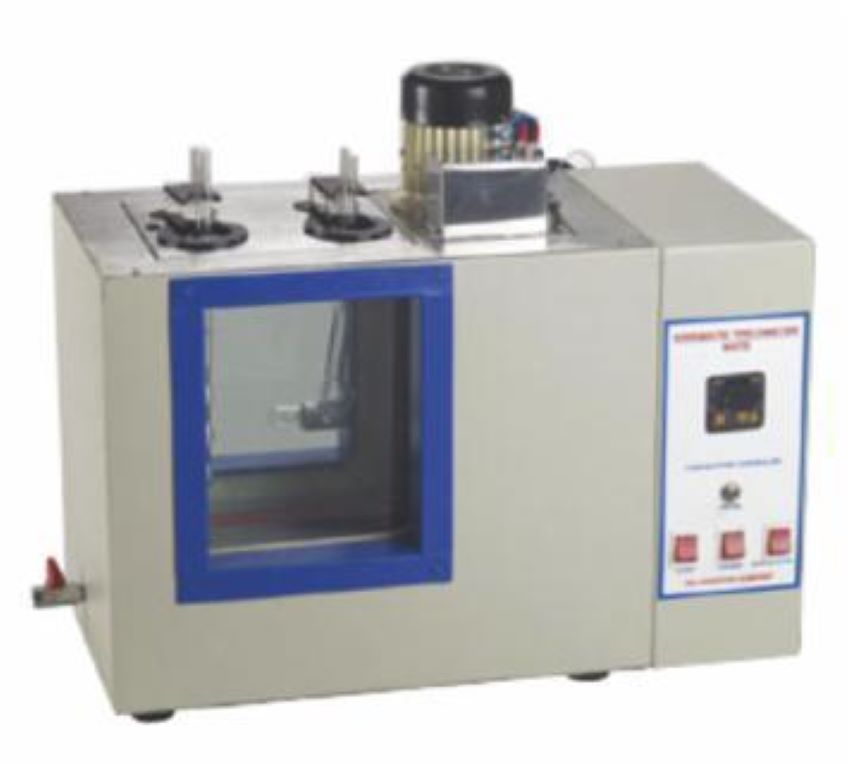
Kinematic Viscometer Bath
Price 30000.0 INR
Minimum Order Quantity : 1 Piece
Usage : Laboratory viscosity measurements
Mounting Type : Tabletop / Benchtop
Power Supply : 230V AC, 50 Hz
Test Range : 1 1000 cSt (typical, depends on bath type)

We are dealing in Coimbatore, Chennai and Tamilnadu.
 Send Inquiry
Our Products
- Concrete Testing Equipment
- Survey Lab Equipment
- Construction Equipment
- Concrete Testing Machine
- Soil Test Machine
- Survey Instrument
- Auto Level
- Cement Testing Machine
- Soil Testing Equipments
- Soil Testing Equipment
- Civil Engineering Lab Equipment
- Total Station
- Soil Test equipments
- Auto Level
- Concrete Highway Engineering lab
- Mechanical Engineering Lab Equipment
- Weighing Scale
- Laboratory Testing Equipment
- Workshop Trolleys
- Compression Testing Machine
- Water Testing Equipment
- Vertical Milling Machine
- Moulding Products
- CNC Machines
- Measuring Ruler
- Cylinder Carrier
- Core Cutting Machine
- Digital Measuring Machine
- Hydraulic Jack
- Drawing Instruments
- Fuel Testing Equipment
- Dynamics Lab Equipment
- Hydraulics and Fluid Mechanics Lab Equipment
- Heat Transfer Lab Equipment
- Scientific Equipment
- Surgical Equipment
- Hot Air Oven
- Impact Testing Machine
- Torsion Testers
- Bernoullis Theorem Apparatus
- Wooden Tripod
- Liquid Mercury
- Vibrating Table
- Material Testing Equipment
- Agriculture Equipment
- Waste Water Analysis

SF No. 189/1B1A, 191/3A1A1E, Sidco Private Industrial Estate, LIC Colony, Kurichi Pudhu Nagar, Kuruchi Housing,Coimbatore - 641021, Tamil Nadu, India

Mr Balamurugan C
(Manager)
Mobile :07313727211
 Send Inquiry
 Send SMS
Developed and Managed by Infocom Network Private Limited.
