
Call us now :07313727211
 Send Inquiry
 Send Inquiry
High Capacity 4 Column Automatic Compression Testing Machine
Price 1550000 INR/ Piece
MOQ : 1 Piece
High Capacity 4 Column Automatic Compression Testing Machine Specification
- Features
- Automatic loading, digital display, safety enclosure, data storage, USB connectivity
- Frequency
- 50 Hz
- Display Type
- Digital / Touch Screen
- Dimension (L*W*H)
- 980 x 600 x 1550 mm
- Gauge
- Digital Load Gauge
- Product Type
- Automatic Compression Testing Machine
- Voltage
- 415 V AC
- Control Mode
- Fully Automatic (Microprocessor Based)
- Power Supply
- AC Mains
- Power
- 3 kW
- Accuracy
- Class 1 as per IS:1828/BS:1610
- Phase
- Three Phase
- Stroke
- 100 mm
- Load Power
- Electric
- Weight
- Approx. 1300 kg
- Usage & Applications
- Laboratory, Cement, Concrete Compression Testing, Civil Engineering
- Frame Type
- 4 Column Rigid Frame
- Speed Range
- 0.1 - 10 mm/min
- Capacity
- 2000 kN (200 Ton)
- Color
- White
- Automation Grade
- Automatic
- Safety Feature
- Overload & Over Travel Protection
- Platen Size
- 225 mm diameter
- Operating Temperature Range
- +5°C to +45°C
- Language Support
- Multilingual Display Options
- Maximum Platen Separation
- 320 mm
- Oil Pressure Gauge
- Digital
- Hydraulic Oil Tank Capacity
- 20 liters
- Sample Types
- Cubes, Cylinders, Blocks, Prisms
- Data Output
- USB and Printer Support
- Calibration
- Provided with Calibration Certificate
- Test Standards
- IS, ASTM, BS Standards Compatible
- Frame Material
- Heavy Duty Steel
High Capacity 4 Column Automatic Compression Testing Machine Trade Information
- Minimum Order Quantity
- 1 Piece
- FOB Port
- Chennai
- Delivery Time
- 2 Week
- Main Export Market(s)
- Asia
- Main Domestic Market
- Assam, Dadra and Nagar Haveli, Chandigarh, Himachal Pradesh, Sikkim, Tripura, Manipur, Pondicherry, Uttarakhand, Daman and Diu, Lakshadweep, Chhattisgarh, South India, East India, Andaman and Nicobar Islands, Arunachal Pradesh, Bihar, Goa, Jammu and Kashmir, Jharkhand, Karnataka, Maharashtra, Mizoram, Meghalaya, Nagaland, Rajasthan, Tamil Nadu, Telangana, Kerala, West Bengal, Haryana, Delhi, Gujarat, Uttar Pradesh, Madhya Pradesh, North India, Punjab, Andhra Pradesh, Central India, Odisha, West India, All India
About High Capacity 4 Column Automatic Compression Testing Machine
Four Column Automatic Compresion Testing Machines are designed for reliable and consistent to do the of compressive strength tests of different sizes concrete cylinder and cube moulds of samples.
Compressive strength test machines are manufactured in accordance with international TS EN 12390-3, 12390-4 and TS EN ISO 7500 standards. It also meets the requirements of all CE norms related to operator health and safety.
Concrete compression test machines are produced in Class 1 starting from 50 kN. The upper platen adjusts itself to apply homogeneous loading on the sample. Upper and lower platens are in accordance with international specifications. Surface hardness is 55HRC, flatness tolerance 0.02 mm. Traceable certificate of surface hardness is shipped with the device on request.
Dealer in Chennai
Manufacturer in Chennai
Superior Automated Performance
This machines fully automatic, microprocessor-based controls streamline compression testing for high efficiency and repeatability. The digital/touchscreen interface, automatic loading, and real-time data output mean operators spend less time monitoring and more time analyzing results, enhancing productivity in laboratory settings.
Designed for Versatile Testing Needs
With a 2000 kN (200 ton) load capacity and interchangeable platens, the machine effectively tests cubes, cylinders, blocks, and prisms. Its compliance with IS, ASTM, and BS standards ensures accurate and trustworthy results, whether used for cement, concrete, or other building materials.
Safety and Operational Excellence
Safety is paramount, with overload and over-travel protections built-in. The heavy-duty four-column frame and safety enclosure safeguard both equipment and operators, while the digital oil pressure gauge and clear status indicators maintain operational awareness throughout tests.
FAQs of High Capacity 4 Column Automatic Compression Testing Machine:
Q: How does the automatic compression testing machine enhance testing efficiency?
A: This machine automates the compression testing process with microprocessor-based controls, automatic loading, and digital/touchscreen operation. Operator intervention is minimized, reducing human error and increasing the speed and repeatability of test cycles.Q: What types of samples can be tested with this equipment?
A: The system is designed to accommodate diverse sample types, including cubes, cylinders, blocks, and prisms. This versatility makes it suitable for a broad range of laboratory, cement, and concrete testing requirements.Q: When should the calibration be checked or renewed?
A: The machine is supplied with a calibration certificate. For consistent accuracy, calibration should be checked periodically as per laboratory protocols and after any major maintenance or relocation of the machine.Q: Where is this compression testing machine typically used?
A: Primarily intended for laboratory environments, the equipment is used by professionals in civil engineering, construction quality control, cement manufacturing, and concrete research across dealer, distributor, manufacturer, and testing agency facilities.Q: What process does the machine follow for a standard test?
A: After sample placement, parameters are set via the digital display; the machine then applies compressive force automatically at a controlled speed (0.110 mm/min). Test results are digitally displayed and can be exported via USB or printer.Q: What are the benefits of the safety features included in the machine?
A: Overload and over-travel protections ensure equipment longevity and operator safety, while the safety enclosure prevents accidental contact during tests. These features collectively reduce risk and maintenance costs.Q: How does the data output system support laboratory workflow?
A: Laboratory staff can export results in real-time using USB connectivity or directly print reports. This facilitates swift documentation, data archiving, and compliance with reporting standards.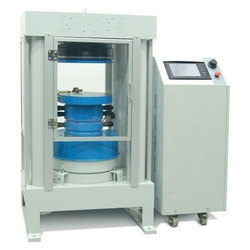
Tell us about your requirement

Price:
Quantity
Select Unit
- 50
- 100
- 200
- 250
- 500
- 1000+
Additional detail
Mobile number
Email

More Products in Compression Testing Machine Category
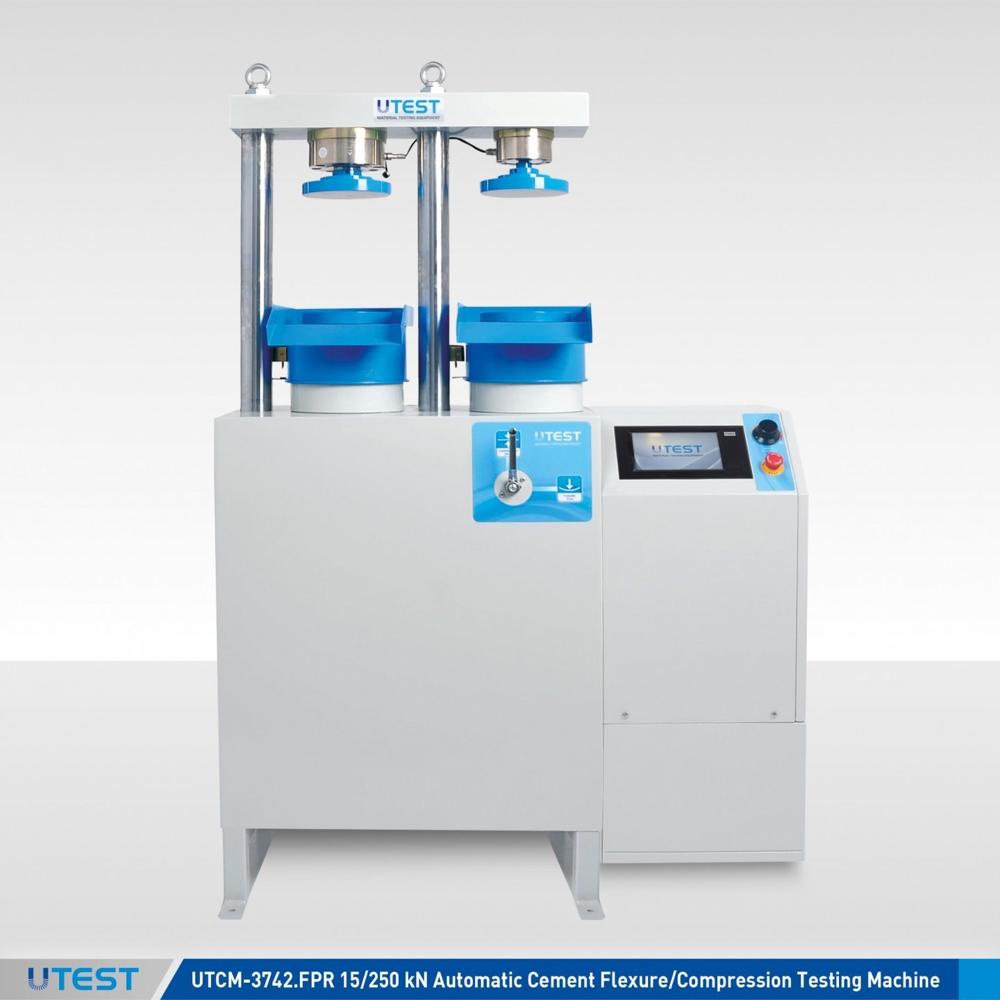
Semi-Automatic Cement Compression & Flexure Testing Machines (Motorized)
Price 120000.0 INR / Piece
Minimum Order Quantity : 1 Piece
Automation Grade : SemiAutomatic
Capacity : 200 kN (Compression), 15 kN (Flexure)
Accuracy : 1% of indicated load
Control Mode : SemiAutomatic, Motorized
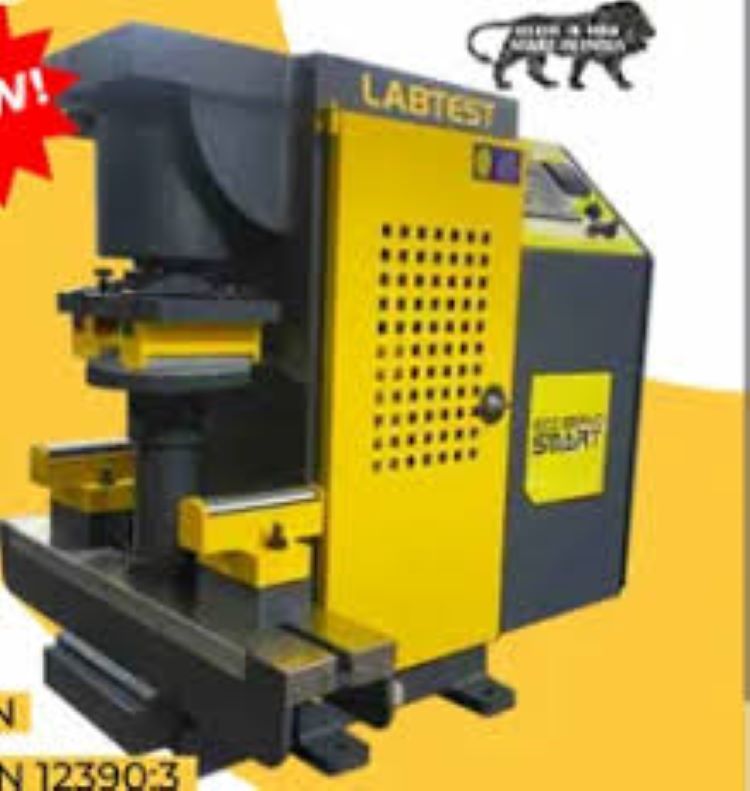
Eco Smart Compression Testing Machine
Price 195000.0 INR / Piece
Minimum Order Quantity : 1 Piece
Automation Grade : Automatic
Capacity : 2000 kN (200 Ton)
Accuracy : 1% of indicated load
Control Mode : Digital/Automatic with touch panel
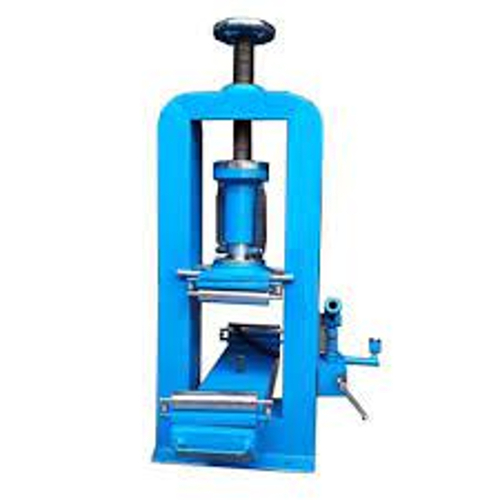
Flexure Testing Machine Hand Operated
Price 30000 INR / Bottle
Minimum Order Quantity : 1 Tablet
Automation Grade : Manual
Capacity : 100 kN (approx.)
Accuracy : 1% of indicated load
Control Mode : Manual Control
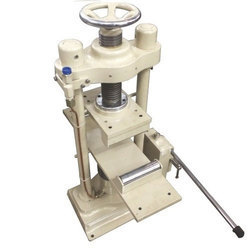
Hand Operated Flexural Testing Machine
Price 44000.0 INR / Piece
Minimum Order Quantity : 1 Piece
Automation Grade : Automatic

We are dealing in Coimbatore, Chennai and Tamilnadu.
 Send Inquiry
Our Products
- Concrete Testing Equipment
- Survey Lab Equipment
- Construction Equipment
- Concrete Testing Machine
- Soil Test Machine
- Survey Instrument
- Auto Level
- Cement Testing Machine
- Soil Testing Equipments
- Soil Testing Equipment
- Civil Engineering Lab Equipment
- Total Station
- Soil Test equipments
- Auto Level
- Concrete Highway Engineering lab
- Mechanical Engineering Lab Equipment
- Weighing Scale
- Laboratory Testing Equipment
- Workshop Trolleys
- Compression Testing Machine
- Water Testing Equipment
- Vertical Milling Machine
- Moulding Products
- CNC Machines
- Measuring Ruler
- Cylinder Carrier
- Core Cutting Machine
- Digital Measuring Machine
- Hydraulic Jack
- Drawing Instruments
- Fuel Testing Equipment
- Dynamics Lab Equipment
- Hydraulics and Fluid Mechanics Lab Equipment
- Heat Transfer Lab Equipment
- Scientific Equipment
- Surgical Equipment
- Hot Air Oven
- Impact Testing Machine
- Torsion Testers
- Bernoullis Theorem Apparatus
- Wooden Tripod
- Liquid Mercury
- Vibrating Table
- Material Testing Equipment
- Agriculture Equipment
- Waste Water Analysis

SF No. 189/1B1A, 191/3A1A1E, Sidco Private Industrial Estate, LIC Colony, Kurichi Pudhu Nagar, Kuruchi Housing,Coimbatore - 641021, Tamil Nadu, India

Mr Balamurugan C
(Manager)
Mobile :07313727211
 Send Inquiry
 Send SMS
Developed and Managed by Infocom Network Private Limited.
