
Call us now :07313727211
 Send Inquiry
 Send Inquiry
Digital Compression Testing Machine 2000 KN
Price 160000.00 INR/ Piece
MOQ : 1 Piece
Digital Compression Testing Machine 2000 KN Specification
- Gauge
- Digital Load Gauge
- Product Type
- Digital Compression Testing Machine
- Speed Range
- Rate of movement meets IS/BS/ASTM standards
- Control Mode
- Digital Control
- Weight
- Approx. 400 kg
- Stroke
- 50 mm
- Phase
- Single/Three Phase
- Display Type
- Digital Display
- Frame Type
- Rigid Welded Steel Frame
- Color
- Blue
- Load Power
- 2000 KN
- Capacity
- 2000 KN
- Dimension (L*W*H)
- 850 mm x 550 mm x 1400 mm
- Accuracy
- ±1% of indicated load
- Power Supply
- AC
- Frequency
- 50/60 Hz
- Features
- High precision load cell, Overload protection, Peak hold, Data storage, USB interface
- Usage & Applications
- Material, Concrete and Cement Testing in Laboratory
- Power
- Electronic
- Voltage
- 220 V/380 V
- Automation Grade
- Automatic
- Surface Finish
- Powder Coated
- Data Connectivity
- USB/RS232 ports
- Oil Reservoir Capacity
- 7 liters
- Calibration
- Easy front panel calibration
- Sample Types
- Concrete cubes, cylinders, blocks
- Platen Size
- 225 mm diameter
- Max. Piston Travel
- 50 mm
- Resolution
- 0.1 KN
- Safety Features
- Overload cut-off, Emergency stop switch
- Operating Temperature
- 10°C to 40°C
- Ram Diameter
- 195 mm
Digital Compression Testing Machine 2000 KN Trade Information
- Minimum Order Quantity
- 1 Piece
- FOB Port
- Chennai
- Payment Terms
- Cash Against Delivery (CAD), Cash on Delivery (COD), Cash Advance (CA), Cash in Advance (CID), Cheque
- Delivery Time
- 2 Week
- Main Export Market(s)
- Asia
- Main Domestic Market
- Goa, West India, Arunachal Pradesh, Kerala, Delhi, Manipur, Chhattisgarh, Karnataka, All India, Jammu and Kashmir, Tripura, Haryana, Central India, Sikkim, Lakshadweep, Assam, Bihar, Dadra and Nagar Haveli, Madhya Pradesh, Nagaland, Punjab, Odisha, Himachal Pradesh, Jharkhand, Gujarat, Mizoram, Pondicherry, Andaman and Nicobar Islands, South India, Uttarakhand, East India, Daman and Diu, Rajasthan, Uttar Pradesh, Telangana, Maharashtra, Meghalaya, North India, Chandigarh, West Bengal, Andhra Pradesh, Tamil Nadu
Digital Compression Testing Machine 2000 KN About
The Labtest Semi-Automatic (Motorized) range of 2000 kN and 3000 kN capacity compression testing machines have been designed for reliable and consistent testing of a wide range of specimens. These compression testers are manufactured as a result of continuous research studies to upgrade the machines with the latest technologies to conform with the latest standards EN 12390-3, 12390-4, BS 1881 in terms of its technical properties taking into account the client requirements. These machines also meet the requirements of CE norms with respect to the health and safety of the operator. And their user-friendly design enable an inexperienced operator to perform the test. Maximum horizontal clearance for placing sample is limited with the border of the platens. Sample must be placed such that its ends will not overflow from the ends of platens and it must be centered perfectly. The suitable vertical clearance for specimen can be adjusted with distance pieces.
Additional Information:
- Item Code: ZI2059
- Port of Dispatch: NEW DELHI
- Production Capacity: 04-05 MACHINES
- Delivery Time: 2-3 WEEKS
- Packaging Details: WOODEN BOX
Dealer in Chennai
Manufactured in Chennai
Advanced Digital Control and Precision
Equipped with a high-precision load cell and digital display, this machine guarantees accuracy within 1% of the indicated load. The resolution of 0.1 KN allows for reliable and detailed compression strength analysis of concrete materials, while the digital control panel ensures user-friendly operation and straightforward calibration.
Robust Construction and Flexible Connectivity
Crafted with a rigid welded steel frame and powder coated finish, the machine is engineered for heavy-duty laboratory use. The USB and RS232 ports enable seamless data transfer and storage, streamlining reporting and research processes. The ergonomic design and color-coded controls enhance usability in fast-paced lab environments.
Comprehensive Safety and Compliance
With essential safety mechanisms such as overload cut-off and emergency stop, this testing machine prioritizes operator protection. The system complies with recognized testing standards (IS/BS/ASTM), ensuring precise, standardized results for all registered sample types.
FAQs of Digital Compression Testing Machine 2000 KN:
Q: How does the Digital Compression Testing Machine ensure accurate results?
A: The machine uses a high-precision load cell and a digital gauge, providing an accuracy of 1% and a resolution of 0.1 KN. These features, combined with easy front-panel calibration and adherence to IS/BS/ASTM standards, guarantee reliable compression strength measurements for concrete samples.Q: What types of samples can be tested with this machine?
A: This device is designed for compression testing of concrete cubes, cylinders, and blocks, catering to typical laboratory sample requirements for material, concrete, and cement testing.Q: When is calibration or maintenance typically needed?
A: The front-panel allows for quick, routine calibration, ensuring ongoing accuracy. Calibration is generally performed according to laboratory protocols or before critical testing sessions to maintain optimal performance.Q: Where can the machine be installed and operated?
A: With dimensions of 850 mm x 550 mm x 1400 mm and an operating temperature range of 10C to 40C, the machine is suitable for most laboratory spaces. Its powder-coated blue finish adds durability, making it ideal for industrial and educational environments across India.Q: What is the process for operating the machine safely?
A: Operation begins with sample placement and securing, followed by digital control setup. Integrated features like overload cut-off and emergency stop switch ensure operator safety, while clear digital displays and automation aid precise execution of the testing process.Q: How does digital connectivity benefit laboratory workflows?
A: With USB and RS232 data ports, results and peak loads can be directly transferred and stored on computers or laboratory information systems, improving documentation, analysis, and compliance with reporting standards.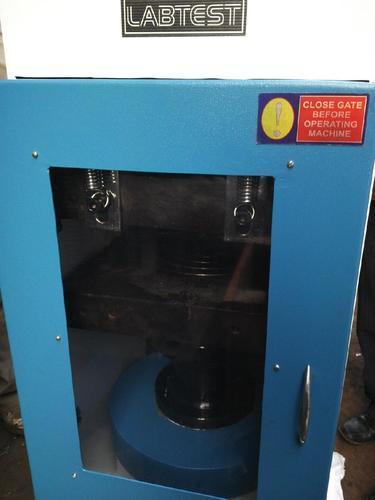
Tell us about your requirement

Price:
Quantity
Select Unit
- 50
- 100
- 200
- 250
- 500
- 1000+
Additional detail
Mobile number
Email

More Products in Compression Testing Machine Category
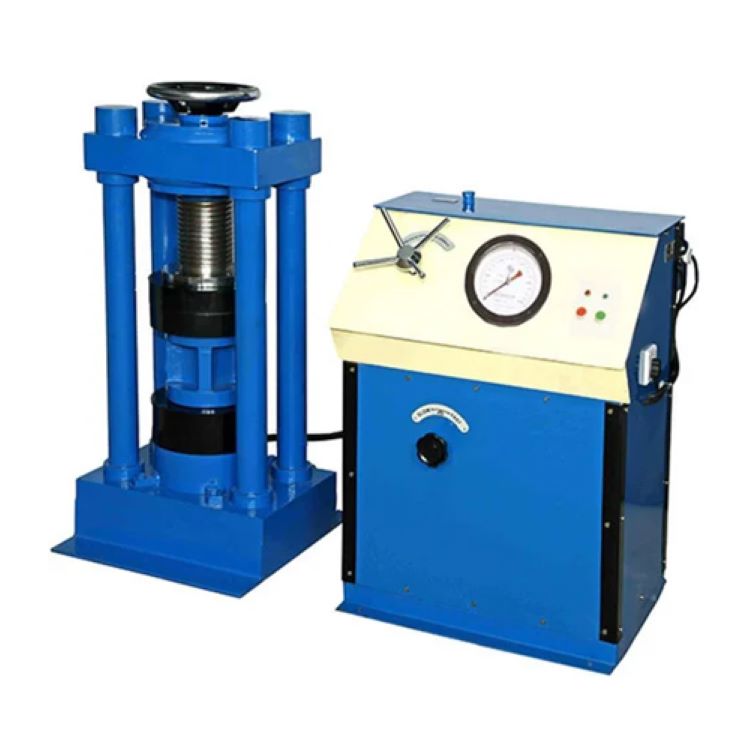
High Stability 4 Pillar Compression Testing Machine
Price 120000.0 INR / Piece
Minimum Order Quantity : 1 Piece
Usage : Industrial quality control and laboratory
Power Supply : AC 220V 10%, 50 Hz
Automation Grade : Automatic
Display Type : Digital LCD display
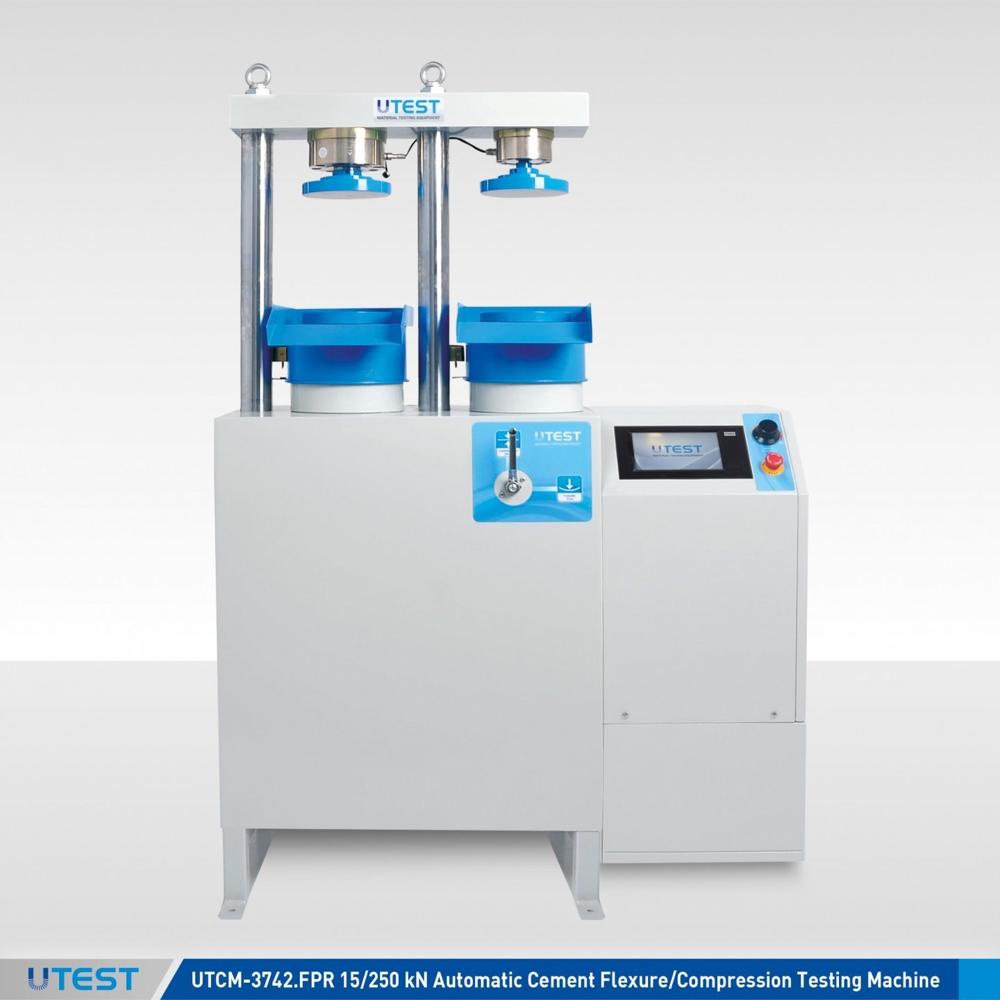
Semi-Automatic Cement Compression & Flexure Testing Machines (Motorized)
Price 120000.0 INR / Piece
Minimum Order Quantity : 1 Piece
Usage : Laboratory testing for cement, mortar strength evaluation
Power Supply : 230V AC, 50 Hz
Automation Grade : SemiAutomatic
Display Type : Digital (LCD)
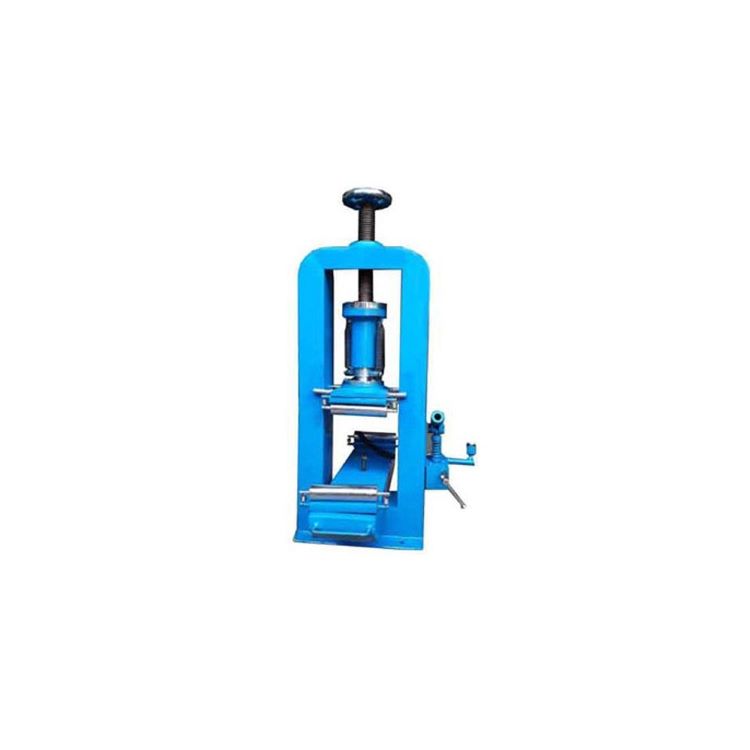
Flexure Testing Machine - Hand Operated
Price 150000.0 INR / Piece
Minimum Order Quantity : 1 Piece
Usage : Laboratory and OnSite Material Testing
Power Supply : Not Required (Manual Operation)
Automation Grade : Manual
Display Type : Dial Gauge
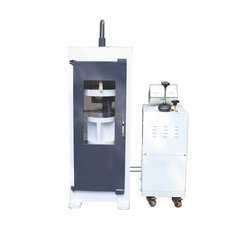
Semi Automatic Compression Testing Machine
Price 275000 INR / Piece
Minimum Order Quantity : 1 Piece
Usage : laboratory
Power Supply : Electric
Automation Grade : Other, SemiAutomatic
Display Type : Analog/Digital Dial Gauge

We are dealing in Coimbatore, Chennai and Tamilnadu.
 Send Inquiry
Our Products
- Concrete Testing Equipment
- Survey Lab Equipment
- Construction Equipment
- Concrete Testing Machine
- Soil Test Machine
- Survey Instrument
- Auto Level
- Cement Testing Machine
- Soil Testing Equipments
- Soil Testing Equipment
- Civil Engineering Lab Equipment
- Total Station
- Soil Test equipments
- Aggregate Testing Equipment
- Concrete Highway Engineering lab
- Mechanical Engineering Lab Equipment
- Weighing Scale
- Laboratory Testing Equipment
- Compression Testing Machine
- Workshop Trolleys
- Vertical Milling Machine
- Water Testing Equipment
- Moulding Products
- CNC Machines
- Non Destructive Testing Equipment
- Core Cutting Machine
- Cylinder Carrier
- Digital Measuring Machine
- Hydraulic Jack
- Drawing Instruments
- Fuel Testing Equipment
- Dynamics Lab Equipment
- Hydraulics and Fluid Mechanics Lab Equipment
- Heat Transfer Lab Equipment
- Scientific Equipment
- Surgical Equipment
- Hot Air Oven
- Impact Testing Machine
- Torsion Testers
- Bernoullis Theorem Apparatus
- Wooden Tripod
- Liquid Mercury
- Vibrating Table
- Material Testing Equipment
- Agriculture Equipment
- Waste Water Analysis
- Precision Measuring Instruments
- Steel Testing Equipment
- Steel Testing equipments

SF No. 189/1B1A, 191/3A1A1E, Sidco Private Industrial Estate, LIC Colony, Kurichi Pudhu Nagar, Kuruchi Housing,Coimbatore - 641021, Tamil Nadu, India

Mr Balamurugan C
(Manager)
Mobile :07313727211
 Send Inquiry
 Send SMS
Developed and Managed by Infocom Network Private Limited.
