
Call us now :07313727211
 Send Inquiry
 Send Inquiry
Compression Splitting Tensile Test Device
Price 20000 INR/ Piece
MOQ : 1 Piece
Compression Splitting Tensile Test Device Specification
- Capacity
- 50 kN / 100 kN (varies by model)
- Control Mode
- Hand operated
- Power
- Single phase, 220V AC
- Power Supply
- 220V, 50Hz
- Frequency
- 50 Hz
- Stroke
- 50 mm
- Accuracy
- ±1%
- Features
- Rugged construction, precise measurement, portable design, corrosion resistant
- Voltage
- 220 V
- Display Type
- Analog / Digital dial gauge
- Frame Type
- Heavy duty steel frame
- Gauge
- 0-100 kN
- Load Power
- 500 W
- Speed Range
- 1 mm/min to 5 mm/min
- Dimension (L*W*H)
- 400 mm x 200 mm x 500 mm (approx.)
- Phase
- Single phase
- Usage & Applications
- laboratory, used for splitting tensile strength test of concrete and cement specimens
- Weight
- Approx. 35-50 kg
- Product Type
- Compression Splitting Tensile Test Device
- Color
- Gold
- Automation Grade
- Manual
- Specimen Size
- Concrete cylinders (150 mm x 300 mm), cubes (150 mm) and similar specimens
- Base Plate Material
- High strength steel
- Standards Compliance
- IS 5816 / ASTM C496
- Accessories Included
- Allen key, operation manual, calibration certificate
- Operating Temperature Range
- 5°C to 45°C
- Calibration
- Pre-calibrated with calibration certificate
- Movement Type
- Vertical and splitting action
- Loading Method
- Hydraulic loading
- Jaw Opening
- Up to 200 mm
- Maintenance
- Low maintenance, easy to service
- Packing Type
- Export quality wooden packaging
- Service Life
- >10 years
Compression Splitting Tensile Test Device Trade Information
- Minimum Order Quantity
- 1 Piece
- FOB Port
- Chennai
- Delivery Time
- 2 Week
- Main Domestic Market
- Kerala, Lakshadweep, Daman and Diu, Chhattisgarh, Pondicherry, All India, Mizoram, Jharkhand, Dadra and Nagar Haveli, Gujarat, Uttar Pradesh, East India, Manipur, Punjab, Arunachal Pradesh, Karnataka, Assam, Central India, West India, Andhra Pradesh, Jammu and Kashmir, Haryana, Goa, Telangana, Rajasthan, Meghalaya, Chandigarh, Uttarakhand, Tripura, South India, Maharashtra, Himachal Pradesh, Odisha, West Bengal, Sikkim, Andaman and Nicobar Islands, Nagaland, Madhya Pradesh, Bihar, Delhi, North India, Tamil Nadu
About Compression Splitting Tensile Test Device
The Latest series Splitting Tensile Test Devices are accessories for compression machines for measuring the splitting tensile strengths of 150 x 300 mm and 160 x 320 mm cylindrical specimens, 150 mm cube concrete specimens and of 60-150 mm height x 220 mm length concrete block pavers according to the requirements of the related standards.
Product Details:
-
ZI 2061A Splitting tensile test device
-
For 150x300 mm and 160 x 320 mm
-
Cylindrical specimens, ASTM/EN
-
ZI 2061B Distance piece for ZI 2061A
-
For 100 x 200 mm, cylindrical specimens, EN
-
ZI 2061C Splitting tensile test device
-
For 60-150 mm height x 220 mm
-
ZI 2061D Length concrete block pavers, EN
-
Splitting tensile test device
-
For 150x150 mm concrete cubes,
-
EN ZI 2061E Distance piece for ZI 2061D
-
For 100x100 concrete cubes, EN
-
Standards: EN 1338, 12390-6; ASTM C496
Dealer in Chennai
Manufacturer in Chennai
Precision and Standards Compliance
Developed to comply with IS 5816 and ASTM C496, this device enables users to conduct standardized splitting tensile strength tests on concrete specimens quickly and consistently. It is ideal for laboratories that require accurate and repeatable results, with a 1% measurement accuracy ensured through pre-calibration and a supplied calibration certificate.
Robust and Portable Build
The apparatus features a rugged construction using high-strength steel and corrosion-resistant materials, allowing for long service life and stability during rigorous testing. Its portable design (approx. 3550 kg, compact dimensions) and export-quality wooden packaging further facilitate safe transport and deployment.
Simple Operation and Low Maintenance
Designed with user convenience in mind, the device features hand-operated controls and clear analog or digital dial gauge displays, simplifying operation even for new users. Low maintenance requirements and easy servicing make this equipment well-suited for both seasoned professionals and entry-level technicians.
FAQs of Compression Splitting Tensile Test Device:
Q: How does the device perform splitting tensile strength tests on concrete samples?
A: The device positions a concrete cylinder or cube specimen between its jaws. As hydraulic loading is applied with a vertical and splitting action, the specimen experiences uniform tensile stress, enabling measurement of its splitting tensile strength using the built-in analog or digital gauge.Q: What types of specimens can be tested, and what is the maximum jaw opening?
A: It is designed for 150 mm x 300 mm concrete cylinders, 150 mm cubes, and similar specimens. The jaw opening accommodates up to 200 mm, making it suitable for a wide variety of laboratory concrete test samples.Q: When and where is this tensile test device typically used?
A: This device is mainly used in material testing laboratories, research facilities, and quality control departments, especially within the construction and civil engineering sectors, whenever there is a need to assess the splitting tensile strength of concrete and cement specimens.Q: What benefits does the pre-calibrated setup with a calibration certificate offer?
A: A pre-calibrated instrument ensures immediate operational readiness and accurate measurements. The included calibration certificate provides documented assurance of compliance with industry standards, essential for quality audits and reports.Q: How is the equipment maintained, and what accessories are included?
A: The apparatus is low maintenance and easy to service. Included accessories are an Allen key for adjustments, a comprehensive operation manual, and a calibration certificate. Its rugged design also helps minimize wear and tear over long use.Q: What power supply and control mode does the device use?
A: The device operates on a single-phase, 220V AC, 50Hz power supply, featuring a manual, hand-operated control mode for precise and user-directed test execution.Q: What advantages does the export-quality wooden packaging offer?
A: Export-quality wooden packaging ensures the device is well-protected from damage during transportation, reducing the risk of impact or environmental exposure and guaranteeing the customer receives the unit in optimal working condition.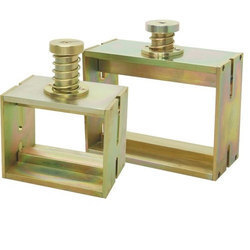
Tell us about your requirement

Price:
Quantity
Select Unit
- 50
- 100
- 200
- 250
- 500
- 1000+
Additional detail
Mobile number
Email

More Products in Compression Testing Machine Category
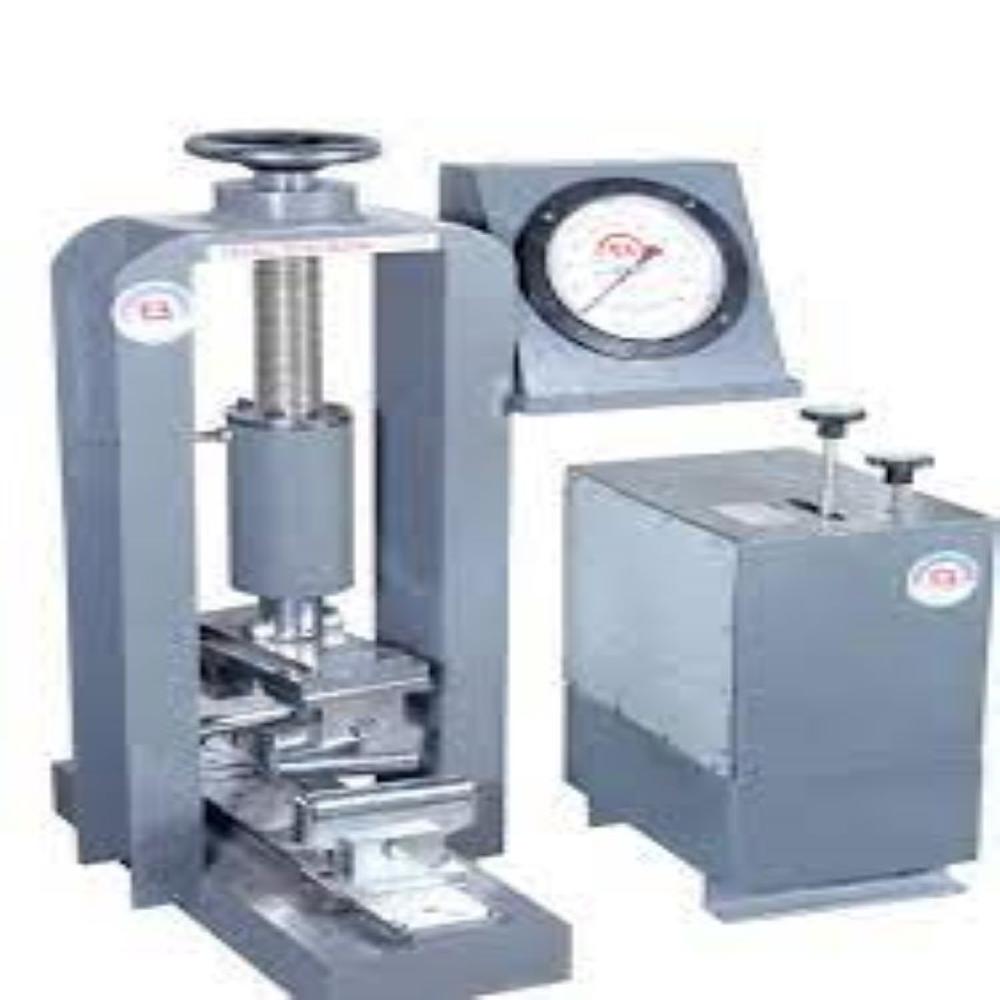
Digital Flexure Testing Machine
Price 80000.0 INR / Piece
Minimum Order Quantity : 1 Piece
Capacity : 100 kN, 200 kN (Customizable)
Control Mode : Digital (Microprocessor based control)
Accuracy : 1% of indicated load
Automation Grade : SemiAutomatic
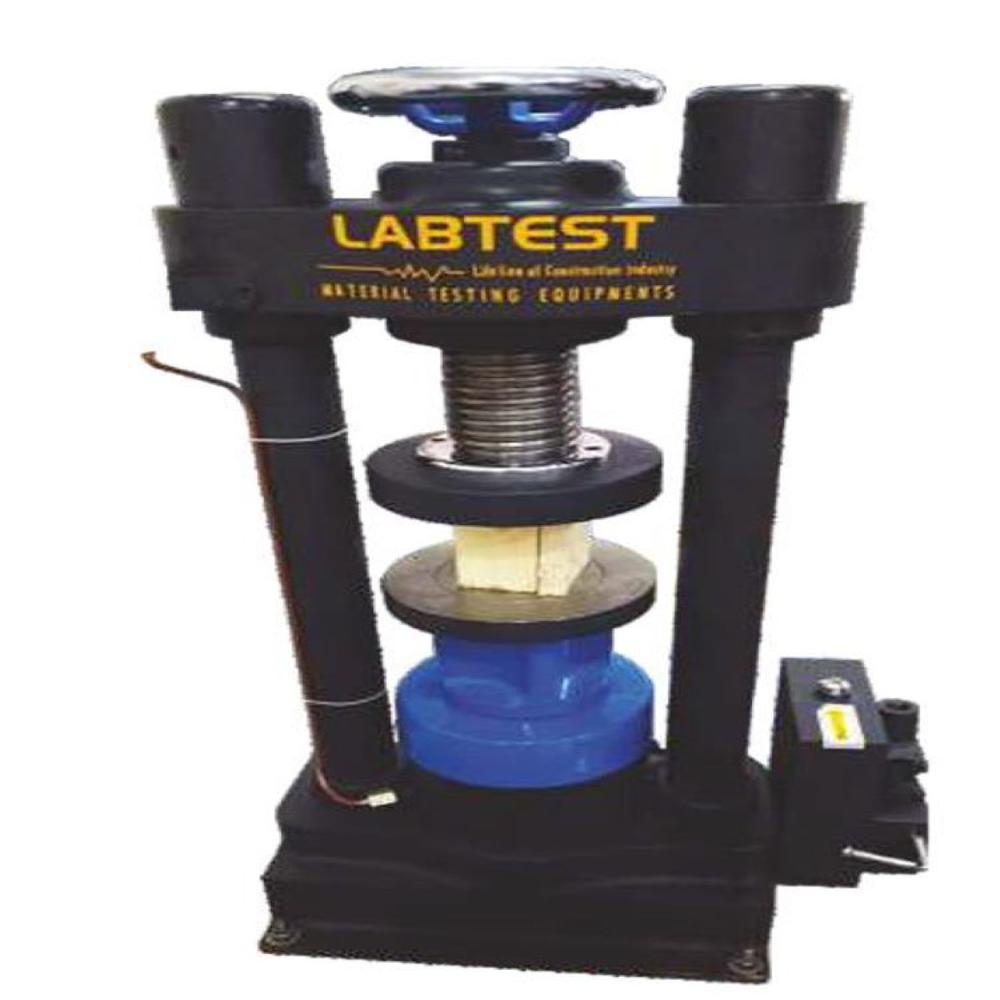
Two Pillar Compression Testing Machine - Hand Operated
Price 30000.0 INR / Piece
Minimum Order Quantity : 1 Piece
Capacity : 1 Ton, 2 Ton, 5 Ton (Customizable)
Control Mode : Hand Operated / Manual
Accuracy : +/ 1% of indicated load
Automation Grade : Manual
Unconfined Compression Tester (Motorised)
Price 62000 INR / Piece
Minimum Order Quantity : 1 Piece
Capacity : Up to 3 kN (3000 kgf)
Control Mode : Motorised single speed
Accuracy : 1%
Automation Grade : Semi Automatic
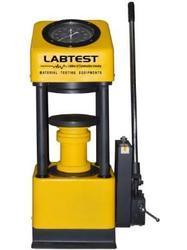
Compression Testing Machine (Channel Type Load Frame)
Price 65000 INR
Minimum Order Quantity : 1 Piece
Capacity : 1000 kN (100 Tons)
Control Mode : Hydraulic/manual handoperated or motorized
Accuracy : 1% of indicated load
Automation Grade : Other, Manual / SemiAutomatic

We are dealing in Coimbatore, Chennai and Tamilnadu.
 Send Inquiry
Our Products
- Concrete Testing Equipment
- Survey Lab Equipment
- Construction Equipment
- Concrete Testing Machine
- Soil Test Machine
- Survey Instrument
- Auto Level
- Cement Testing Machine
- Soil Testing Equipments
- Soil Testing Equipment
- Civil Engineering Lab Equipment
- Total Station
- Soil Test equipments
- Auto Level
- Concrete Highway Engineering lab
- Mechanical Engineering Lab Equipment
- Weighing Scale
- Laboratory Testing Equipment
- Workshop Trolleys
- Compression Testing Machine
- Water Testing Equipment
- Vertical Milling Machine
- Moulding Products
- CNC Machines
- Measuring Ruler
- Cylinder Carrier
- Core Cutting Machine
- Digital Measuring Machine
- Hydraulic Jack
- Drawing Instruments
- Fuel Testing Equipment
- Dynamics Lab Equipment
- Hydraulics and Fluid Mechanics Lab Equipment
- Heat Transfer Lab Equipment
- Scientific Equipment
- Surgical Equipment
- Hot Air Oven
- Impact Testing Machine
- Torsion Testers
- Bernoullis Theorem Apparatus
- Wooden Tripod
- Liquid Mercury
- Vibrating Table
- Material Testing Equipment
- Agriculture Equipment
- Waste Water Analysis

SF No. 189/1B1A, 191/3A1A1E, Sidco Private Industrial Estate, LIC Colony, Kurichi Pudhu Nagar, Kuruchi Housing,Coimbatore - 641021, Tamil Nadu, India

Mr Balamurugan C
(Manager)
Mobile :07313727211
 Send Inquiry
 Send SMS
Developed and Managed by Infocom Network Private Limited.
