
Call us now :07313727211
 Send Inquiry
 Send Inquiry
Digital Flexure Testing Machine
Price 80000.0 INR/ Piece
MOQ : 1 Piece
Digital Flexure Testing Machine Specification
- Structure Material
- Heavy Duty Mild Steel
- Paint Finish
- Powder Coated
- Data Output
- RS-232 / USB (Optional)
- Ram Speed
- Manual and automatic adjustment
- Calibration
- IS 516 / IS 4031 Certified
- Load Sensor Type
- Strain Gauge Based Load Cell
- Safety Features
- Overload protection with automatic cut-off
- Software Compatibility
- Optional PC Interface Software
Digital Flexure Testing Machine Trade Information
- Minimum Order Quantity
- 1 Piece
- FOB Port
- coimbatore
- Payment Terms
- Cash Advance (CA), Cash in Advance (CID)
- Supply Ability
- 1 Piece Per Day
- Delivery Time
- 1 Days
- Sample Available
- No
- Packaging Details
- cotton box
- Main Export Market(s)
- Asia, Africa
- Main Domestic Market
- North India, Mizoram, Arunachal Pradesh, Chhattisgarh, Haryana, Himachal Pradesh, Jammu and Kashmir, Madhya Pradesh, Maharashtra, Nagaland, Tripura, Pondicherry, Uttar Pradesh, Gujarat, Lakshadweep, Meghalaya, Manipur, Telangana, All India, South India, Central India, West India, East India, Uttarakhand, Karnataka, Kerala, Andhra Pradesh, Bihar, Chandigarh, Daman and Diu, Goa, Jharkhand, Odisha, Punjab, Assam, Delhi, Dadra and Nagar Haveli, Andaman and Nicobar Islands, Rajasthan, Sikkim, Tamil Nadu, West Bengal
About Digital Flexure Testing Machine
Specification:
Capacity: 250 kN
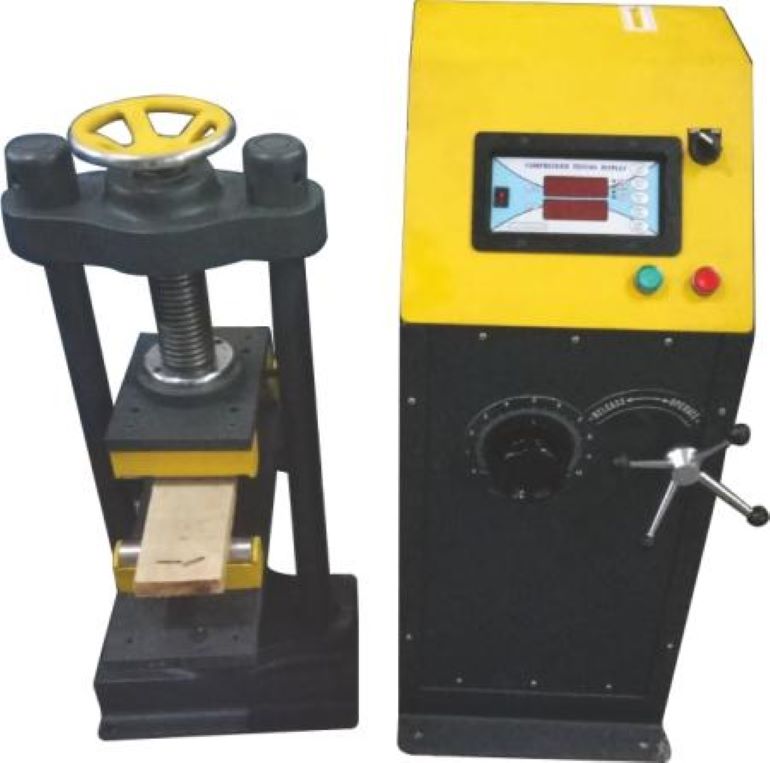
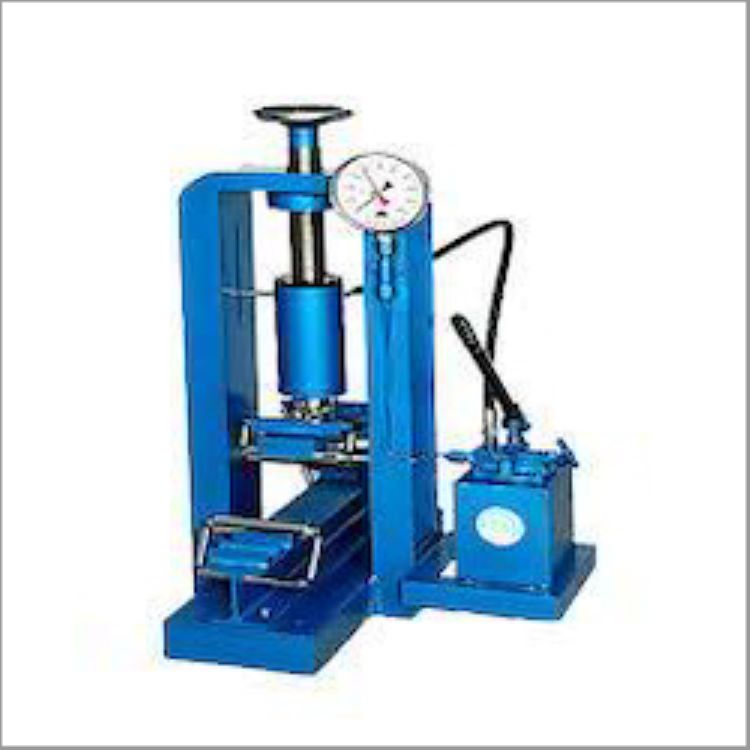
The Digital Flexure Testing Machine is designed to test flexural strength of concrete beams. The design provide maximum rigidity throughout their working range. The load is applied by the downward movement of the piston.
A spacer is for testing different size of beams. The load is indicated on a calibrated digital load indicator of range: 0 - 100 kN x 0.1 kN (0- 10,000 kgf x 10 kgf). The digital load indicator is calibrated by Certified Proving Ring / Load Cells.
Features:
- Light weight, rugged high strength frame
- Double action hydraulic pump
- Self-aligning roller assembly
- Hydraulic jack provided with retraction spring
- For testing beams of 100 x 100 x 500mm and 150 x 150 x 700mm
Note: Compression platen for compression test should be ordered separately.
Advanced Digital Control
Equipped with microprocessor-based control, this flexure testing machine ensures stable performance and reproducible results. Its user-friendly digital LCD display presents accurate, real-time values, and the auto peak hold function aids in capturing peak load readings. Both control and data retrieval are streamlined for efficiency, making the unit suitable for routine laboratory and demanding industrial applications.
Robust Structure and Safety
The machine's heavy-duty mild steel construction, finished with powder coating, provides durability and long-term resistance to harsh conditions. Overload protection with automatic cut-off enhances user safety and equipment longevity. Designed for ease of integration, it mounts securely on laboratory or industrial floors, ensuring stability during operation.
Seamless Data Management
With optional RS-232 or USB data output and PC interface software, this system enables straightforward data storage and analysis. Whether in research environments or quality control settings, users can efficiently document test results, generate reports, and comply with regulatory requirements, supporting traceability and data integrity.
FAQ's of Digital Flexure Testing Machine:
Q: How does the Digital Flexure Testing Machine ensure accurate flexural strength measurements?
A: The machine uses a strain gauge-based load cell, microprocessor control, and a digital LCD display, providing high precision (1% accuracy) and 0.01 kN resolution. It is certified under IS 516 and IS 4031 standards, ensuring reliable and repeatable results for concrete and cement specimens.Q: What safety features are integrated into the machine during testing operations?
A: It includes overload protection with an automatic cut-off system. If the applied force exceeds safe limits, the machine automatically halts to protect both the specimen and the device, ensuring operator safety and preventing mechanical damage.Q: When and where is it recommended to use this Flexure Testing Machine?
A: The machine is intended for use in laboratories and industrial environments, especially in quality control or R&D sectors focused on construction materials. It is suitable for testing the flexural strength of concrete and cement samples.Q: How does the data output and storage system work in this testing machine?
A: The machine features a panel-mounted digital LCD and offers optional data output via RS-232 or USB ports. Users can connect compatible PC interface software for comprehensive data logging, storage, and analysis, making documentation efficient and reliable.Q: What process is followed for adjusting the testing parameters like ram speed and test range?
A: Ram speed is adjustable both manually and automatically, enabling users to set the preferred test speed (up to 50 mm/min). The test range can be set up to 200 kN as per requirements, and control is managed through the digital microprocessor panel.Q: What types and sizes of specimens can be tested with this machine?
A: It accommodates single specimen tests with sizes of 100x100x500 mm or 150x150x700 mm, covering a wide range of construction materials for flexural strength evaluation.Q: What are the key benefits of using this Digital Flexure Testing Machine?
A: Key advantages include high measurement precision, advanced safety features, robust build quality, instantaneous response time, versatile data management, and compliance with national standards. Customization options, such as test capacity and data interfaces, further enhance its versatility for diverse user needs.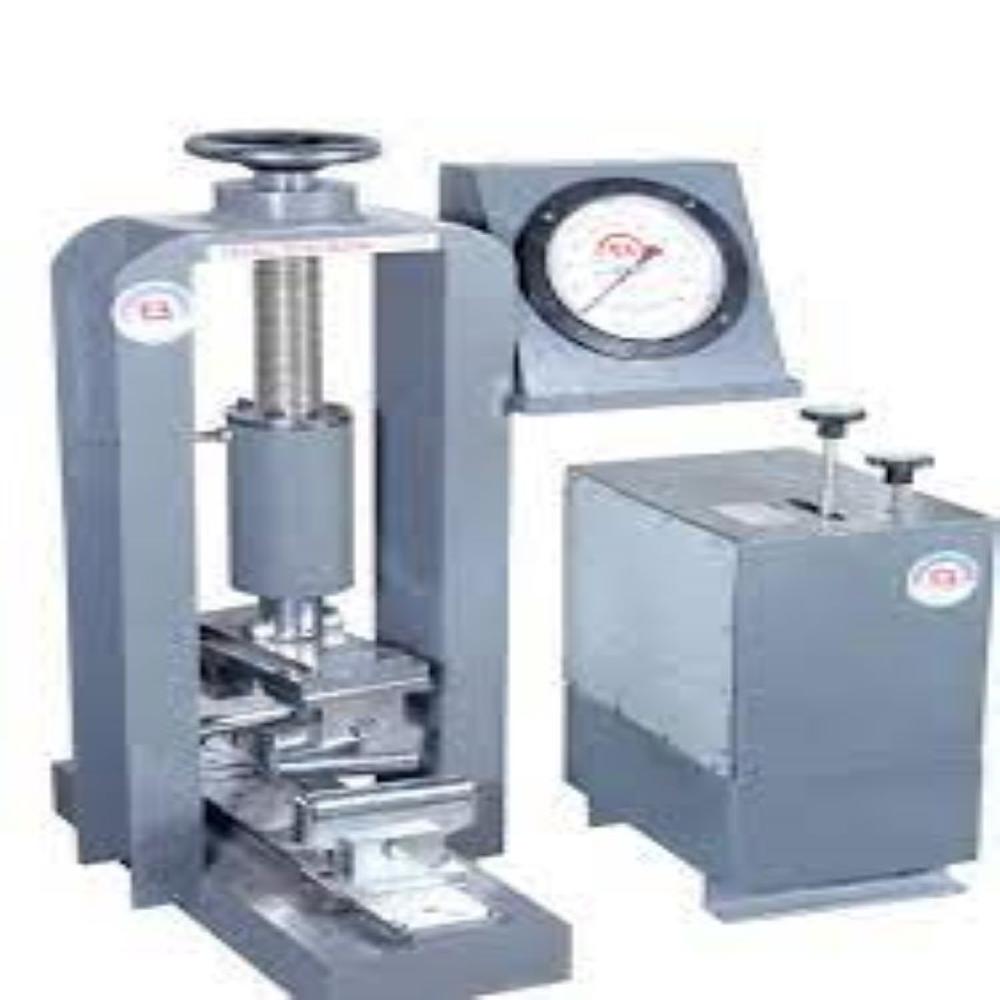
Tell us about your requirement

Price:
Quantity
Select Unit
- 50
- 100
- 200
- 250
- 500
- 1000+
Additional detail
Mobile number
Email

More Products in Compression Testing Machine Category
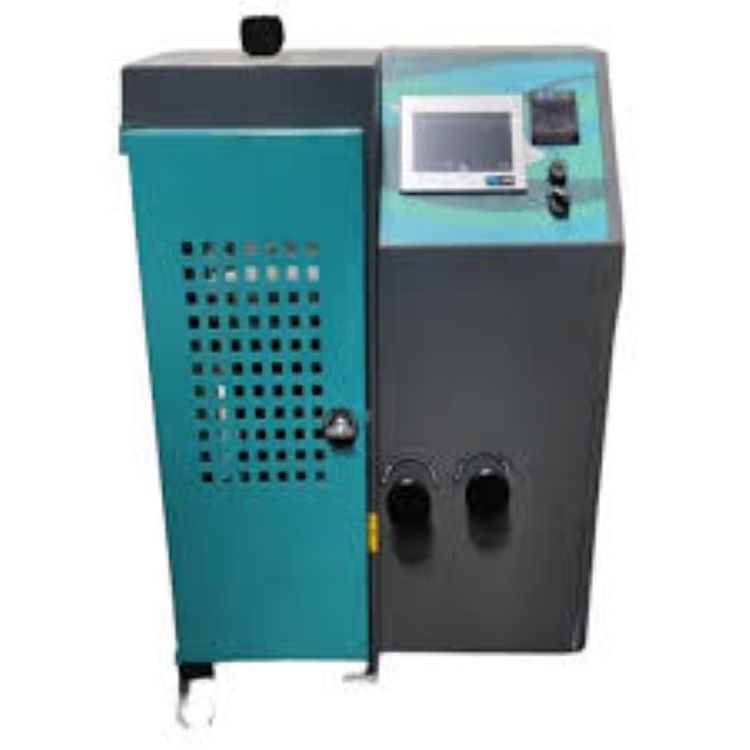
Eco Servo Smart Compression Testing Machine
Price 395000.0 INR / Piece
Minimum Order Quantity : 1 Piece
Accuracy : 1% FS
Capacity : 100 kN
Control Mode : Servo Control with Touchscreen Interface
Automation Grade : Automatic
Digital Compression Testing Machine 2000 KN
Price 160000.00 INR / Piece
Minimum Order Quantity : 1 Piece
Accuracy : 1% of indicated load
Capacity : 2000 KN
Control Mode : Digital Control
Automation Grade : Automatic
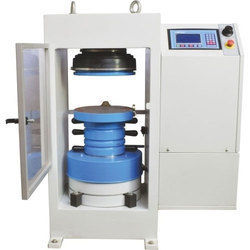
Semi Automatic Compression Testing Machine
Price 275000 INR / Piece
Minimum Order Quantity : 1 Piece
Accuracy : 1% of indicated load value
Capacity : 2000 kN (approx. 200 Ton)
Control Mode : SemiAutomatic with hand lead control valve
Automation Grade : Other, SemiAutomatic
Fully Automatic Compression Testing Machine
Price 400000.00 INR
Minimum Order Quantity : 1 Piece
Accuracy : 1% of indicated load
Capacity : 2000 kN (200 Ton)
Control Mode : Automatic (Microprocessor based control)
Automation Grade : Other, Fully Automatic

We are dealing in Coimbatore, Chennai and Tamilnadu.
 Send Inquiry
Our Products
- Concrete Testing Equipment
- Survey Lab Equipment
- Construction Equipment
- Concrete Testing Machine
- Soil Test Machine
- Survey Instrument
- Auto Level
- Cement Testing Machine
- Soil Testing Equipments
- Soil Testing Equipment
- Civil Engineering Lab Equipment
- Total Station
- Soil Test equipments
- Auto Level
- Concrete Highway Engineering lab
- Mechanical Engineering Lab Equipment
- Weighing Scale
- Laboratory Testing Equipment
- Workshop Trolleys
- Compression Testing Machine
- Water Testing Equipment
- Vertical Milling Machine
- Moulding Products
- CNC Machines
- Measuring Ruler
- Cylinder Carrier
- Core Cutting Machine
- Digital Measuring Machine
- Hydraulic Jack
- Drawing Instruments
- Fuel Testing Equipment
- Dynamics Lab Equipment
- Hydraulics and Fluid Mechanics Lab Equipment
- Heat Transfer Lab Equipment
- Scientific Equipment
- Surgical Equipment
- Hot Air Oven
- Impact Testing Machine
- Torsion Testers
- Bernoullis Theorem Apparatus
- Wooden Tripod
- Liquid Mercury
- Vibrating Table
- Material Testing Equipment
- Agriculture Equipment
- Waste Water Analysis

SF No. 189/1B1A, 191/3A1A1E, Sidco Private Industrial Estate, LIC Colony, Kurichi Pudhu Nagar, Kuruchi Housing,Coimbatore - 641021, Tamil Nadu, India

Mr Balamurugan C
(Manager)
Mobile :07313727211
 Send Inquiry
 Send SMS
Developed and Managed by Infocom Network Private Limited.
