
Call us now :07313727211
 Send Inquiry
 Send Inquiry
Relative Density Test Equipment
Price 99000 INR/ Piece
MOQ : 1 Piece
Relative Density Test Equipment Specification
- Usage
- laboratory
- Material
- Mild Steel
- Power Supply
- Electric
- Color
- Blue
- Mounting Type
- Floor Mounting
- Voltage
- 230 Volt (v)
Relative Density Test Equipment Trade Information
- Minimum Order Quantity
- 1 Piece
- FOB Port
- Chennai
- Delivery Time
- 2 Week
- Main Export Market(s)
- Asia
- Main Domestic Market
- Chandigarh, Himachal Pradesh, Sikkim, Tripura, Manipur, Uttarakhand, Daman and Diu, Dadra and Nagar Haveli, South India, East India, Andaman and Nicobar Islands, Assam, Arunachal Pradesh, Bihar, Goa, Jammu and Kashmir, Jharkhand, Karnataka, Haryana, Kerala, Lakshadweep, Mizoram, Meghalaya, Nagaland, Odisha, Punjab, Pondicherry, Rajasthan, Tamil Nadu, Telangana, West Bengal, Delhi, Gujarat, Uttar Pradesh, Maharashtra, Madhya Pradesh, North India, Andhra Pradesh, Central India, West India, Chhattisgarh, All India
About Relative Density Test Equipment
The equipment is used for the determination of the relative density of cohesion less free draining soils and meets the essential requirements. The equipment consists one each of: Vibratory table, with a cushioned steel vibrating decks about 75cm x 75cm. It has a frequency of approximately 3600 vibratory table, minute under a11.5kg load. Amplitude is variable in between 0.65mm in step of 0.05 to 0.25mm, 0.25 to 0.45 mm and 0.45 to 0.65mm. Suitable for operations on 415V, Three Phase supply. Cylindrical metal unit weight mould, 3000ml capacity. Guide sleeve with clamp assembly. Surcharges base plate for mould.Handle for surcharge base plate. Surcharge weight. The total weight together with surcharge base plate and handle is equipment to 140 kg. / cm2. For mould.Cylindrical metal unit weight mould 15000 ml.capacity. (Total weight together with the above mould surcharge weight is equivalent to 140 kg./ cm2) dial gauge 0.01mm x 50mm travel. Extension piece 25mm for dial gauge
Additional Information:
- Item Code: ZI-3040
Dealer in Chennai
Manufacturer in Chennai
Reliable Performance for Laboratory Testing
Engineered with mild steel and finished in an eye-catching blue, the Relative Density Test Equipment stands out for its reliability and accuracy in laboratory use. Its 230V electric power supply ensures consistent performance, enabling dependable outcomes for research, quality control, and industrial analysis. The thoughtfully designed floor mounting type ensures stability and ease of use during testing procedures.
Comprehensive Supply Chain Reach Across India
Distributed throughout India, our Relative Density Test Equipment is accessible to a broad range of industry professionals. Whether you are a dealer, exporter, manufacturer, retailer, or supplier, this equipment fits seamlessly into diverse operational setups. Its robust fabrication and supply from trusted sources guarantee both longevity and high-quality results for your lab or testing facility.
FAQs of Relative Density Test Equipment:
Q: How is the Relative Density Test Equipment used in laboratories?
A: The Relative Density Test Equipment is used in laboratories to determine the relative density of various materials. The specimen is placed in the equipment, and the measurement process is conducted according to standard laboratory procedures, ensuring precise and accurate results.Q: What materials are used in constructing the Relative Density Test Equipment?
A: This equipment is constructed from high-quality mild steel, which ensures durability, longevity, and resistance to corrosion, making it ideal for intensive laboratory use.Q: When should I choose floor mounting for my testing equipment?
A: Floor mounting is recommended when stability and ease of access are necessary during regular laboratory operations. It supports consistent testing procedures while minimizing vibrations and movement during measurements.Q: Where can I purchase Relative Density Test Equipment in India?
A: You can purchase this equipment from dealers, distributors, exporters, fabricators, manufacturers, producers, retailers, suppliers, traders, and wholesalers located throughout India.Q: What is the process of conducting a relative density test with this equipment?
A: The process generally involves placing the material to be tested inside the equipment, which is then connected to a 230V electric power supply. Follow the specific laboratory protocols for measuring and recording the relative density.Q: What are the main benefits of using this apparatus in laboratory environments?
A: The key benefits include reliable and accurate testing results, robust construction for long-term use, easy installation due to floor mounting, and compatibility with standard electric power supplies at 230 volts.Q: How does the electric power supply affect the equipments operation?
A: The 230V power supply provides the necessary energy for precise operation, ensuring consistent and repeatable outputs during relative density testing, making it well-suited for both routine and advanced laboratory applications.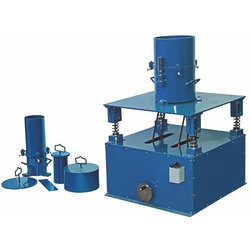
Tell us about your requirement

Price:
Quantity
Select Unit
- 50
- 100
- 200
- 250
- 500
- 1000+
Additional detail
Mobile number
Email

More Products in Soil Testing Equipments Category
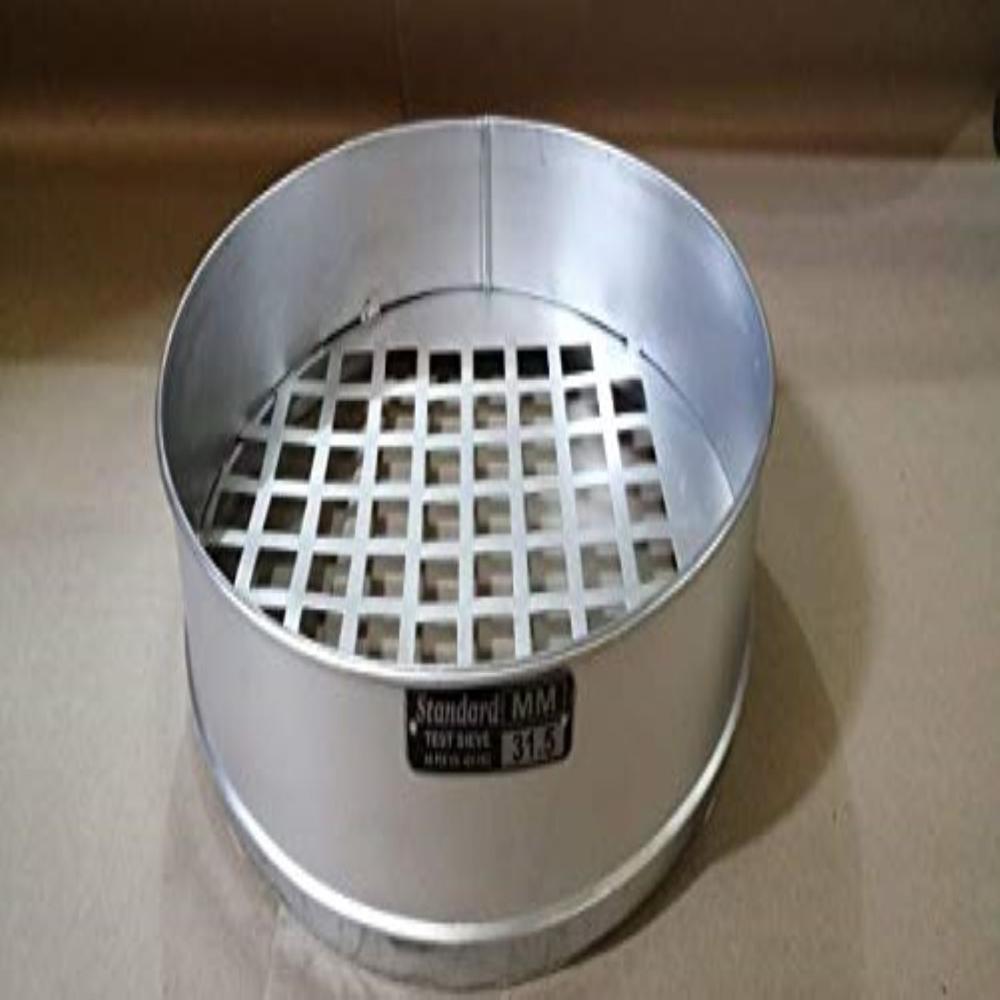
G. I. Frame sieves 300 & 450 mm dia (powder coated)
Price 1500.0 INR
Minimum Order Quantity : 1 Piece
Power Supply : Not required (manual)
Mounting Type : Tabletop/stackable
Usage : Manual sieve shaking/stacking for particle separation
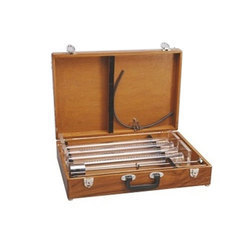
Sand Equivalent Test Set
Price 10500 INR / Piece
Minimum Order Quantity : 1 Piece
Power Supply : Manual
Mounting Type : Floor Mounting
Usage : Laboratory
Material : Glass
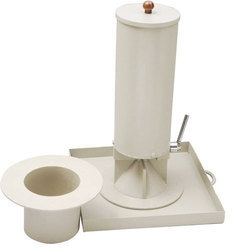
Sand Pouring Cylinder
Price 5000 INR / Piece
Minimum Order Quantity : 1 Piece
Power Supply : Manual
Mounting Type : Floor Mounting
Usage : Laboratory
Material : Metal

Pycno meters
Price 600 INR / Piece
Minimum Order Quantity : 1 Piece
Power Supply : Manual
Mounting Type : Floor Mounting
Usage : laboratory
Material : Glass

We are dealing in Coimbatore, Chennai and Tamilnadu.
 Send Inquiry
Our Products
- Concrete Testing Equipment
- Survey Lab Equipment
- Construction Equipment
- Concrete Testing Machine
- Soil Test Machine
- Survey Instrument
- Auto Level
- Cement Testing Machine
- Soil Testing Equipments
- Soil Testing Equipment
- Civil Engineering Lab Equipment
- Total Station
- Soil Test equipments
- Auto Level
- Concrete Highway Engineering lab
- Mechanical Engineering Lab Equipment
- Weighing Scale
- Laboratory Testing Equipment
- Workshop Trolleys
- Compression Testing Machine
- Water Testing Equipment
- Vertical Milling Machine
- Moulding Products
- CNC Machines
- Measuring Ruler
- Cylinder Carrier
- Core Cutting Machine
- Digital Measuring Machine
- Hydraulic Jack
- Drawing Instruments
- Fuel Testing Equipment
- Dynamics Lab Equipment
- Hydraulics and Fluid Mechanics Lab Equipment
- Heat Transfer Lab Equipment
- Scientific Equipment
- Surgical Equipment
- Hot Air Oven
- Impact Testing Machine
- Torsion Testers
- Bernoullis Theorem Apparatus
- Wooden Tripod
- Liquid Mercury
- Vibrating Table
- Material Testing Equipment
- Agriculture Equipment
- Waste Water Analysis

SF No. 189/1B1A, 191/3A1A1E, Sidco Private Industrial Estate, LIC Colony, Kurichi Pudhu Nagar, Kuruchi Housing,Coimbatore - 641021, Tamil Nadu, India

Mr Balamurugan C
(Manager)
Mobile :07313727211
 Send Inquiry
 Send SMS
Developed and Managed by Infocom Network Private Limited.
