
Call us now :07313727211
 Send Inquiry
 Send Inquiry
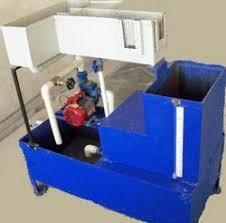
Francis Turbine Test Rig
Price 6000 INR/ Piece
MOQ : 1 Piece
Francis Turbine Test Rig Specification
- Mounting Type
- Floor Mounting
- Material
- Mild Steel
- Operate Method
- Automatic
- Usage
- Laboratory
- Power Supply
- Electric
- Color
- Blue Grey
Francis Turbine Test Rig Trade Information
- Minimum Order Quantity
- 1 Piece
- FOB Port
- Chennai
- Payment Terms
- Cash in Advance (CID), Cash Advance (CA)
- Delivery Time
- 2 Week
- Main Export Market(s)
- Asia
- Main Domestic Market
- Chandigarh, Himachal Pradesh, Tripura, Manipur, Pondicherry, Uttarakhand, Dadra and Nagar Haveli, Lakshadweep, South India, East India, West India, Andaman and Nicobar Islands, Assam, Arunachal Pradesh, Bihar, Delhi, Daman and Diu, Goa, Jammu and Kashmir, Jharkhand, Karnataka, Kerala, Maharashtra, Mizoram, Meghalaya, Nagaland, Odisha, Punjab, Rajasthan, Sikkim, Tamil Nadu, Telangana, Haryana, Uttar Pradesh, Gujarat, West Bengal, Madhya Pradesh, North India, Andhra Pradesh, Central India, Chhattisgarh, All India
About Francis Turbine Test Rig
Francis Turbine Test Rig
Francis turbine is a reaction turbine which was developed by an English born American engineer Sir J.B Francis. the water enter the turbine though the outer periphery of the runner in The redial direction & leaves the runner in axial direction & hence it is called a mixed flow turbine As the water flow to the the runner a part of pressure energy goes on changing in to kinetic energy. Thus the water though the runner is completely enclosed in a air tight casing & the casing & runner is always full of water.
Robust Construction and Design
Built from high-quality mild steel, the Francis Turbine Test Rig provides durability and stability, essential for laboratory experiments. Its blue-grey finish lends a modern appearance while resisting corrosion and wear, ensuring long-term use in demanding academic or research settings.
Effortless Automatic Operation
With an integrated automatic operating system, users can easily conduct turbine performance experiments without complex manual intervention. This feature streamlines workflow, reduces preparation time, and ensures precise control during each test cycle.
Versatile Laboratory Applications
Specially engineered for laboratory usage, this floor-mounted rig is fundamental in helping students and researchers analyze various aspects of hydraulic machinery. It supports practical learning and hands-on experimentation, enriching the educational experience in institutes across India.
FAQs of Francis Turbine Test Rig:
Q: How does the automatic operation method benefit users of the Francis Turbine Test Rig?
A: The automatic operation of the Francis Turbine Test Rig simplifies testing procedures, reducing human error and ensuring consistent, reliable results. This ease of use is particularly advantageous in laboratory settings, enabling students and researchers to focus on data collection and analysis rather than manual adjustments.Q: What is the primary purpose of using the Francis Turbine Test Rig in laboratories?
A: The main purpose of this test rig is to facilitate the detailed study and performance testing of Francis turbines under controlled laboratory conditions. It allows for observation, measurement, and analysis of hydraulic and mechanical efficiencies, making it a valuable tool for both instruction and research.Q: When is the Francis Turbine Test Rig typically incorporated into laboratory courses or research projects?
A: This test rig is generally utilized during academic sessions focused on fluid machinery, hydraulics, and renewable energy systems. It is also employed in research projects that investigate turbine behavior, energy conversion, and performance optimization.Q: Where can the Francis Turbine Test Rig be sourced in India?
A: The test rig is available throughout India via a broad range of channels, including dealers, distributors, exporters, manufacturers, producers, retailers, suppliers, traders, and wholesalers. These entities ensure timely supply, installation, and after-sales support to educational and research institutions.Q: What is the process of mounting the Francis Turbine Test Rig in a laboratory?
A: The rig is designed for floor mounting, which involves securely fixing it to a stable, level surface. Installation is usually performed by experienced technicians provided by the supplier, ensuring proper alignment and safe operation as per laboratory requirements.Q: How is the Francis Turbine Test Rig powered and why is this advantageous?
A: Powered by electricity, the rig offers reliable and consistent energy for experiments. Electric operation eliminates the need for manual power input, streamlining experimental procedures and supporting uninterrupted research activities.Q: What benefits does using a mild steel construction provide for the Francis Turbine Test Rig?
A: Mild steel offers exceptional strength and resistance to mechanical stress, ensuring the rig endures frequent use in dynamic laboratory environments. Its durability, combined with a corrosion-resistant finish, results in minimal maintenance and a prolonged operational lifespan.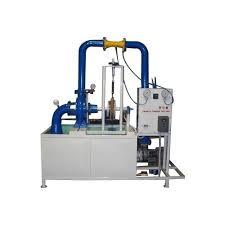
Tell us about your requirement

Price:
Quantity
Select Unit
- 50
- 100
- 200
- 250
- 500
- 1000+
Additional detail
Mobile number
Email

More Products in Hydraulics and Fluid Mechanics Lab Equipment Category
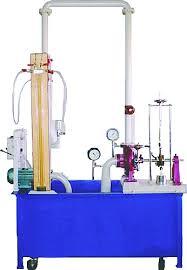
Kaplan Turbine Test Rig
Price 2000 INR / Piece
Minimum Order Quantity : 1 Piece
Color : Blue White
Power Supply : Electric
Usage : Laboratory
Operate Method : Automatic
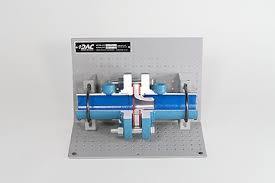
Flow Nozzle
Price 4000 INR / Piece
Minimum Order Quantity : 1 Piece
Color : Blue
Power Supply : Manual
Usage : Laboratory
Operate Method : Manual
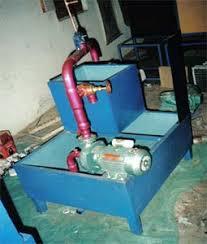
Pitot Tube Apparatus
Price 3000 INR / Piece
Minimum Order Quantity : 1 Piece
Color : Blue
Power Supply : Electric
Usage : Laboratory
Operate Method : Automatic
Notch Apparatus
Price 5000 INR
Minimum Order Quantity : 1 Piece
Color : Blue
Power Supply : Electric
Usage : Laboratory
Operate Method : Automatic

We are dealing in Coimbatore, Chennai and Tamilnadu.
 Send Inquiry
Our Products
- Concrete Testing Equipment
- Survey Lab Equipment
- Construction Equipment
- Concrete Testing Machine
- Soil Test Machine
- Survey Instrument
- Auto Level
- Cement Testing Machine
- Soil Testing Equipments
- Soil Testing Equipment
- Civil Engineering Lab Equipment
- Total Station
- Soil Test equipments
- Auto Level
- Concrete Highway Engineering lab
- Mechanical Engineering Lab Equipment
- Weighing Scale
- Laboratory Testing Equipment
- Workshop Trolleys
- Compression Testing Machine
- Water Testing Equipment
- Vertical Milling Machine
- Moulding Products
- CNC Machines
- Measuring Ruler
- Cylinder Carrier
- Core Cutting Machine
- Digital Measuring Machine
- Hydraulic Jack
- Drawing Instruments
- Fuel Testing Equipment
- Dynamics Lab Equipment
- Hydraulics and Fluid Mechanics Lab Equipment
- Heat Transfer Lab Equipment
- Scientific Equipment
- Surgical Equipment
- Hot Air Oven
- Impact Testing Machine
- Torsion Testers
- Bernoullis Theorem Apparatus
- Wooden Tripod
- Liquid Mercury
- Vibrating Table
- Material Testing Equipment
- Agriculture Equipment
- Waste Water Analysis

SF No. 189/1B1A, 191/3A1A1E, Sidco Private Industrial Estate, LIC Colony, Kurichi Pudhu Nagar, Kuruchi Housing,Coimbatore - 641021, Tamil Nadu, India

Mr Balamurugan C
(Manager)
Mobile :07313727211
 Send Inquiry
 Send SMS
Developed and Managed by Infocom Network Private Limited.
