
Call us now :07313727211
 Send Inquiry
 Send Inquiry
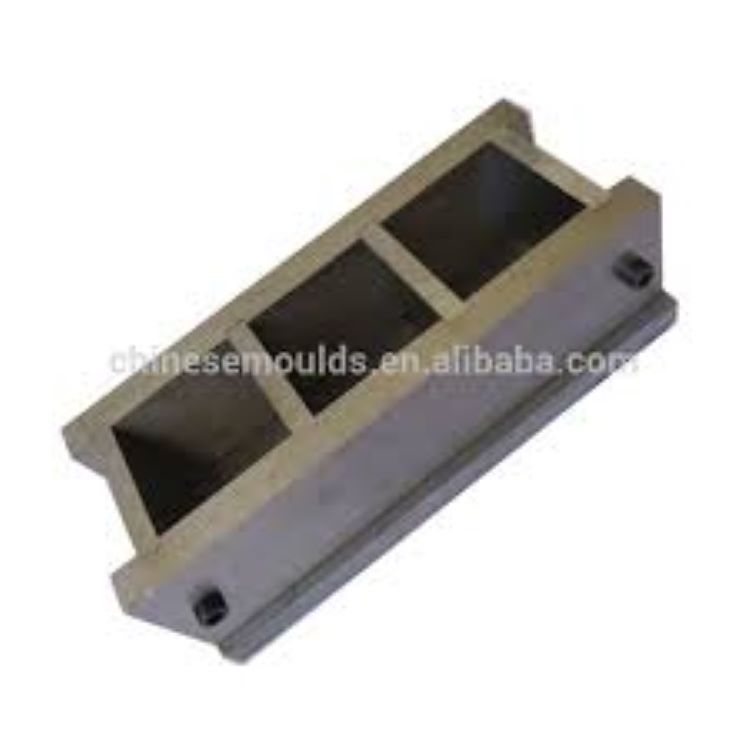
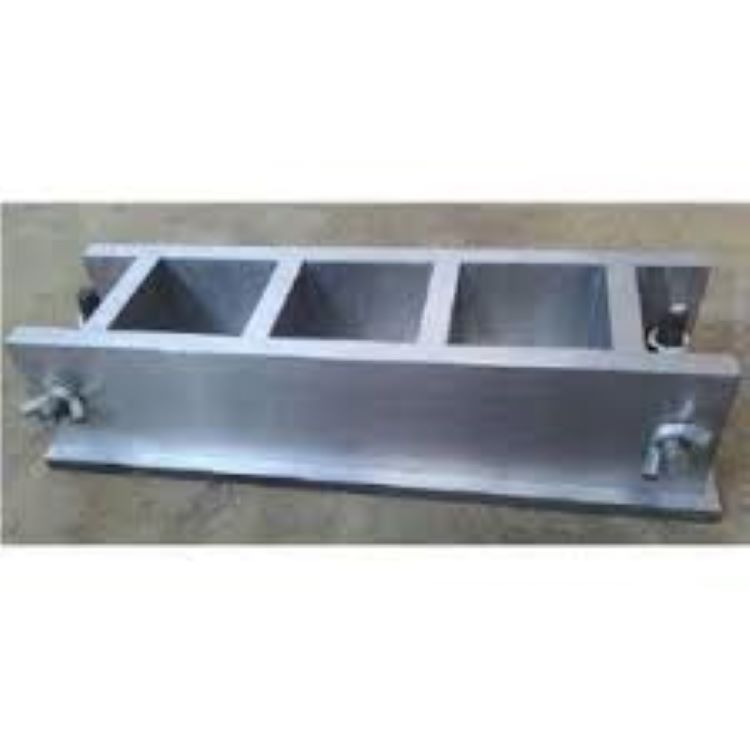
Cube Mould (Three Gang)
Price 3000.0 INR/ Piece
MOQ : 1 Piece
Cube Mould (Three Gang) Specification
- Molding Material
- Concrete
- Mold Base
- Cast Iron
- Cavity
- Three Gang (3 Cubes in Series)
- Life Span
- Over 5000 cycles
- Shaping Mode
- Casting Mould
- Material
- High Grade Cast Iron
- Tolerance
- ±0.2 mm
- Mould Weight
- Approx. 14 kg
- Mould Life
- Long Life, Heavy Duty
- Surface Treatment
- Anti-corrosive Paint
- Clamping
- Supplied with detachable base plate and clamping bolts
- Assembly
- Easily assembled and dismantled
- Finish
- Machined Surface, Smooth finish
- Application
- For compressive strength testing of cement/ concrete cubes in laboratories
- Packaging
- Corrugated Box or Wooden Crate
- Cube Size
- 150 mm x 150 mm x 150 mm each
- Marking
- Clearly marked numbers for identification
Cube Mould (Three Gang) Trade Information
- Minimum Order Quantity
- 1 Piece
- FOB Port
- COIMBATORE
- Average Load Time
- 30 seconds per set up
- Payment Terms
- Cash Advance (CA), Cash in Advance (CID)
- Supply Ability
- 1 Piece Per Day
- Delivery Time
- 1 Days
- Sample Available
- No
- Packaging Details
- COTTON BOX
- Main Export Market(s)
- Asia, Africa
- Main Domestic Market
- East India, Gujarat, Jammu and Kashmir, Madhya Pradesh, Tripura, All India, South India, Central India, Maharashtra, Nagaland, Rajasthan, Sikkim, Tamil Nadu, West India, North India, Andaman and Nicobar Islands, Arunachal Pradesh, Chhattisgarh, Haryana, Himachal Pradesh, Uttar Pradesh, Uttarakhand, West Bengal, Karnataka, Kerala, Lakshadweep, Mizoram, Meghalaya, Manipur, Andhra Pradesh, Bihar, Chandigarh, Daman and Diu, Goa, Jharkhand, Odisha, Punjab, Assam, Delhi, Dadra and Nagar Haveli, Telangana, Pondicherry
About Cube Mould (Three Gang)
Specification:
This Cube Mould forms three cubes at one time in a diagonal arrangement. Mold and detachable base are held together by self-aligning thumbscrews, which ensure an even, tight fit.
ZI 2034 50mm x 50mm x 50mm
A three-gang cube mould is a device used to create three concrete cube specimens simultaneously for compressive strength testing. These molds are typically made of steel or cast iron and are designed to ensure accurate dimensions and easy demolding. Specifications vary, but common features include a detachable base, self-aligning thumbscrews or butterfly screws for securing the mold, and a smooth internal surface for easy specimen removal.
Key Features and Specifications:
- Number of Gangs: 3, allowing for the creation of three cube specimens at once.
- Material: Commonly made of steel or cast iron.
- Dimensions: Typical cube size is 50mm x 50mm x 50mm, but other sizes are available.
- Construction: Usually consists of a base and a mold body, which can be detachable or fixed.
- Securing Mechanism: Uses thumbscrews, butterfly screws, or T-bolts to secure the mold halves.
- Internal Surface: Machined smooth to facilitate easy demolding of specimens.
- Standards Compliance: Meets relevant standards like EN 12390-1.
- Weight: Varies depending on size and material, but can range from a few kilograms to around 19 kg.
Crafted for Precision and Durability
Each Cube Mould is manufactured from high-grade cast iron, providing a robust framework with excellent dimensional stability. The machined surfaces enhance smoothness, ensuring accurate cube formation essential for precise compressive strength tests. The anti-corrosive surface treatment further extends the mould's lifespan, making it suitable for heavy-duty laboratory use.
User-Friendly Assembly Meets Laboratory Standards
Designed for practicality, the Three Gang Cube Mould is easy to assemble and dismantle with detachable base plates and clamping bolts. This streamlined process not only saves time but also supports high-throughput laboratory operations. The inclusion of clear marking numbers aids in sample identification and documentation, boosting workflow productivity.
FAQ's of Cube Mould (Three Gang):
Q: How is the Cube Mould (Three Gang) assembled and dismantled for use in the laboratory?
A: The mould features a detachable base plate and clamping bolts, enabling rapid and simple assembly or disassembly. This design supports efficient workflows in labs requiring frequent sample preparation and cleaning.Q: What is the main benefit of using a machined surface with anti-corrosive paint on the mould?
A: A machined surface ensures uniform, smooth cubes for accurate strength testing, while the anti-corrosive paint protects the cast iron during repeated use and cleaning, significantly extending the mould's working life.Q: When should the Cube Mould be used during cement or concrete testing procedures?
A: The mould is employed during the specimen preparation phase, where fresh concrete or cement is poured and compacted. After curing, the cubes are tested for compressive strength as per laboratory protocols.Q: Where is the Cube Mould (Three Gang) commonly utilized?
A: This mould is extensively used in material testing laboratories, research facilities, academic institutions, and construction quality control labs across India and globally for standardized cement and concrete testing.Q: What makes the Cube Mould suitable for long-term, repeated laboratory use?
A: Its construction from high-grade cast iron, heavy-duty build, and precision machining provide stability and durability for over 5,000 testing cycles, making it ideal for demanding laboratory environments.Q: How does clear marking benefit users during testing procedures?
A: Clear identification numbers on each mould and cavity help users accurately track samples throughout the testing process, reducing errors and streamlining laboratory recordkeeping.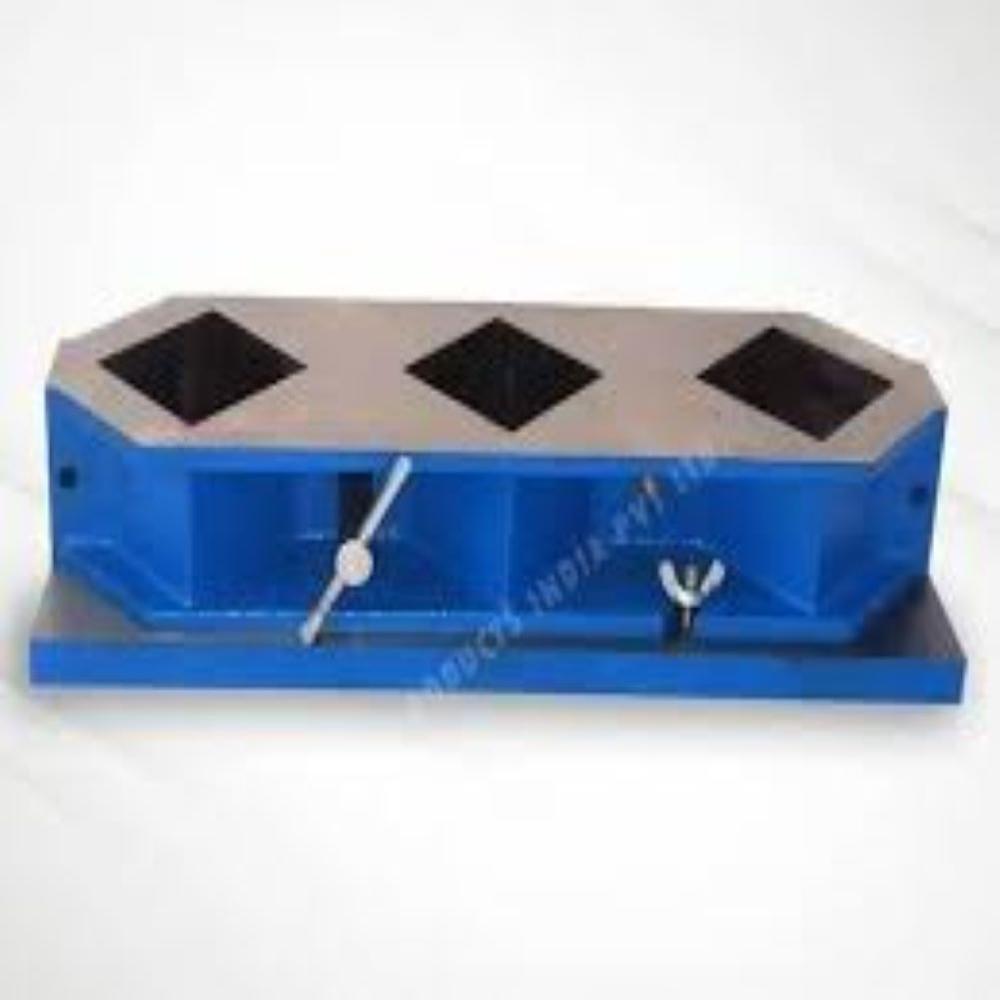
Tell us about your requirement

Price:
Quantity
Select Unit
- 50
- 100
- 200
- 250
- 500
- 1000+
Additional detail
Mobile number
Email

More Products in Moulding Products Category
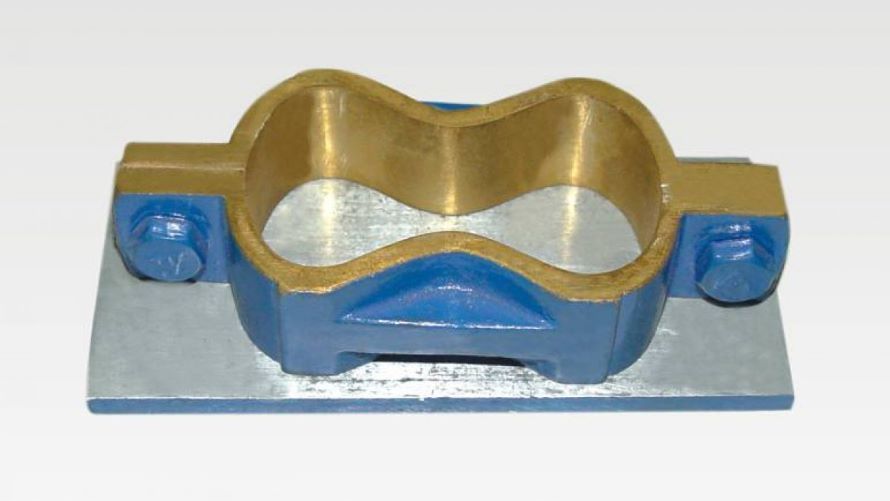
Briquette Mould (Single)
Price 3000.0 INR / Piece
Minimum Order Quantity : 1 Piece
Life Span : 57 years under normal working conditions
Material : Other, High Grade Steel
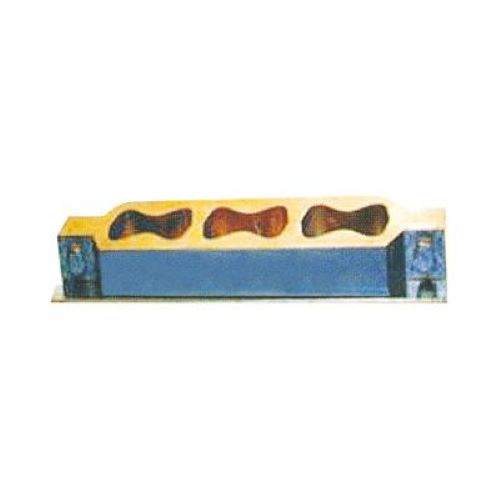
Briquette Mould (Three Gang)
Price 5000.0 INR / Piece
Minimum Order Quantity : 1 Piece
Life Span : 57 years with normal usage
Material : Other, High Grade Stainless Steel & Cast Iron
Shrinkage Bar Mould
Price 1300 INR / Piece
Minimum Order Quantity : 1 Piece
Life Span : Longlife Span
Material : Steel
Color : Yellow Silver
Usage : Industrial
Beam Mould
Price 3800 INR / Piece
Minimum Order Quantity : 1 Piece
Life Span : Longlife Span
Material : Other, Mild Steel
Color : Blue
Usage : Laboratory

We are dealing in Coimbatore, Chennai and Tamilnadu.
 Send Inquiry
Our Products
- Concrete Testing Equipment
- Survey Lab Equipment
- Construction Equipment
- Concrete Testing Machine
- Soil Test Machine
- Survey Instrument
- Auto Level
- Cement Testing Machine
- Soil Testing Equipments
- Soil Testing Equipment
- Civil Engineering Lab Equipment
- Total Station
- Soil Test equipments
- Auto Level
- Concrete Highway Engineering lab
- Mechanical Engineering Lab Equipment
- Weighing Scale
- Laboratory Testing Equipment
- Workshop Trolleys
- Compression Testing Machine
- Water Testing Equipment
- Vertical Milling Machine
- Moulding Products
- CNC Machines
- Measuring Ruler
- Cylinder Carrier
- Core Cutting Machine
- Digital Measuring Machine
- Hydraulic Jack
- Drawing Instruments
- Fuel Testing Equipment
- Dynamics Lab Equipment
- Hydraulics and Fluid Mechanics Lab Equipment
- Heat Transfer Lab Equipment
- Scientific Equipment
- Surgical Equipment
- Hot Air Oven
- Impact Testing Machine
- Torsion Testers
- Bernoullis Theorem Apparatus
- Wooden Tripod
- Liquid Mercury
- Vibrating Table
- Material Testing Equipment
- Agriculture Equipment
- Waste Water Analysis

SF No. 189/1B1A, 191/3A1A1E, Sidco Private Industrial Estate, LIC Colony, Kurichi Pudhu Nagar, Kuruchi Housing,Coimbatore - 641021, Tamil Nadu, India

Mr Balamurugan C
(Manager)
Mobile :07313727211
 Send Inquiry
 Send SMS
Developed and Managed by Infocom Network Private Limited.
