
Call us now :07313727211
 Send Inquiry
 Send Inquiry
Consolidation Cells (Floating)
Price 12000 INR/ Piece
MOQ : 1 Piece
Consolidation Cells (Floating) Specification
- Material
- Stainless Steel
- Usage
- Laboratory
- Color
- Silver
- Power Supply
- Manual
- Control Mode
- Manual
Consolidation Cells (Floating) Trade Information
- Minimum Order Quantity
- 1 Piece
- FOB Port
- Chennai
- Payment Terms
- Cash in Advance (CID), Cash Advance (CA)
- Delivery Time
- 2 Week
- Main Export Market(s)
- Asia
- Main Domestic Market
- Manipur, Dadra and Nagar Haveli, Chandigarh, Himachal Pradesh, Andaman and Nicobar Islands, Pondicherry, Nagaland, Uttarakhand, Daman and Diu, Lakshadweep, South India, East India, West India, Andhra Pradesh, Assam, Arunachal Pradesh, Bihar, Delhi, Goa, Jammu and Kashmir, Jharkhand, Karnataka, Madhya Pradesh, Maharashtra, Mizoram, Meghalaya, Rajasthan, Sikkim, Tamil Nadu, Telangana, Tripura, West Bengal, Haryana, Uttar Pradesh, Gujarat, North India, Punjab, Kerala, Central India, Odisha, Chhattisgarh, All India
About Consolidation Cells (Floating)
Water trough: Floating ring type of Consolidometer (Odeometer) cell assembly for specimens complete with floating ring with two guide rings,pair of porous stones, pressure pad and cutting collar. Set of weights to give a pressure of 10kg/cm. sq. on 60mm dia specimens. Floating ring type of Consolidometer (Oedometer)cell assembly for 50mm dia x 20mm thick specimens complete with accessories as above. Set of weights to give a pressure of 10kg/cm2. On70mm dia specimen. Floating ring type of Consolidometer (Odeometer) cell assembly for 100mm dia x 25mm thick specimens complete with accessories as above. Set of weights to give a pressure of 10kg/cm2. On 100mm dia specimen. Additional set of weights for loading up to 20kg/ cm2. Set of weights to give a pressure of 10kg / cm2. On a60mm dia specimen comprising 10 off 1.0kg/cm2. Set of weights to give a pressure of 10kg /cm2. On a50mm dia specimen comprising 10 off 1.0kg/cm2.
Exceptional Durability and Design
Crafted from high-quality stainless steel and finished in a sleek silver color, these consolidation cells offer robustness and a professional appearance. Their resistance to corrosion and wear ensures long-term performance in demanding laboratory environments.
Versatile Distribution Network in India
Whether you require a single unit or a bulk order, these consolidation cells are accessible through a comprehensive network of suppliers across Indiaincluding traders, wholesalers, exporters, and more. This ensures prompt availability and support for laboratories nationwide.
Essential for Soil Testing Procedures
These manual consolidation cells are vital in geotechnical testing, enabling accurate assessment of soil compressibility. Laboratories benefit from their ease of operation, reliability, and relevance in both research and practical fieldwork applications.
FAQs of Consolidation Cells (Floating):
Q: How are the consolidation cells (floating) used in laboratory settings?
A: These cells are primarily used in soil testing laboratories to measure the consolidation properties of soil samples. They evaluate how soil compresses under load, which is essential for geotechnical and civil engineering applications.Q: What makes stainless steel a preferable material for these consolidation cells?
A: Stainless steel is chosen for its outstanding strength, resistance to corrosion, and longevity. This ensures the consolidation cells remain precise and functional, even after repeated usage in potentially harsh laboratory environments.Q: When should I consider manual consolidation cells over automated options?
A: Manual consolidation cells are ideal when you require reliable operation without the need for electricity or electronic control systems. They are especially useful in laboratories where simple, hands-on operation is preferred or where electronic maintenance is impractical.Q: Where can I purchase these silver, stainless steel consolidation cells in India?
A: They are widely available throughout India via authorized dealers, manufacturers, suppliers, exporters, traders, wholesalers, and retailers specializing in laboratory equipment.Q: What is the process for operating a manual consolidation cell?
A: To operate, place the prepared soil sample in the cell, manually apply the specified load incrementally, and record deformation over time. This process accurately determines the compression characteristics of the tested soil.Q: How does using a consolidation cell benefit laboratory soil testing?
A: Using these cells provides reliable and precise data on soil behavior under pressure, aiding in foundational analysis and decision-making for engineering projects and soil studies.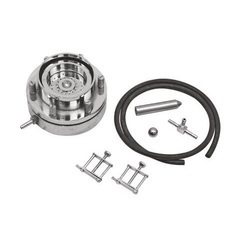
Tell us about your requirement

Price:
Quantity
Select Unit
- 50
- 100
- 200
- 250
- 500
- 1000+
Additional detail
Mobile number
Email

More Products in Soil Test Machine Category

Motorised Laboratory California Bearing Ratio Apparatus
Price 70000 INR / Piece
Minimum Order Quantity : 1 Piece
Material : Mild Steel
Usage : laboratory
Color : Grey
Power Supply : Electric
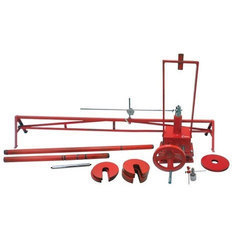
California Bearing Ratio Test (Field Type) Equipment
Price 49000 INR / Piece
Minimum Order Quantity : 1 Piece
Material : Mild Steel
Usage : laboratory
Color : Red
Power Supply : Manual
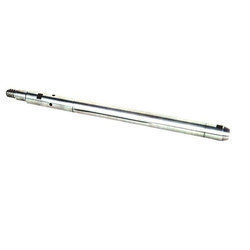
Split Spoon Sampler
Price 8500 INR / Piece
Minimum Order Quantity : 1 Piece
Material : Stainless Steel
Usage : laboratory
Color : Silver
Power Supply : Manual
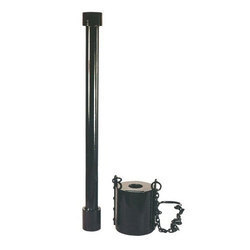
Drop Hammer And Guide Pipe Assembly
Price 15000 INR / Piece
Minimum Order Quantity : 1 Piece
Material : Mild Steel
Usage : laboratory
Color : White
Power Supply : Manual

We are dealing in Coimbatore, Chennai and Tamilnadu.
 Send Inquiry
Our Products
- Concrete Testing Equipment
- Survey Lab Equipment
- Construction Equipment
- Concrete Testing Machine
- Soil Test Machine
- Survey Instrument
- Auto Level
- Cement Testing Machine
- Soil Testing Equipments
- Soil Testing Equipment
- Civil Engineering Lab Equipment
- Total Station
- Soil Test equipments
- Auto Level
- Concrete Highway Engineering lab
- Mechanical Engineering Lab Equipment
- Weighing Scale
- Laboratory Testing Equipment
- Workshop Trolleys
- Compression Testing Machine
- Water Testing Equipment
- Vertical Milling Machine
- Moulding Products
- CNC Machines
- Measuring Ruler
- Cylinder Carrier
- Core Cutting Machine
- Digital Measuring Machine
- Hydraulic Jack
- Drawing Instruments
- Fuel Testing Equipment
- Dynamics Lab Equipment
- Hydraulics and Fluid Mechanics Lab Equipment
- Heat Transfer Lab Equipment
- Scientific Equipment
- Surgical Equipment
- Hot Air Oven
- Impact Testing Machine
- Torsion Testers
- Bernoullis Theorem Apparatus
- Wooden Tripod
- Liquid Mercury
- Vibrating Table
- Material Testing Equipment
- Agriculture Equipment
- Waste Water Analysis

SF No. 189/1B1A, 191/3A1A1E, Sidco Private Industrial Estate, LIC Colony, Kurichi Pudhu Nagar, Kuruchi Housing,Coimbatore - 641021, Tamil Nadu, India

Mr Balamurugan C
(Manager)
Mobile :07313727211
 Send Inquiry
 Send SMS
Developed and Managed by Infocom Network Private Limited.
