
Call us now :07313727211
 Send Inquiry
 Send Inquiry
Blaine Air Permeability Apparatus
Price 5000.0 INR/ Piece
MOQ : 1 Piece
Blaine Air Permeability Apparatus Specification
- Max Height
- Approx. 30 cm
- Accuracy
- ±1% (depending on calibration and operation care)
- Port Size
- Standard glass tube opening
- Application
- Determining the fineness of cement and other powders by specific surface area
- Resolution
- 1 cm²/g
- Equipment Type
- Air Permeability Apparatus
- Humidity
- Ambient (should be maintained between 20% - 80%)
- Response Time
- Immediate (manual time measurement)
- Automation Grade
- Manual
- Measuring Range
- 100 - 5000 cm²/g
- Features
- Compact design, easy to use, suitable for laboratory use, robust glass and metal construction
- Specimen Size
- Sample weight 2-4 grams depending on fineness
- Mounting Type
- Bench-top
- Number of Specimens
- Single specimen per test
- Display Type
- Manometer with glass scale
- Temperature
- 15°C to 40°C (operating)
- Gas Pressure
- Atmospheric pressure (uses ambient air)
- Test Range
- Specific Surface area of 100-5000 cm²/g
- Power Supply
- Not Required (Manual)
- Usage
- For laboratory analysis of cement fineness
- Capacity
- Single Test Unit
- Machine Weight
- Approx. 3 kg
- Test Speed
- Manual operation
- Control Mode
- Manual
- Calibration Requirement
- Periodic calibration with reference cement
- Color
- Transparent (glass), Blue/Black (metal stand)
- Accessories Included
- Permeability cell, manometer, rubber aspirator, filter paper, and weighed sample tube
- Compliance
- IS 4031, ASTM C204 & BS 4359 standards
- Typical User
- Laboratories, cement manufacturers, research centers
- Cleaning Method
- Dismantlable for easy cleaning
- Manometer Type
- U-tube manometer with scale
- Fineness Measurement Principle
- Blaine Air Permeability Method
- Brand Compatibility
- Universal laboratory usage
- Body Material
- Borosilicate glass and powder-coated metal stand
- Sample Preparation Tool
- Provided
- Oil Type for Manometer
- Low viscosity liquid paraffin/oil
Blaine Air Permeability Apparatus Trade Information
- Minimum Order Quantity
- 1 Piece
- FOB Port
- COIMBATORE
- Payment Terms
- Cash Advance (CA), Cash in Advance (CID)
- Supply Ability
- 1 Piece Per Day
- Delivery Time
- 1 Days
- Sample Available
- No
- Packaging Details
- COTTON BOX
- Main Export Market(s)
- Asia, Africa
- Main Domestic Market
- Haryana, Himachal Pradesh, Jammu and Kashmir, Madhya Pradesh, Maharashtra, Central India, Mizoram, Meghalaya, Manipur, Andhra Pradesh, Bihar, Chandigarh, All India, South India, West India, North India, East India, Gujarat, Karnataka, Kerala, Lakshadweep, Daman and Diu, Goa, Jharkhand, Odisha, Punjab, Assam, Delhi, Dadra and Nagar Haveli, Andaman and Nicobar Islands, Arunachal Pradesh, Chhattisgarh, Nagaland, Rajasthan, Sikkim, Tamil Nadu, Telangana, Tripura, Pondicherry, Uttar Pradesh, Uttarakhand, West Bengal
About Blaine Air Permeability Apparatus
Specification:
Designed to find out specific gravities of semi liquids like mud and other liquids having densities in the range 0.8 to 2.5. It has a stainless steel bam calibrated specific gravities from 0.8 to 2.5. A stainless steel cup with lid and overflow vent is fitted on one side of the beam. A counter weights with cursor slides over the graduated scale. The beam has a knife-edge at centre which rests in a fulcrum fitted in the stand. Leveling screws and spirit level are fitted to the stand.
Spares & Accessories (On Extra Cost) :
Punch to cut filter paper discs. Non-perforated disc. Suction bulb, Mercury
Precise Fineness Measurement
Employing the Blaine Air Permeability Method, the apparatus provides accurate, repeatable determination of cement and powder fineness based on specific surface area, with a resolution of 1 cm2/g and 1% accuracy. Suitable for samples weighing 2-4 grams, users get immediate readings for efficient analysis and quality control.
Robust and Practical Construction
Built with transparent borosilicate glass for visibility and a sturdy powder-coated metal stand, the device promises longevity and easy maintenance. Its compact, dismantlable design enables straightforward cleaning, and all required sample preparation tools are included for smooth operation.
FAQ's of Blaine Air Permeability Apparatus:
Q: How is the fineness of cement measured using the Blaine Air Permeability Apparatus?
A: The apparatus measures fineness by determining the specific surface area of cement powder. Ambient air is drawn through a standardized permeability cell containing a compressed sample, and the flow rate is measured using a U-tube manometer, yielding the specific surface area in cm2/g.Q: What accessories are included with the Blaine Air Permeability Apparatus, and how are they used?
A: The apparatus includes a permeability cell, U-tube manometer with glass scale, rubber aspirator, filter paper, weighed sample tube, and sample preparation tool. These accessories facilitate accurate sample containment, air movement, and extraction of results.Q: When should the Blaine Air Permeability Apparatus be calibrated, and how is calibration performed?
A: Periodic calibration is recommended, especially before a critical series of tests. Calibration involves using reference cement with known fineness to verify the apparatus readings and make necessary adjustments for optimal accuracy.Q: Where can the Blaine Air Permeability Apparatus be installed and used?
A: It is designed for bench-top mounting in laboratories, cement manufacturing plants, research facilities, and educational institutions. Its compact design allows for convenient placement on standard laboratory benches.Q: What is the process for preparing a sample for fineness testing?
A: A sample of cement weighing between 2 to 4 grams is carefully prepared using the included tool and filter paper, ensuring homogeneity. The sample is placed in the permeability cell, assembled according to instructions, and then subjected to testing as per standards.Q: How does the Blaine Air Permeability Apparatus benefit laboratory users and cement manufacturers?
A: Users benefit from reliable, accurate measurement of cement particle fineness, aiding in quality control and compliance with international standards. Its easy operation, low maintenance, and immediate response time streamline laboratory workflow and improve productivity.Q: Is the apparatus suitable for testing powders other than cement?
A: Yes, while optimized for cement, the Blaine Air Permeability Apparatus can be used to measure the specific surface area of other similar powders within the given capacity and measuring range.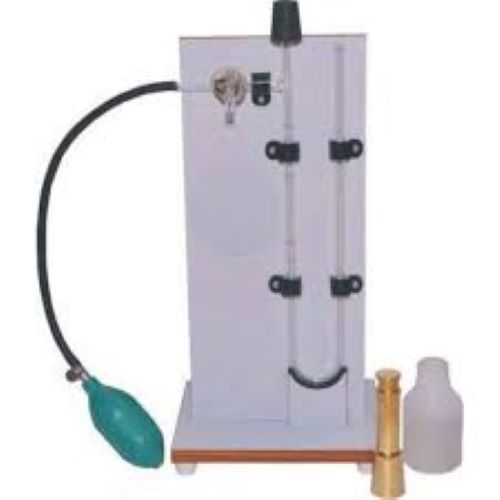
Tell us about your requirement

Price:
Quantity
Select Unit
- 50
- 100
- 200
- 250
- 500
- 1000+
Additional detail
Mobile number
Email

More Products in Cement Testing Machine Category
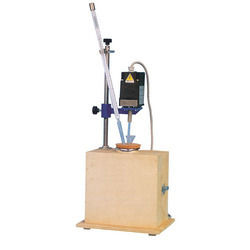
Heat Of Hydration Apparatus
Price 38000 INR / Piece
Minimum Order Quantity : 1 Piece
Color : White
Usage : laboratory
Power Supply : Electric
Material : Mild Steel
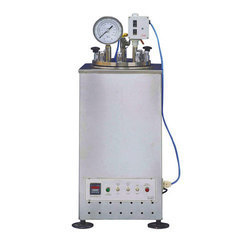
Laboratory Cement Autoclave
Price 68000 INR / Piece
Minimum Order Quantity : 1 Piece
Color : White
Usage : laboratory
Power Supply : Electric
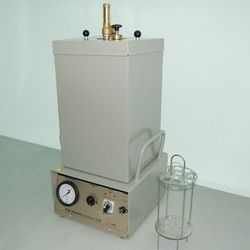
High Pressure Cement Autoclave
Price 350000.00 INR / Piece
Minimum Order Quantity : 1 Piece
Color : Grey
Usage : laboratory
Power Supply : Electric
Material : MS
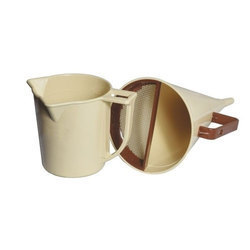
Marsh Funnel with Measuring Cup
Price 5500 INR / Piece
Minimum Order Quantity : 1 Piece
Color : blue
Usage : laboratory
Material : Mild Steel

We are dealing in Coimbatore, Chennai and Tamilnadu.
 Send Inquiry
Our Products
- Concrete Testing Equipment
- Survey Lab Equipment
- Construction Equipment
- Concrete Testing Machine
- Soil Test Machine
- Survey Instrument
- Auto Level
- Cement Testing Machine
- Soil Testing Equipments
- Soil Testing Equipment
- Civil Engineering Lab Equipment
- Total Station
- Soil Test equipments
- Auto Level
- Concrete Highway Engineering lab
- Mechanical Engineering Lab Equipment
- Weighing Scale
- Laboratory Testing Equipment
- Workshop Trolleys
- Compression Testing Machine
- Water Testing Equipment
- Vertical Milling Machine
- Moulding Products
- CNC Machines
- Measuring Ruler
- Cylinder Carrier
- Core Cutting Machine
- Digital Measuring Machine
- Hydraulic Jack
- Drawing Instruments
- Fuel Testing Equipment
- Dynamics Lab Equipment
- Hydraulics and Fluid Mechanics Lab Equipment
- Heat Transfer Lab Equipment
- Scientific Equipment
- Surgical Equipment
- Hot Air Oven
- Impact Testing Machine
- Torsion Testers
- Bernoullis Theorem Apparatus
- Wooden Tripod
- Liquid Mercury
- Vibrating Table
- Material Testing Equipment
- Agriculture Equipment
- Waste Water Analysis

SF No. 189/1B1A, 191/3A1A1E, Sidco Private Industrial Estate, LIC Colony, Kurichi Pudhu Nagar, Kuruchi Housing,Coimbatore - 641021, Tamil Nadu, India

Mr Balamurugan C
(Manager)
Mobile :07313727211
 Send Inquiry
 Send SMS
Developed and Managed by Infocom Network Private Limited.
