
Call us now :07313727211
 Send Inquiry
 Send Inquiry
Proctor Needles (Spring Type)
Price 11000 INR/ Piece
MOQ : 1 Piece
Proctor Needles (Spring Type) Specification
- Color
- Silver Yellow
- Power Supply
- Manual
- Material
- Stainless Steel
- Usage
- laboratory
- Mounting Type
- Floor Mounting
Proctor Needles (Spring Type) Trade Information
- Minimum Order Quantity
- 1 Piece
- FOB Port
- Chennai
- Payment Terms
- Cash in Advance (CID), Cash Advance (CA)
- Delivery Time
- 2 Week
- Main Export Market(s)
- Asia
- Main Domestic Market
- Dadra and Nagar Haveli, Chandigarh, Himachal Pradesh, Sikkim, Andaman and Nicobar Islands, Uttarakhand, Daman and Diu, Lakshadweep, South India, North India, East India, West India, Andhra Pradesh, Assam, Arunachal Pradesh, Bihar, Goa, Haryana, Jammu and Kashmir, Jharkhand, Karnataka, Madhya Pradesh, Maharashtra, Mizoram, Meghalaya, Manipur, Punjab, Pondicherry, Rajasthan, Tamil Nadu, Telangana, Tripura, Nagaland, West Bengal, Delhi, Gujarat, Uttar Pradesh, Kerala, Central India, Odisha, Chhattisgarh, All India
Proctor Needles (Spring Type) About
The instrument consists of a needle attached to a spring loaded plunger, the stem of which is calibrated to read 0 to 40 kg division. Long stem is graduated at every 12.5mm to read depth of penetration and for use with needles of larger areas. The small penetration stem is also graduation in 12.5mm division and is used with needles of smaller areas. And one Tommy pin is supplied. Complete as above in a wooden carrying case
Additional Information:
- Item Code: ZI-3022
Precise Laboratory Testing
Proctor Needles (Spring Type) excel in accurate soil testing, offering reliable measurements crucial for civil engineering and material research. Their manual, floor-mounted design ensures both convenience and stability, making them a preferred choice in laboratories across India.
Durable Construction and Finish
Constructed from stainless steel with a silver-yellow color, these needles are resistant to corrosion and built for longevity. Their sturdy build guarantees consistent performance across repeated use, making them a valuable addition to any laboratorys equipment repertoire.
FAQs of Proctor Needles (Spring Type):
Q: How are Proctor Needles (Spring Type) used in laboratories?
A: Proctor Needles (Spring Type) are used in laboratories primarily to determine the moisture content and compaction properties of soil samples. By manually pressing the needle into a soil specimen and observing penetration resistance, laboratory professionals can assess soil consistency and suitability for construction projects.Q: What is the benefit of using a stainless steel Proctor Needle in testing?
A: Using a stainless steel Proctor Needle ensures durability and resistance to corrosion, leading to consistent and reliable measurements over time. The material also offers easy cleaning, which contributes to accuracy and longevity in laboratory environments.Q: When should a Proctor Needle (Spring Type) be chosen over other types of testing equipment?
A: A Proctor Needle (Spring Type) should be selected when accurate, manual testing of soil compaction is required, especially in environments where automated equipment is unnecessary or unavailable. Its simplicity and effectiveness make it ideal for routine laboratory soil analysis.Q: Where can Proctor Needles (Spring Type) be sourced within India?
A: These needles are widely available throughout India from reputable dealers, distributors, exporters, fabricators, manufacturers, producers, retailers, suppliers, traders, and wholesalers who specialize in laboratory equipment and testing instruments.Q: What is the process for performing a soil penetration test with this needle?
A: To perform a soil penetration test, place the Proctor Needle vertically on the soil sample. Apply a steady, manual pressure to insert the needle into the soil, and measure the depth of penetration using the calibrated spring mechanism. Compare the readings to standard values to evaluate soil consistency.Q: What are the primary usage advantages of manual, floor-mounted Proctor Needles?
A: Manual, floor-mounted Proctor Needles are valued for their stability during use, ensuring accurate and repeatable results. The mechanical operation eliminates the need for external power supplies, making them suitable for a variety of laboratory settings and field testing situations.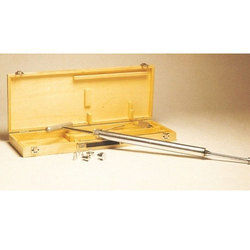
Tell us about your requirement

Price:
Quantity
Select Unit
- 50
- 100
- 200
- 250
- 500
- 1000+
Additional detail
Mobile number
Email

More Products in Soil Testing Equipments Category
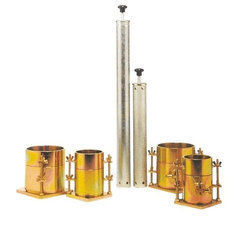
Standard Compaction Test Equipments
Price 2900 INR / Piece
Minimum Order Quantity : 1 Piece
Usage : laboratory
Color : Silver
Power Supply : Manual
Mounting Type : Floor Mounting
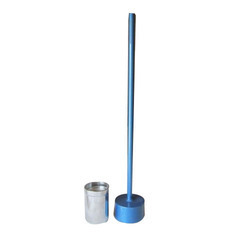
Core Cutte
Price 2000 INR / Piece
Minimum Order Quantity : 1 Piece
Usage : Laboratory
Color : Silver Blue
Power Supply : Manual
Mounting Type : Floor Mounting
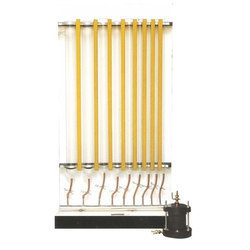
Universal Permeability Equipment
Price 29000 INR / Piece
Minimum Order Quantity : 1 Piece
Usage : laboratory
Color : Yellow
Power Supply : Manual
Mounting Type : Wall Mount
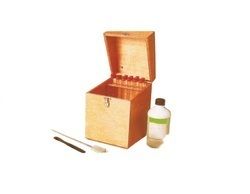
Soil Testing Kit
Price 5200 INR / Piece
Minimum Order Quantity : 1 Piece
Usage : laboratory
Color : Brown
Power Supply : Manual
Mounting Type : Floor Mounting

We are dealing in Coimbatore, Chennai and Tamilnadu.
 Send Inquiry
Our Products
- Concrete Testing Equipment
- Survey Lab Equipment
- Construction Equipment
- Concrete Testing Machine
- Soil Test Machine
- Survey Instrument
- Auto Level
- Cement Testing Machine
- Soil Testing Equipments
- Soil Testing Equipment
- Civil Engineering Lab Equipment
- Total Station
- Soil Test equipments
- Aggregate Testing Equipment
- Concrete Highway Engineering lab
- Mechanical Engineering Lab Equipment
- Weighing Scale
- Laboratory Testing Equipment
- Compression Testing Machine
- Workshop Trolleys
- Vertical Milling Machine
- Water Testing Equipment
- Moulding Products
- CNC Machines
- Non Destructive Testing Equipment
- Core Cutting Machine
- Cylinder Carrier
- Digital Measuring Machine
- Hydraulic Jack
- Drawing Instruments
- Fuel Testing Equipment
- Dynamics Lab Equipment
- Hydraulics and Fluid Mechanics Lab Equipment
- Heat Transfer Lab Equipment
- Scientific Equipment
- Surgical Equipment
- Hot Air Oven
- Impact Testing Machine
- Torsion Testers
- Bernoullis Theorem Apparatus
- Wooden Tripod
- Liquid Mercury
- Vibrating Table
- Material Testing Equipment
- Agriculture Equipment
- Waste Water Analysis
- Precision Measuring Instruments
- Steel Testing Equipment
- Steel Testing equipments

SF No. 189/1B1A, 191/3A1A1E, Sidco Private Industrial Estate, LIC Colony, Kurichi Pudhu Nagar, Kuruchi Housing,Coimbatore - 641021, Tamil Nadu, India

Mr Balamurugan C
(Manager)
Mobile :07313727211
 Send Inquiry
 Send SMS
Developed and Managed by Infocom Network Private Limited.
