
Call us now :07313727211
 Send Inquiry
 Send Inquiry
Consolidation Apparatus (Front Loading Type)
Price 39000 INR/ Piece
MOQ : 1 Piece
Consolidation Apparatus (Front Loading Type) Specification
- Usage
- Laboratory
- Operate Method
- Semi-Automatic
- Power Supply
- Manual
- Mounting Type
- Floor Mounting
- Color
- White Green
- Material
- Mild Steel
Consolidation Apparatus (Front Loading Type) Trade Information
- Minimum Order Quantity
- 1 Piece
- FOB Port
- Chennai
- Payment Terms
- Cash Advance (CA), Cash in Advance (CID)
- Delivery Time
- 2 Week
- Main Export Market(s)
- Asia
- Main Domestic Market
- Chandigarh, Himachal Pradesh, Andaman and Nicobar Islands, Uttarakhand, Daman and Diu, Dadra and Nagar Haveli, Lakshadweep, South India, East India, West India, Assam, Arunachal Pradesh, Bihar, Delhi, Gujarat, Goa, Jammu and Kashmir, Jharkhand, Karnataka, Madhya Pradesh, Maharashtra, Mizoram, Meghalaya, Manipur, Nagaland, Pondicherry, Rajasthan, Sikkim, Tamil Nadu, Telangana, Tripura, West Bengal, Kerala, Haryana, Uttar Pradesh, North India, Punjab, Andhra Pradesh, Central India, Odisha, Chhattisgarh, All India
Consolidation Apparatus (Front Loading Type) About
Rigidly manufactured from aluminium alloy casting to provide a high degree of accuracy with any frame distortion under load. The load bridge group is supported in high accuracy self-aligning seat balls. The beam assembly is fitted with an adjustable counter balance weight. The oedometer accepts cells up to 100cm. sq. Supplied complete with rod holding the weights and coupling block holding the dial gauge or transducer.
Supplied without:
Supplied without:
- Consolidation cell
- Weights, Dial Gauge (or transducer)
- Holding bench which have to be ordered separately
Precision and Reliability for Soil Testing
This semi-automatic consolidation apparatus enables accurate soil compression tests, crucial for foundation design and geotechnical investigations. The front-loading design simplifies sample placement, reducing handling errors and ensuring consistent results. Laboratories across India benefit from its reliable power supply and sturdy floor-mounted build, making it a preferred choice for educational and research settings.
Durable Construction for Long-Term Use
Crafted from high-grade mild steel, this apparatus is engineered for strength and resilience. The floor mounting enhances operational stability, while its white-green finish adds a clean, professional touch to laboratory environments. Its robust design minimizes maintenance needs, allowing users to focus on precise testing and research.
FAQs of Consolidation Apparatus (Front Loading Type):
Q: How does the Consolidation Apparatus (Front Loading Type) with Power Supply operate?
A: This apparatus features a semi-automatic operation that combines manual intervention and automated control, allowing users to easily set up and monitor soil consolidation tests. The front-loading mechanism simplifies sample placement, while the integrated power supply ensures uniform application of loads during testing.Q: What materials is the apparatus constructed from and how does this benefit laboratory users?
A: It is made from premium mild steel, ensuring robustness and durability. This construction benefits users by providing a stable, long-lasting instrument that can withstand repeated use in demanding laboratory conditions, thereby reducing the need for frequent maintenance or replacement.Q: When should laboratories use the front loading type consolidation apparatus?
A: This apparatus is ideal for use during geotechnical investigations or any project requiring accurate measurement of soil consolidation. It is particularly valuable when studying soil behavior under different loading conditions, a key aspect of foundation and civil engineering research.Q: Where can the Consolidation Apparatus (Front Loading Type) be purchased in India?
A: The apparatus is widely available through various channels in India, including dealers, distributors, exporters, fabricators, manufacturers, producers, retailers, suppliers, traders, and wholesalers. Prospective buyers can source it from trusted laboratory equipment suppliers across the country.Q: What is the process for using this apparatus in a laboratory setting?
A: Users mount the apparatus on the laboratory floor, load the soil specimen using the front-loading access, and configure the required test settings using the semi-automatic controls. The integrated power supply applies the necessary load, and data is collected to assess soil consolidation characteristics.Q: How does the front loading design improve the testing experience?
A: The front loading mechanism reduces manual sample handling, enabling quicker setup and minimizing the risk of sample disturbance. This streamlines the testing process and improves the accuracy and reliability of test results, benefiting both research and practical applications.Q: What advantages do laboratories gain by adopting this semi-automatic, floor-mounted consolidation apparatus?
A: Laboratories benefit from enhanced operational efficiency, improved test accuracy, and reduced operator fatigue. Its sturdy mild steel construction and semi-automatic features make it a dependable choice for consistent, high-quality soil testing in various research and educational institutions.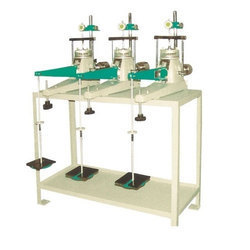
Tell us about your requirement

Price:
Quantity
Select Unit
- 50
- 100
- 200
- 250
- 500
- 1000+
Additional detail
Mobile number
Email

More Products in Soil Test Machine Category
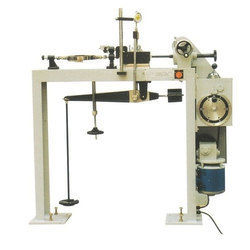
Direct Shear (Motorised Twelve Speed)
Price 92000 INR / Piece
Minimum Order Quantity : 1 Piece
Material : Mild Steel
Color : White
Usage : Laboratory
Power Supply : Electric
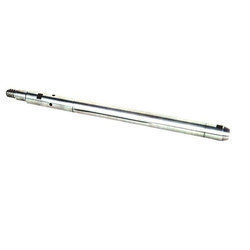
Split Spoon Sampler
Price 8500 INR / Piece
Minimum Order Quantity : 1 Piece
Material : Stainless Steel
Color : Silver
Usage : laboratory
Power Supply : Manual
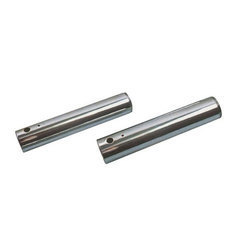
Sampling Tubes
Price 500 INR / Piece
Minimum Order Quantity : 1 Piece
Material : Stainless Steel
Color : Silver
Usage : laboratory
Power Supply : Manual
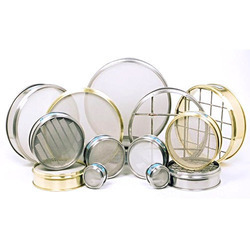
GI Frame Sieves 300 & 450 Mm Dia (Powder Coated)
Price 2000 INR / Piece
Minimum Order Quantity : 1 Piece
Material : Stainless Steel
Color : Silver
Usage : Laboratory
Power Supply : Manual

We are dealing in Coimbatore, Chennai and Tamilnadu.
 Send Inquiry
Our Products
- Concrete Testing Equipment
- Survey Lab Equipment
- Construction Equipment
- Concrete Testing Machine
- Auto Level
- Soil Test Machine
- Survey Instrument
- Cement Testing Machine
- Soil Testing Equipments
- Soil Testing Equipment
- Civil Engineering Lab Equipment
- Total Station
- Soil Test equipments
- Concrete Highway Engineering lab
- Mechanical Engineering Lab Equipment
- Weighing Scale
- Laboratory Testing Equipment
- Workshop Trolleys
- Compression Testing Machine
- Water Testing Equipment
- Cube Mould
- Non Destructive Testing Equipment
- Core Cutting Machine
- Digital Measuring Machine
- Oil & Petroleum Testing Equipment
- Drawing Instruments
- Fuel Testing Equipment
- Dynamics Lab Equipment
- Hydraulics and Fluid Mechanics Lab Equipment
- Heat Transfer Lab Equipment
- Scientific Equipment
- Standard Sand
- Hot Air Oven
- Tamping Rammer
- Structural Engineering Lab Equipment
- Pharmaceutical And Microbiology Testing Laboratory
- Thermal Engineering Laboratory Equipment
- Liquid Mercury
- Vibrating Table
- Material Testing Equipment
- Waste Water Analysis
- Precision Measuring Instruments
- Walk Behind Double Drum Roller
- Vernier Theodolite
- Bitumen Testing Equipment
- Agriculture Equipment
- Bosch Measuring Tools
- Concrete Mixer Machine
- Concrete Power Trowel
- Bar Cutting Machine
- Concrete Vibrator
- Construction Mini Lift
- Bar Bending Machine
- Construction Power Tools
- DGPS Survey Equipment
- Double Wheel Barrow
- Automobile Tools
- Aggregate Testing Equipment
- Alcohol Breath Analyser
- Construction and Building Equipments
- Earth Rammer
- GARMIN Handheld GPS
- General Laboratory Equipment

SF No. 189/1B1A, 191/3A1A1E, Sidco Private Industrial Estate, LIC Colony, Kurichi Pudhu Nagar, Kuruchi Housing,Coimbatore - 641021, Tamil Nadu, India

Mr Balamurugan C
(Manager)
Mobile :07313727211
 Send Inquiry
 Send SMS
Developed and Managed by Infocom Network Private Limited.
