
Call us now :07313727211
 Send Inquiry
 Send Inquiry
Consolidation Apparatus (Single Gang)
Price 35000 INR/ Piece
MOQ : 1 Piece
Consolidation Apparatus (Single Gang) Specification
- Power Supply
- Electric
- Material
- Mild Steel
- Color
- Silver
- Usage
- Laboratory
- Mounting Type
- Floor Mounting
- Operate Method
- Semi-Automatic
Consolidation Apparatus (Single Gang) Trade Information
- Minimum Order Quantity
- 1 Piece
- FOB Port
- Chennai
- Payment Terms
- Cash in Advance (CID), Cash Advance (CA)
- Delivery Time
- 2 Week
- Main Export Market(s)
- Asia
- Main Domestic Market
- Himachal Pradesh, Andaman and Nicobar Islands, Nagaland, Uttarakhand, Daman and Diu, Dadra and Nagar Haveli, Lakshadweep, South India, Central India, North India, East India, Andhra Pradesh, Assam, Arunachal Pradesh, Bihar, Chandigarh, Delhi, Gujarat, Goa, Haryana, Jammu and Kashmir, Jharkhand, Karnataka, Madhya Pradesh, Maharashtra, Mizoram, Meghalaya, Manipur, Punjab, Pondicherry, Rajasthan, Sikkim, Tamil Nadu, Telangana, Tripura, West Bengal, Uttar Pradesh, Kerala, Odisha, West India, Chhattisgarh, All India
Consolidation Apparatus (Single Gang) About
Consolidation test is un-dimensional test considered extremely important in soil mechanics. Sample taken from adjacent areas of a single site show differential settlement even when tested using same techniques. Soil of similar strength may show varying consolidation. Samples are very carefully prepared and vertical settlement of the specimen in saturated or drained conditions carefully recorded when known load is applied.The standard outfit comprises of the following items. Loading unit, maximum capacity 20kg/cm2. Having a loading yoke connected to a lever arm with a counter balancing adjustment and having a lever ratio of 1:1 the whole assembly being mounted on a sturdy steel frame stand. The loading unit is so designed that it can be used for consolidation cells of different diameters as well as different dia floating ring type consolidation cells. Fixed ring type Consolidometer (Oedometer) cell assembly for testing 60mm dia x 20mm thick specimen comprising: Fixed ring for specimens 60mm dia x 20mm thick with guide ring.Top and bottom porous stones for 60mm dia specimen. Perforated pressure pad, channeled base with water inlet and gasket Flanged water jacket, water reservoir with plastic tube and pinch cock.Set of weights to give a pressure of 10kg/cm.sq. On 60mm dia specimen, comprising: 7 nos. 0.05 kg/cm2, 5nos. 0.1 kg/cm2, 6nos. 0.5kg/cm2, and 5 nos. 1.0 kg/cm2.Supplied complete as above but without dial gauge.
Accessories:
Accessories:
- Dial gauge 0.002 mm x 5mm.
- Extension piece, 40 mm long
- Consolidation test forms pad of 50 for one dimensional consolidation.
Precision in Soil Testing
Achieve accurate soil consolidation data with the Single Gang Consolidation Apparatus. Its semi-automatic operation streamlines test processes, reducing human error and enhancing repeatability. Designed specifically for laboratory environments, its robust mild steel construction ensures longevity even with frequent use.
Versatile and Reliable Operation
This equipment is engineered for versatility, supporting a wide range of soil samples. Electric power supply and floor-mount design provide ease of use and stable operation. Whether for academic research or practical soil analysis, it delivers consistent and reliable results for various laboratory settings.
FAQs of Consolidation Apparatus (Single Gang):
Q: How is the Consolidation Apparatus (Single Gang) typically used in laboratories?
A: This apparatus is used to assess the consolidation properties of soil samples by applying controlled loading and monitoring deformation over time, aiding in projects such as construction and geotechnical analysis.Q: What benefits does the semi-automatic operate method offer?
A: The semi-automatic operation enhances efficiency by regulating critical processes during testing, reduces manual intervention, and ensures greater consistency and repeatability in test results.Q: When should a laboratory opt for a mild steel, floor-mounted model?
A: A mild steel, floor-mounted apparatus is recommended when durability and stability are required, particularly in high-usage labs conducting frequent or rigorous soil testing.Q: Where can the Consolidation Apparatus (Single Gang) be sourced in India?
A: This apparatus is available throughout India from various dealers, distributors, exporters, manufacturers, suppliers, traders, retailers, and wholesalers.Q: What is the process of operating this apparatus?
A: The process begins with placing a soil sample in the test cell, applying a consolidating load via the semi-automatic mechanism, monitoring deformation, and recording data until the desired consolidation stage is reached.Q: How does electric power supply improve laboratory workflows?
A: Electric power supply supports precise and adjustable control during tests, minimizes effort for laboratory staff, and streamlines the entire soil consolidation testing procedure.Q: What are the main usage benefits for laboratories working with this apparatus?
A: The apparatus delivers reliable, repeatable results, minimizes manual errors, and is built to withstand rigorous lab environments, making it an essential tool for accurate soil analysis and research.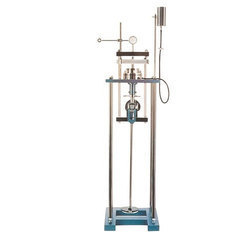
Tell us about your requirement

Price:
Quantity
Select Unit
- 50
- 100
- 200
- 250
- 500
- 1000+
Additional detail
Mobile number
Email

More Products in Soil Test Machine Category
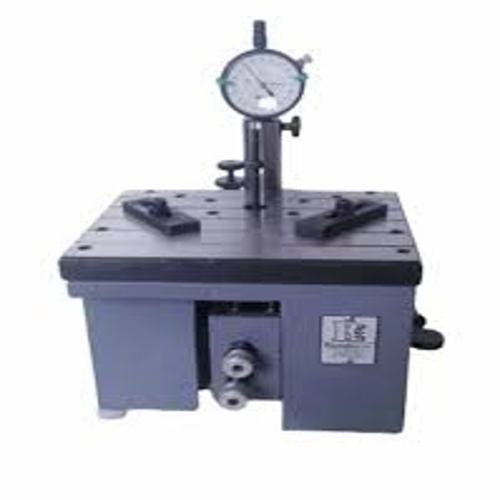
Mechanical Comparator
Price 10000 INR / Number
Minimum Order Quantity : 1 Number
Usage : Precision Measurement
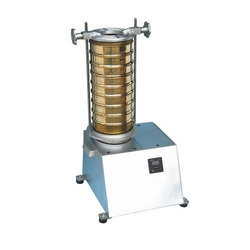
Gyratory Sieve Shaker
Price 24500 INR / Piece
Minimum Order Quantity : 1 Piece
Usage : laboratory
Power Supply : Electric
Color : White Grey
Material : Mild Steel
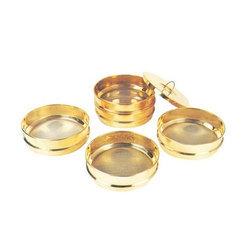
Brass Frame Sieves
Price 550 INR / Piece
Minimum Order Quantity : 1 Piece
Usage : Laboratory
Power Supply : Manual
Color : Golden
Material : Brass
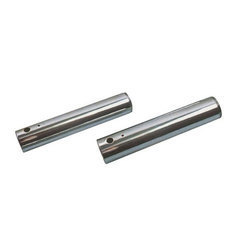
Sampling Tubes
Price 500 INR / Piece
Minimum Order Quantity : 1 Piece
Usage : laboratory
Power Supply : Manual
Color : Silver
Material : Stainless Steel

We are dealing in Coimbatore, Chennai and Tamilnadu.
 Send Inquiry
Our Products
- Concrete Testing Equipment
- Survey Lab Equipment
- Construction Equipment
- Concrete Testing Machine
- Soil Test Machine
- Survey Instrument
- Auto Level
- Cement Testing Machine
- Soil Testing Equipments
- Soil Testing Equipment
- Civil Engineering Lab Equipment
- Total Station
- Soil Test equipments
- Aggregate Testing Equipment
- Concrete Highway Engineering lab
- Mechanical Engineering Lab Equipment
- Weighing Scale
- Laboratory Testing Equipment
- Compression Testing Machine
- Workshop Trolleys
- Vertical Milling Machine
- Water Testing Equipment
- Moulding Products
- CNC Machines
- Non Destructive Testing Equipment
- Core Cutting Machine
- Cylinder Carrier
- Digital Measuring Machine
- Hydraulic Jack
- Drawing Instruments
- Fuel Testing Equipment
- Dynamics Lab Equipment
- Hydraulics and Fluid Mechanics Lab Equipment
- Heat Transfer Lab Equipment
- Scientific Equipment
- Surgical Equipment
- Hot Air Oven
- Impact Testing Machine
- Torsion Testers
- Bernoullis Theorem Apparatus
- Wooden Tripod
- Liquid Mercury
- Vibrating Table
- Material Testing Equipment
- Agriculture Equipment
- Waste Water Analysis
- Precision Measuring Instruments
- Steel Testing Equipment
- Steel Testing equipments

SF No. 189/1B1A, 191/3A1A1E, Sidco Private Industrial Estate, LIC Colony, Kurichi Pudhu Nagar, Kuruchi Housing,Coimbatore - 641021, Tamil Nadu, India

Mr Balamurugan C
(Manager)
Mobile :07313727211
 Send Inquiry
 Send SMS
Developed and Managed by Infocom Network Private Limited.
